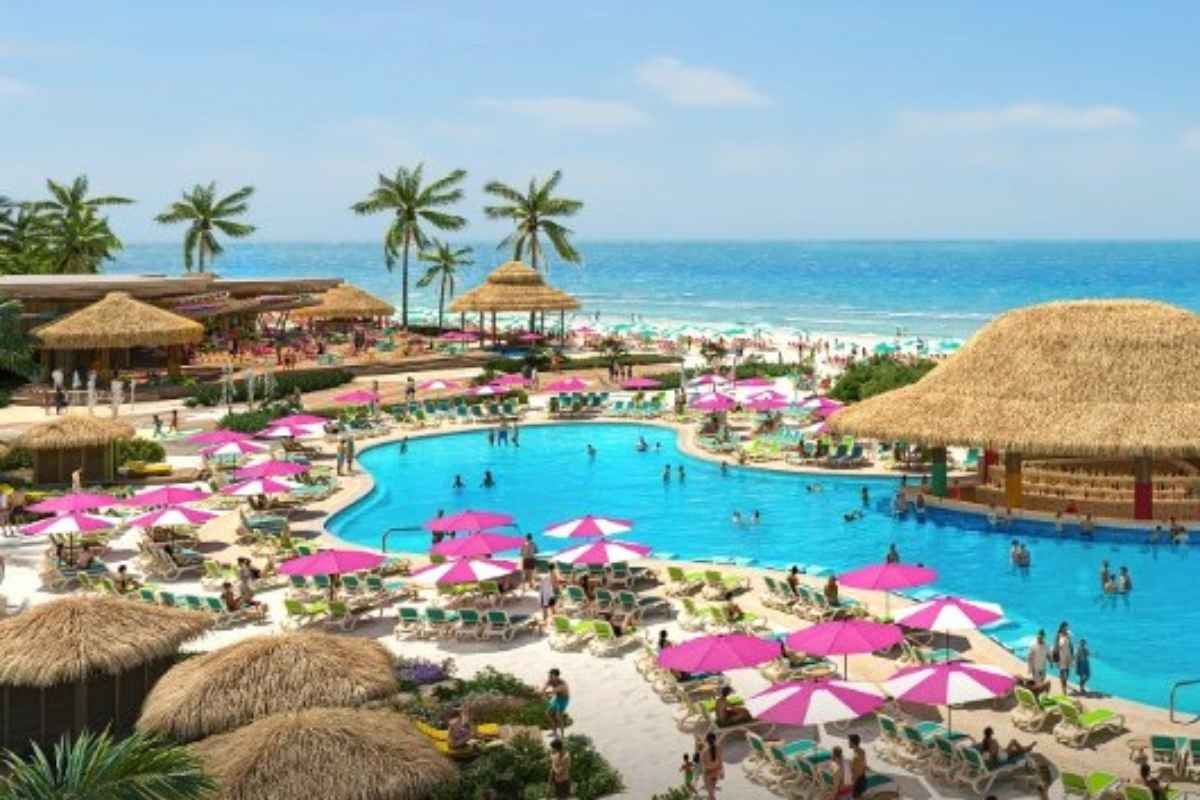
Cozumel, Quintana Roo — Mexico’s National Commission of Protected Natural Areas (CONANP) has concluded that Royal Caribbean’s Royal Beach Club Cozumel is unviable, warning that the $75 million development would damage coral reefs, seagrass beds and mangroves, and disturb nesting sea turtles inside a national park.
The assessment is laid out in technical opinion F00.9.DRPYyCM/SUTCMR/199/2026, which forms part of environmental review file 23QR2025U0054 that the Environment Ministry (Semarnat) is weighing as it decides whether to grant the project an environmental impact permit. Environmental organizations on the island obtained the document through a public records request.
The opinion, signed by regional director Juan Carlos Romero Gil, states that the 17.42-hectare project, designed for 4,000 visitors a day, sits partly inside the Cozumel Reefs National Park, in Intensive Use Zone III, and within the federal maritime-terrestrial zone and the reef zone. It therefore conflicts with the protected area’s founding decree and management program.
Fixed structures over coral
Among CONANP’s central objections is the club’s plan for 2,000 lounge chairs and 24 stilt-mounted palapa structures standing 4.6 meters high. The agency argues the structures are not movable and amount to fixed infrastructure, which the reserve’s decree expressly bans when it could affect coral formations.
Visitor numbers would double
The agency also flags excessive tourism density. The management program allows only low-density tourism in that zone, yet the club would double the park’s visitation. The national park currently receives about 4,000 visitors a day for diving and snorkeling, and the project would add another 4,000 without the developer analyzing the cumulative impact.
CONANP documented two sea turtle nests next to the existing pier. It said the stilts, lounge chairs, direct lights facing the sea and sand compaction from daily operations would violate Mexican standard NOM-62-SEMARNAT-2012 on turtle protection and Rule 56 of the management program, which prohibits altering the shoreline, removing dunes and filling mangrove.
Wastewater risk in a porous aquifer
Water management is another critical point. With 4,000 users a day, the proposed treatment plant and injection wells do not guarantee adequate handling of wastewater. Cozumel’s aquifer is highly permeable and has no natural filter, so the agency warns of nitrogen and phosphorus enrichment that would kill mangrove, seagrass — including Thalassia testudinum, listed for Special Protection — and reefs already weakened by the 2020 and 2024 hurricanes, the stony coral tissue loss disease recorded since 2019 and bleaching events documented since 2023.
The opinion also cites damage to the seagrass meadow, which begins a few meters from the beach and lies no more than three meters deep. Boat traffic ferrying visitors would constantly stir up sediment, and only vessels authorized by CONANP with a draft of less than two meters may dock in the park.
CONANP further warns of the privatization of a public beach. Mass placement of lounge chairs at Playa Sur, one of the beaches most used by local residents because of its free access, would shrink public space and violate the General Law on National Assets, which guarantees free public passage along beaches.
Finally, the agency points to the loss of jungle and harm to endemic species, saying the project does not guarantee preservation of the 70% native vegetation required by Rule 54. The site is home to protected and endemic species, including the Cozumel dwarf raccoon and the Cozumel vireo, which were not considered in the environmental impact statement.
CONANP also observed that part of the site has already been stripped of soil during demolition of the former club, and that it detected operations involving visitors without an environmental impact authorization in place.
City government declines to disclose its position
As part of the same review, Semarnat asked the Cozumel municipal government for its own technical opinion on the project. Environmental groups filed transparency request 1411288500033526 seeking the city’s opinion, its annexes and proof that it had been sent to Semarnat.
The municipal government issued a response that did not address the request, invoking the legal principle of exhaustiveness, under which its transparency committee must meet to determine whether the information exists. It added that federal transparency laws set out the procedure agencies must follow when requested information is not in their files, which “implies, among other things, that the Transparency Committee confirm the non-existence stated by the competent areas that carried out the search.”
At no point did the document disclose the requested information. It noted only that the requester was entitled to challenge the response. As a result, the municipal government’s official position on a $75 million project in its territory remains unpublished.
What the project entails
Royal Beach Club Cozumel is planned as a day-use beach club with no overnight stays, capable of handling 4,000 tourists a day, with restaurants, pools, bars, lounge chairs and stilt structures across 17.42 hectares, of which 1.11 hectares lie in the federal maritime-terrestrial zone.
Governor Mara Lezama announced the investment, put at more than $75 million, in March 2024. The developer is Desarrolladora Turística L.18 de México, a Royal Caribbean subsidiary.
The same company is behind the Perfect Day México project in Mahahual, in southern Quintana Roo, with an estimated investment of $600 million to $1 billion. That project is currently suspended and faces injunctions from local residents, which the Supreme Court recently revived for a substantive review of possible environmental harm.
More Environment
- Dolphin Mincho Dies at 37 in Cancún as AMHMAR Calls for Necropsy
- Quintana Roo Bat Expert Warns of Research Gaps and Cave Damage From Urban Growth
- Yucatán DJ Parties in Secret Cenotes Trigger Environmental Scrutiny
- Firefighters Rescue Man, 57, Who Fell Into Urban Cenote in Cancún’s Supermanzana 100
- Yucatan Peninsula to Lose 23% of Its Water Reserves by 2035, Researcher Warns
More Cozumel
- Cozumel Marks Halloween With Inclusive Festival and Community Candy Swap
- CROC Intervenes in Salary Deduction Dispute at Cozumel’s Secrets Aura Hotel
- Cozumel Ferry Passenger Traffic Falls in Eight of First Nine Months of 2026
- Cozumel’s Punta Sur Hosts Bichos Night, Showcasing Insect Research Tied to Public Health
- Cozumel Cruise Arrivals Rise 13.24% as September Passengers Jump 18.82%