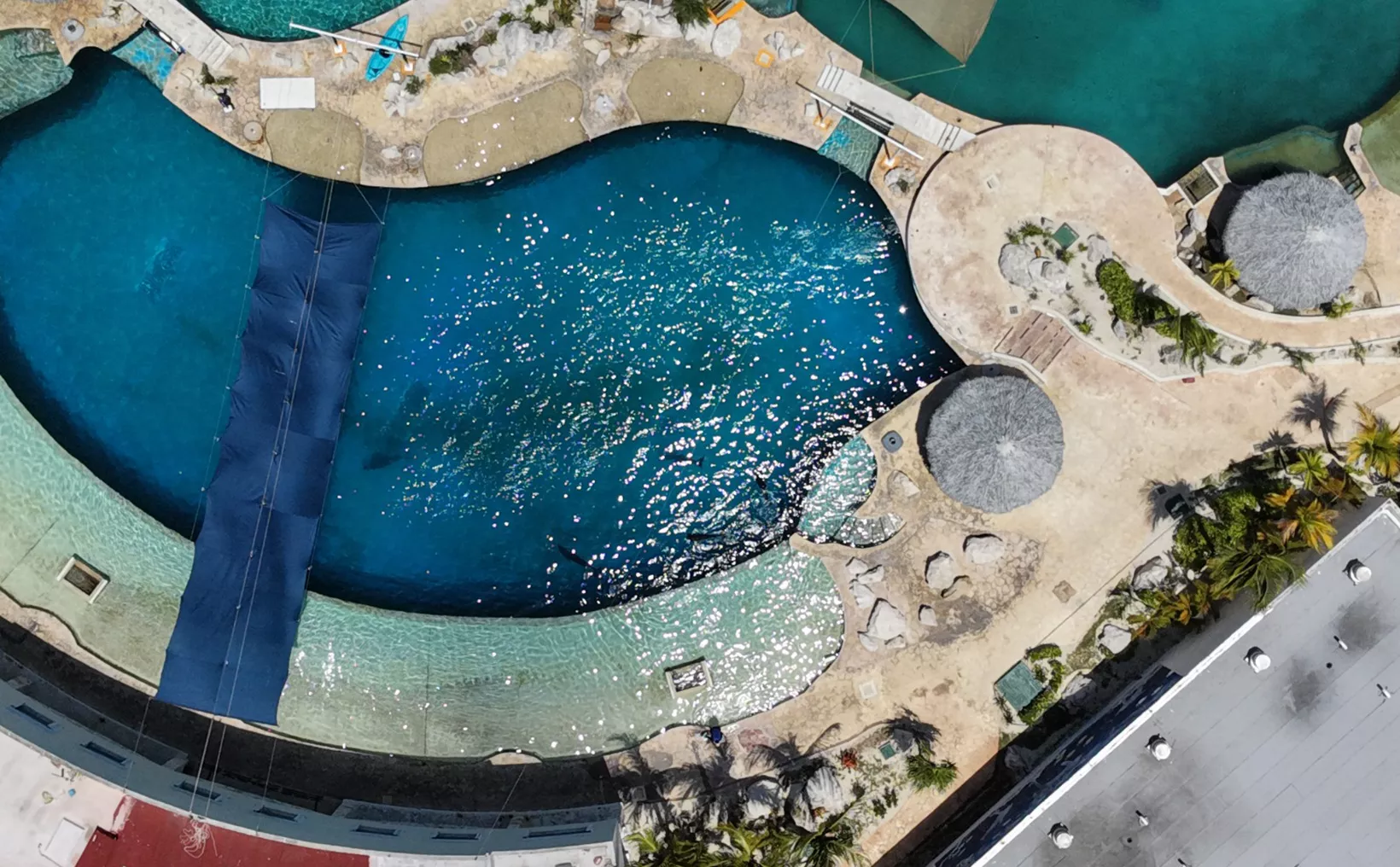
Cancún, Quintana Roo — Mincho, an Indo-Pacific bottlenose dolphin whose injury during a show became a rallying point for animal-welfare advocates, has died at approximately 37 after decades in human care. His death leaves eight dolphins at the Cancún facility where federal authorities have been monitoring the animals and weighing whether any can safely be moved.
Dolphin Connection Cancún notified Mexico’s environmental protection agency, Profepa, of Mincho’s death. The agency said he had suffered a serious illness and ordered the operator to carry out an immediate necropsy and additional studies. An official cause of death has not yet been established; Profepa said it would release the findings once its technical reviews are complete.
The Mexican Association of Habitats for the Interaction and Protection of Marine Mammals, or AMHMAR, said Mincho had previously been diagnosed with cancer and was receiving specialized care and palliative treatment intended to preserve his quality of life. The industry group called for a rigorous investigation and public disclosure of the necropsy results. It also urged people to wait for verifiable findings before drawing conclusions about his death.
The eight dolphins still at the facility
Mincho’s death comes amid an unresolved case involving the Cancún dolphinarium. In October 2025, Profepa temporarily closed the facility and placed its nine dolphins under federal protection after inspectors found irregularities, including murky water and inadequate cleaning.
In an Oct. 1, 2026, update, the agency said corrective measures had improved water circulation, cleanliness and veterinary monitoring. It cautioned that those improvements did not erase the earlier findings or end its administrative investigation.
Profepa also reported that all nine dolphins then at the site had health problems requiring individual attention, including eye and mouth conditions, worn teeth and other chronic ailments. At that point, it considered three unlikely to be suitable for transfer because of the medical risks. A possible move for the other six remained under evaluation. With Mincho’s death, eight dolphins remain, but the agency has not announced a new assessment of which of them could be moved.
That distinction matters. Moving a dolphin out of a closed facility may sound like an obvious solution, but Profepa says each animal’s health, ability to withstand transport and social bonds must be assessed before a destination is chosen.
Why Mincho’s name became known nationwide
On Nov. 28, 2020, Mincho struck a concrete platform while performing an acrobatic maneuver at a Riviera Maya dolphinarium. Video of the incident circulated years later, drawing renewed scrutiny of marine-mammal shows. Profepa reported the accident and filed a criminal complaint for authorities to investigate whether an offence had been committed.
The case became associated with reforms to Mexico’s General Wildlife Law, widely called “Ley Mincho.” Published in July 2025, the changes prohibit breeding marine mammals in captivity except for specified conservation purposes and sharply restrict their possession and use. They also establish a transition for cetaceans already under professional care, including provisions for moving them to sea pens or other legally permitted settings.
The law did not instantly close every dolphinarium or require every dolphin to be moved regardless of its condition. Its transitional rules allow certain previously approved activities to continue for animals already held, while imposing limits on interactions and requiring their welfare to be protected
More Environment
- Playa del Carmen halts poplar tree relocation
- Playa del Carmen Shark Point Welcomes Back 12 Bull Sharks
- Playa del Carmen subsoil study eyed for 2027
- Quintana Roo Tourism Master Plan Shifts From Sustainability to Regeneration at 18% Completion
- Isla Mujeres Returns to New Orleans DEMA Show to Boost Dive Tourism After Seven-Year Absence
More Cancun
- Bishop of Cancún-Chetumal Visits 73 of 78 Parishes in First Eight Months
- Mexican Caribbean Leads Hotel Boom as Cancún and Riviera Maya Take Half of New Rooms
- Cancún Searching Mothers Reopen Outbound Lanes but Keep Hotel Zone Blockade
- Cancún’s El Parián Market Endures as a Working-Class Hub After 48 Years
- Quintana Roo to Build Three Margarita Maza High Schools in Cancún by 2027