
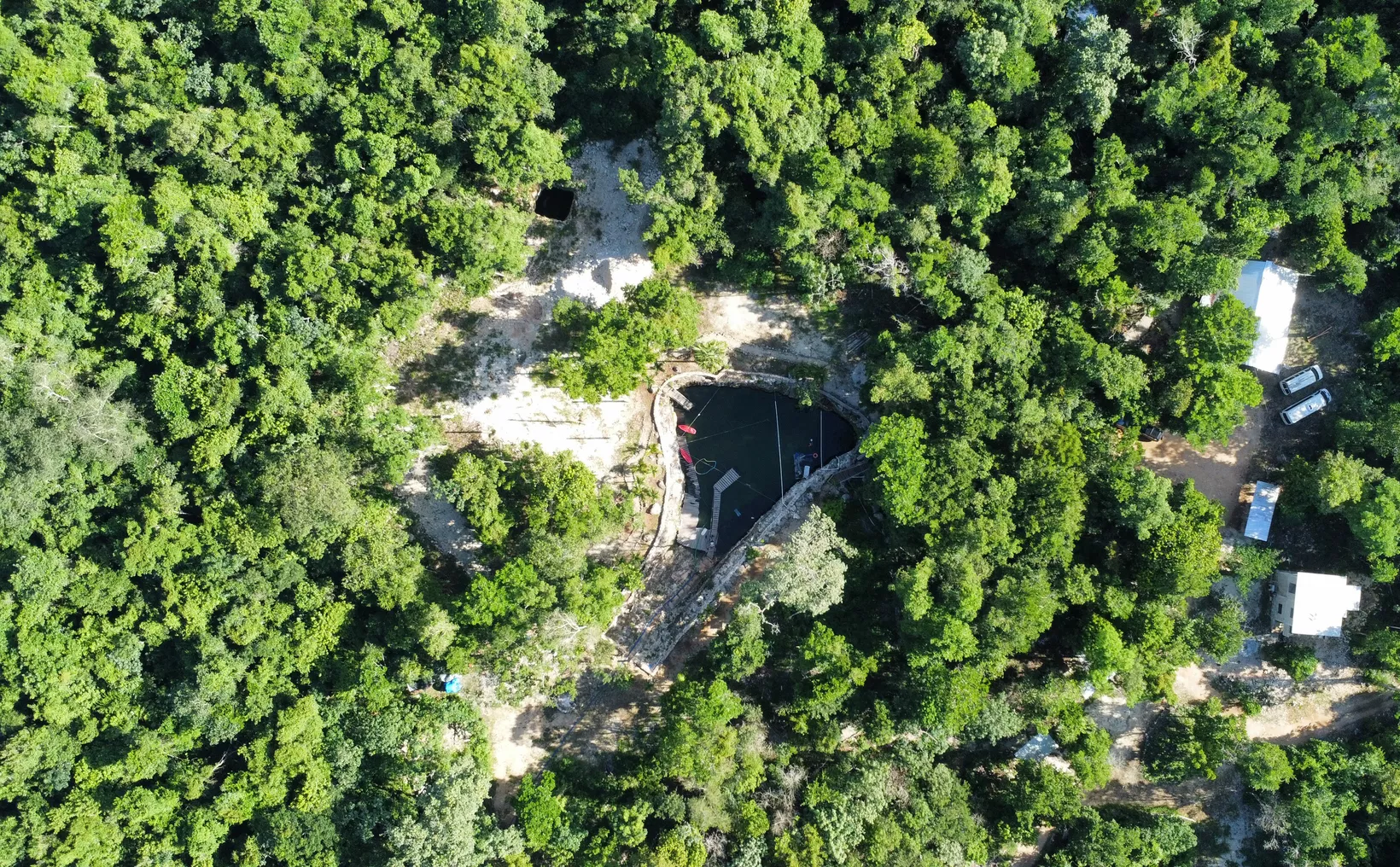
Cancún, Quintana Roo — The Yucatan Peninsula could lose up to 23 percent of its freshwater reserves by 2035 as climate shifts disrupt the natural recharge of its underground aquifers, a researcher at the Universidad del Caribe (Unicaribe) has warned.
Laura Margarita Hernández Terrones said the decline stems from changing weather patterns that are altering rainfall and the cold fronts known as nortes, compounded by deforestation and growing demographic and tourism pressure on the region’s water supply.
Models Point to Sharp Drop in Aquifer Recharge
Presenting her findings, Hernández Terrones said water-balance and general-circulation models project a 20 to 23 percent drop in the aquifer’s natural recharge — before factoring in human activity — depending on global emissions scenarios.
The changes also affect the chemistry of the region’s cenotes, she said. Shifting rainfall and cold-front cycles alter the movement of nutrients such as nitrogen and phosphorus, while greater dissolution of minerals in the region’s carbonate rock changes the composition of the water itself.
Calls for Protected Recharge Zones
The academic urged the region to adopt mitigation strategies already tested elsewhere, particularly the creation of hydrogeological reserve zones.
She pointed to a program carried out in Yucatán state with state authorities and universities that protected strategic recharge areas by regulating activity on the surface without harming local communities.
Hernández Terrones also called for a broader rethink of water management and civic responsibility, arguing that the challenge goes beyond saving water at home. Consumption patterns, she said, must be assessed for their full impact on natural resources and greenhouse gas emissions.
Key Figures
- 9 years: the period over which the drop in water reserves is projected.
- 23 percent: the estimated reduction in natural aquifer recharge.
- 2 factors identified: altered climate patterns and changes in cold-front behavior.
More Environment
- Quintana Roo Conch Season Opens November 1 and Runs Through April 2027
- Tulum Tour Operators Report Rising Visitors as Sargassum Eases
- Pollution Blocks Diving in Tulum Cenotes, Instructor José Urbina Warns
- Boat Noise Is Drowning Out the Natural Sounds of Mexican Caribbean Reefs, Researchers Warn
- Diving Tourism Collapses in Playa del Carmen as Four Dive Shops Close
More Quintana Roo
- Quintana Roo Chair Law Hits 95% as 1,750 Notices Issued
- Quintana Roo to Finish 67 School Canopies in 2026 With 240 Million Pesos
- Profeco Launches Day of the Dead Price Monitoring Operation Across Quintana Roo
- Belize to Headline 2026 Caribbean Culture Festival in Quintana Roo
- Grupo Posadas’ 55% Hotel Sale Aims to Revive Mexican Tourism
