
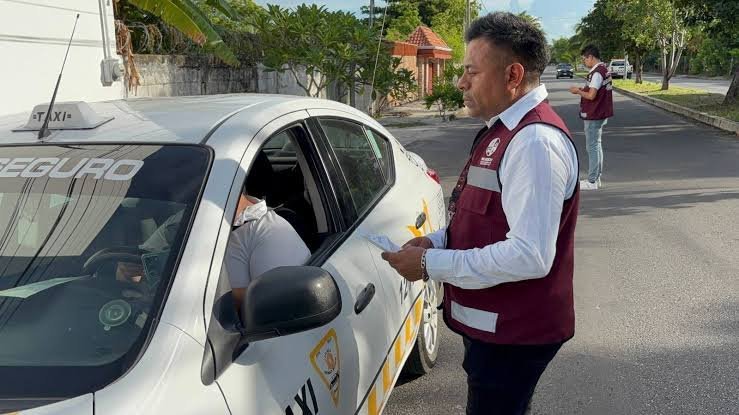
CHETUMAL — In Quintana Roo, taxis are required to have GPS to renew their registration, the Quintana Roo State Mobility Institute (Imoveqroo) has warned.
The institute, in conjunction with taxi driver unions, has been promoting the mandatory use of security technology in public transportation since last year, including GPS and video surveillance cameras inside vehicles to record and monitor journeys. The aim is for units to incorporate real-time satellite tracking so the vehicle can be located and emergencies addressed. Under current regulations, it is already mandatory for concessionaires to have geolocation equipment in order to carry out renewals, the annual procedure required to maintain the right to operate the service.
Of the 27,000 concessions in the state, approximately 80% already have the device installed and operating. Inspections are scheduled from January to March 2027 to verify that all vehicles providing service comply.
Imoveqroo said: “We are talking about around 27,000 permits, about 12,000 of which are for taxis, and I would venture to say that 80% already have GPS. We will see that during the verification process from January to March. However, this information is kept privately; many of these taxis have their own cell phones, or there are groups of taxi drivers who pool their data on 10, 20, or 50 vehicles. If having GPS is mandatory, the regulation has a transition process so that, starting this year, taxi drivers will not be able to renew their permits if they do not have this technology.”
The institute explained that a platform has been launched so unions can upload the number of units that have the technological equipment, allowing the mobility authority to know the true number of vehicles complying with the regulation.
Imoveqroo emphasized that those who have not yet installed the device will not be subject to penalties or lose their concession, although there may be temporary suspensions of permits until they submit the required information showing that the units carry the tracking system.
“What happens is that the concession that is granted annually during the activation process is simply not activated until they submit the information,” Imoveqroo stated. “The concessionaire absorbs the costs, although it depends on what they want to request. For example, there are options starting at 100 pesos, and you can even have it through an application on your cell phone. I think the most expensive one is around 500 pesos.”
Imoveqroo also specified that the objective is only for the institute to have registration and control over the vehicle fleet that provides public transport service in the state, a mechanism that provides greater security for the concession holder, the vehicle owner, the operator and the user.
More Business
- Why a Councilman Wants Tulum Out of the Airport’s Name
- US Lifts Limits on Flights From AIFA and AICM to US Cities
- Leaks Flood Cancún Airport Terminal 2 as Heavy Rain Soaks Check-In Area
- HR Ratings Cuts Mexico and Pemex Ratings on Fiscal Deterioration and Debt Pressure
- Isla Mujeres Closes Port to Small Boats as Heavy Rain Lashes Quintana Roo
More Quintana Roo
- Flamingos Banded in Yucatan Peninsula Travel as Far as Venezuela, Tracking Shows
- Cutaneous Leishmaniasis Cases Jump 387% in Mexico’s Yucatan Peninsula
- Quintana Roo Opens Supervised Family Visitation Center in Chetumal
- Quintana Roo Youth Institute Seeks 13 Million Peso Budget Boost for Scholarships
- 35% of Quintana Roo Tourism Businesses Plan Loans to Cover Year-End Costs
