
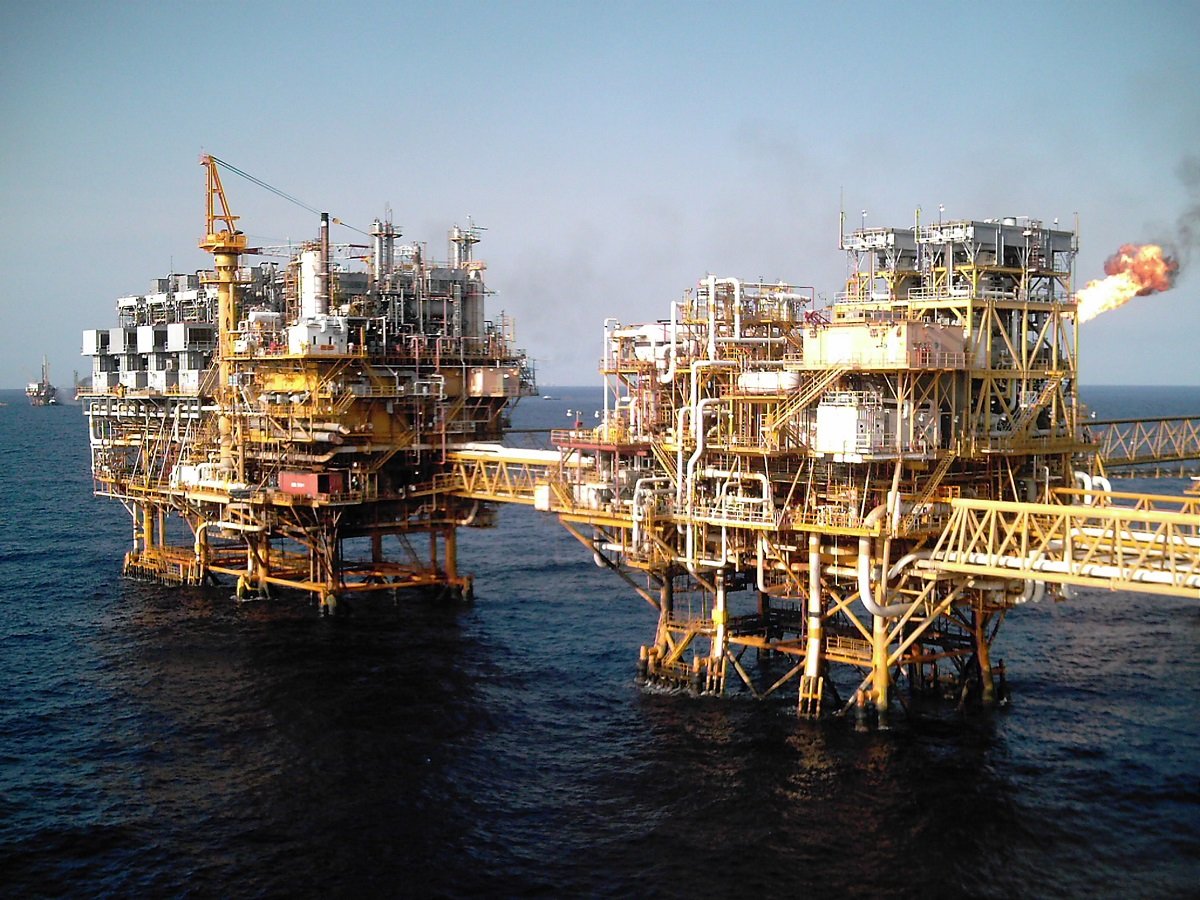
Mexico City — Deteriorating public finances, weaker growth prospects and mounting pressure on borrowing costs led HR Ratings to downgrade Mexico’s credit rating and, in a related move, the rating of state oil company Pemex.
On Oct. 15, the agency lowered Mexico’s long-term sovereign debt rating to HR BBB (G) from HR BBB+ (G), while keeping the outlook stable and affirming the short-term rating at HR3 (G).
The same day, HR Ratings cut Pemex’s global long-term rating to HR BBB (G) from HR BBB+ (G), mirroring the adjustment on the sovereign. It kept the company’s national-scale long-term rating at HR AAA with a stable outlook, and its short-term rating at HR+1.
The moves reflect the close financial ties between the federal government and the oil company, whose borrowing still depends in part on public contributions to cover maturities and other financial obligations.
A persistent deficit and rising debt
For Mexico, HR Ratings cited a decline in the country’s main fiscal balances and a growth path weaker than previously forecast — factors it said would limit the government’s ability to contain the deficit and stabilize debt.
The agency estimates that Public Sector Borrowing Requirements (RFSP), the broadest measure of the public deficit, will close 2026 at 4.6% of gross domestic product. If that forecast holds, Mexico will have logged five consecutive years with deficits above 4% of GDP.
While acknowledging efforts by the Finance Ministry to narrow the fiscal gap after 2024’s level, the agency said the measures taken have been insufficient to reduce the public sector’s financing needs.
Among the factors keeping pressure on public accounts, it listed rigid current spending, transfers, subsidies and payroll costs, along with the rising cost of servicing debt, which now absorbs a growing share of budget resources.
HR Ratings also warned that the economic slowdown and weak investment are limiting growth in tax revenue, making it harder to correct budget imbalances.
Against that backdrop, it projects net debt — measured through the Historical Balance of Public Sector Borrowing Requirements — at 54.5% of GDP at the end of 2026, rising to 56.4% in 2027, 58.1% in 2028 and 59.6% in 2029, before reaching 61.2% in 2030 and 65.6% in 2033.
The agency also cut its long-term real growth estimate to 1.50% from 1.85%. It expects growth of 1.3% in 2026 and 1.5% in 2027.
The combination of moderate growth, persistent deficits and higher financing costs could keep debt on an upward path in the coming years.
Pemex still reliant on the federal government
In Pemex’s case, HR Ratings linked the cut in its global rating directly to the sovereign downgrade, citing the financial backing the oil company receives from the federal government.
The agency said that support has come through contributions earmarked for debt payments, capital investments and tax relief mechanisms. The company’s importance to public finances also reinforces the link between its credit risk and the country’s.
Despite the global downgrade, Pemex’s finances have shown some improvement. At the close of the second quarter of 2026, its total debt stood at 1.353 trillion pesos, down 11.6% from the end of 2025.
In dollar terms, debt fell to $77.5 billion from $85.2 billion, a 9.1% decline. HR Ratings attributed much of that reduction to repayments funded through federal government contributions.
The company’s revenue also recovered in the first half of 2026. After an 8.6% annual decline in 2025 to 1.529 trillion pesos, Pemex reported revenue of 876 billion pesos in the first six months of this year, up 11.3%, driven mainly by higher domestic sales.
Operationally, liquid hydrocarbon output averaged 1.655 million barrels per day in the second quarter, 2% more than in the same period of 2025. Excluding condensates, however, crude production was essentially flat at 1.367 million barrels per day.
Even so, the agency expects Pemex will keep needing federal resources to meet its financial obligations at least through 2029. The decline in its debt therefore does not yet mean the company has achieved enough financial independence to forgo public support.
HR Ratings projects Pemex’s net debt will edge down to 1.298 trillion pesos in 2026, 1.283 trillion in 2027 and 1.250 trillion in 2028, assuming capital contributions and refinancing of maturities continue.
Finance Ministry defends macroeconomic stability
Responding to the sovereign downgrade, the Finance Ministry said Mexico retains investment-grade status with all eight agencies that rate its debt and defended the government’s fiscal policy.
The ministry stressed that Mexico carried out a fiscal adjustment in 2025 equal to 1.3 percentage points of GDP, which it described as the largest since 1990, without cutting social programs or compromising macroeconomic stability.
It also said the 2027 economic package includes measures to raise revenue, improve tax efficiency, strengthen auditing and modernize customs.
The ministry added that nearly 80% of federal government debt is denominated in pesos at fixed rates, a feature that reduces exposure to currency swings and certain external shocks.
The stable outlook HR Ratings maintained for both Mexico and Pemex means the agency does not currently anticipate another immediate rating change under its central scenario. It does not, however, reverse the announced cuts or eliminate the risks it identified.
The agency warned that greater fiscal deterioration, prolonged deficits above 5% of GDP or growth below 1% over the medium and long term could trigger further downgrades.
More Economy
- Quintana Roo Youth Institute Seeks 13 Million Peso Budget Boost for Scholarships
- 35% of Quintana Roo Tourism Businesses Plan Loans to Cover Year-End Costs
- Chetumal Business Chamber Urges Employers to Update Contracts Ahead of New Workweek
- Cancún’s Huayacán and 135 Avenue Roadworks Reach 65% Completion
- Puerto Morelos Port Eyes New Guatemala Trade Route
