Cancún, Quintana Roo — Pink flamingos banded in the Yucatan Peninsula have been recorded traveling to other parts of the Caribbean, including as far as Venezuela, according to a monitoring program that is mapping the birds’ movements and the wetlands they depend on.
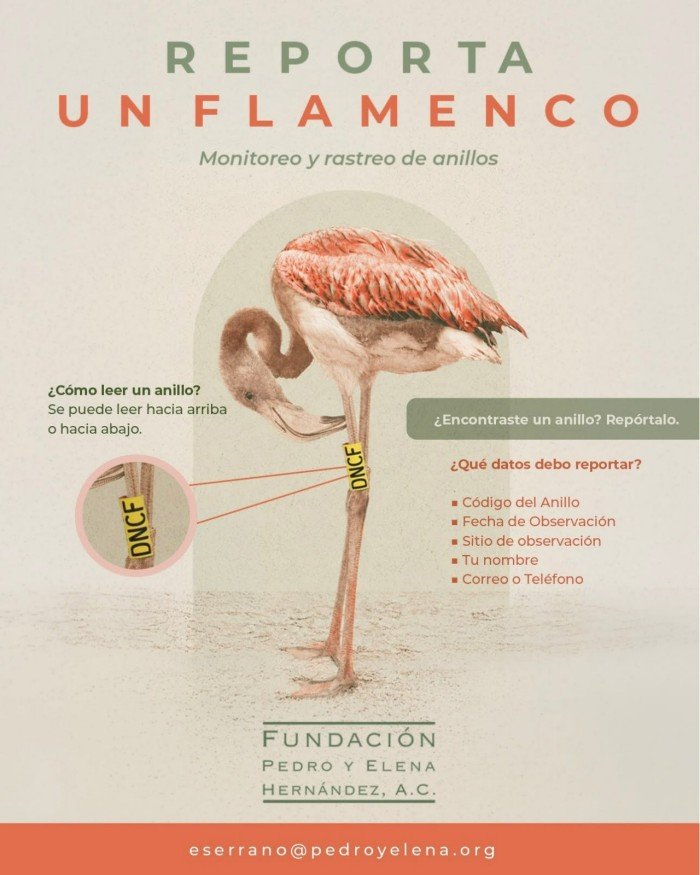
The Pedro y Elena Hernández Foundation runs the #FindFlamingo program, which tracks Caribbean flamingos (Phoenicopterus ruber) using identification bands and GPS devices fitted to individual birds, among them specimens named Víctor, Pedro and Elena. The data allows researchers to identify travel routes, feeding grounds, resting areas and the sites the birds use overnight.
Thousands of kilometers and dozens of stopovers
According to records released by the foundation, some birds have covered more than 5,500 kilometers and used as many as 18 sites in Mexico and Cuba, while others stay in essentially the same region year-round. The contrast shows that not all flamingos follow the same movement patterns and that their routes depend on the conditions and needs of each bird.
The findings also drew responses from other parts of the Caribbean. Frank Espinoza, a Facebook user who commented on the foundation’s post, said observers on the Venezuelan coast are watching for flamingos banded in Yucatan. He also raised the possibility of carrying out new banding work at the Ciénaga de Los Olivitos, home to one of the largest flamingo colonies in the Caribbean.
“Here in the southern Caribbean, mainly on the Venezuelan coast, we are keeping an eye out for some of the Caribbean flamingos banded in Yucatan,” Espinoza wrote in reply to the post.
A connected network of wetlands
The tracking data indicates that coastal wetlands do not function as isolated spaces but as part of a linked network of ecosystems. Food availability, resting places and environmental conditions all shape the birds’ routes, making the conservation of these sites essential to their survival.
Information gathered through the bands and GPS devices helps researchers identify priority areas for the species and strengthen conservation strategies.
While Espinoza’s comment reflects the expectation that flamingos banded in Yucatan will be recorded on Venezuelan territory, the foundation’s post did not confirm the sighting of a specific banded bird in that country.
More Environment
- Cutaneous Leishmaniasis Cases Jump 387% in Mexico’s Yucatan Peninsula
- Sheinbaum Reviews Sargassum Monitoring in Cancún as Quintana Roo Shifts to Early Intervention
- Isla Mujeres Closes Port to Small Boats as Heavy Rain Lashes Quintana Roo
- Heavy Rain in Cancún Diverts Two Flights to Mérida Airport
- Developers Seek Semarnat Approval for 16.45-Hectare Residential Subdivision at Punta Maroma
More Quintana Roo
- Quintana Roo Opens Supervised Family Visitation Center in Chetumal
- Quintana Roo Youth Institute Seeks 13 Million Peso Budget Boost for Scholarships
- 35% of Quintana Roo Tourism Businesses Plan Loans to Cover Year-End Costs
- Chetumal Business Chamber Urges Employers to Update Contracts Ahead of New Workweek
- Quintana Roo Enacts ‘Nicole Law’ Banning Cosmetic Surgery on Minors