Quintana Roo Lost 130,000 Hectares of Primary Humid Forest in 23 Years
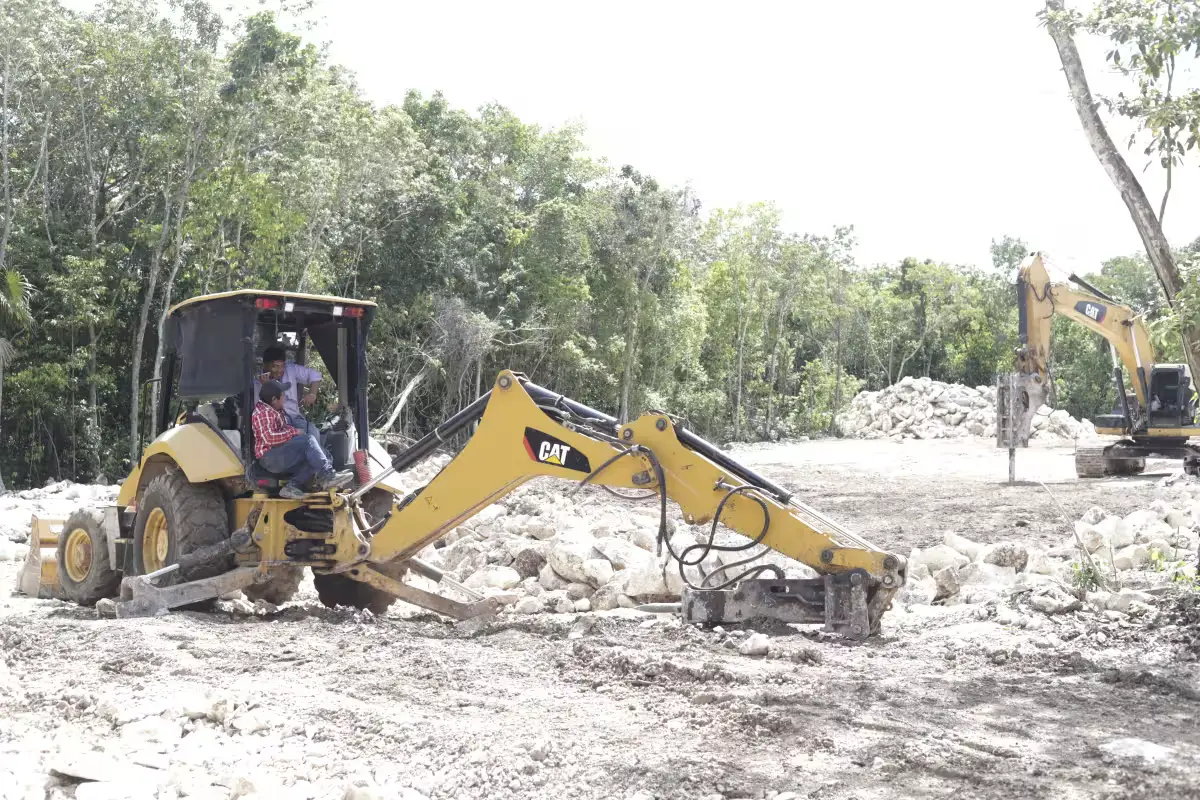
QUINTANA ROO — Quintana Roo lost approximately 130,000 hectares of primary humid forest between 2002 and 2025, according to the latest data from Global Forest Watch, adding another measure to growing concern over development pressure on the Maya Forest and other natural areas across the state.
The loss represents 21 percent of all tree-cover loss recorded in Quintana Roo during that period, according to the monitoring platform operated by the World Resources Institute. To put the figure in perspective, 130,000 hectares is equivalent to about 1,300 square kilometers, an area larger than the municipality-sized urban footprint of many major cities.
What does “primary humid forest” mean?
The term can sound technical, but the basic idea is straightforward. Global Forest Watch defines humid tropical primary forest as mature, naturally occurring tropical forest that has not been completely cleared and allowed to regrow in recent history. The category excludes plantations, tree crops and young secondary forest, making it particularly useful for tracking the loss of older, ecologically important forest.
In Quintana Roo, that includes areas of mature tropical forest that form part of the broader Maya Forest, one of the largest tropical forest systems in the Americas. Primary forest is especially valuable because older natural forests generally store large amounts of carbon and provide complex habitat for wildlife. Once lost, a regrowing secondary forest may take decades or longer to recover comparable levels of biodiversity and carbon storage.
13,000 hectares lost in 2025 alone
Global Forest Watch data show that Quintana Roo had approximately 3.4 million hectares of natural forest in 2020, covering about 79 percent of the state’s land area.
In 2025 alone, the state lost approximately 13,000 hectares of natural forest, generating an estimated 5.5 million metric tons of carbon dioxide emissions associated with that loss.
It is important to distinguish between tree-cover loss and deforestation. Tree-cover loss can include temporary disturbances, such as fire or harvesting in managed forests, as well as permanent land-use conversion. Deforestation refers more specifically to forest being permanently cleared and converted to another use.
According to the Global Forest Watch analysis cited in local reporting, about 60 percent of Quintana Roo’s tree-cover loss between 2002 and 2025 occurred in areas where the dominant drivers were associated with deforestation, including permanent agriculture, settlements, infrastructure and extractive activities.
Environmental group points to unregulated development
Guillermo D’Christy, president of the environmental organization Selvame MX, said much of the destruction occurring in Quintana Roo’s portion of the Maya Forest is linked to development that does not comply with environmental regulations.
“We are not against development,” D’Christy explained to local media outlets. “We are against disorderly development that does not comply with environmental, municipal, state and federal regulations.” He argued that some development has been driven by the desire for immediate financial returns without sufficient consideration of long-term environmental consequences.
“They want to sell the goose that lays the golden eggs as quickly as possible,” he said. D’Christy specifically emphasized the importance of rigorous environmental review before projects are approved, including a proper Manifestación de Impacto Ambiental, or MIA.
An MIA is not supposed to be simply another piece of paperwork. Mexico’s environmental authorities define it as a technical and scientific study used to identify the likely effects of a proposed project and establish measures to prevent, reduce or compensate for environmental damage. According to SEMARNAT, the goal of environmental impact assessment is to evaluate potential effects before a project is built and determine whether it should be approved, approved with conditions or rejected.
D’Christy said meaningful assessments should consider not only the number of trees that may be removed, but also the species present, wildlife habitat, water supply, wastewater disposal, solid waste and the carrying capacity of the surrounding ecosystem.
Development pressure across the Mexican Caribbean
The issue is particularly relevant in Quintana Roo, where some of Mexico’s fastest-growing tourism and residential centers are located. Cancún, Playa del Carmen and Tulum have expanded rapidly over recent decades, while development pressure is increasingly reaching areas farther south and into previously less-disturbed stretches of forest and coastline.
New hotels, residential projects, roads and other infrastructure can all contribute to forest fragmentation, even when an individual project clears only part of a larger property. Fragmentation can break continuous habitat into smaller sections, affecting wildlife movement and increasing pressure along newly accessible forest edges.
The Global Forest Watch numbers do not, by themselves, prove that any specific project was illegal or responsible for a particular area of forest loss. They provide a satellite-based measure of where tree cover and primary forest have disappeared over time.
That distinction matters. D’Christy’s claims about illegal development are allegations that would require case-by-case verification through environmental permits, inspection records, PROFEPA enforcement actions and other official documentation.
Still, the broader trend is difficult to ignore. Between 2002 and 2025, Quintana Roo lost 130,000 hectares of mature humid tropical forest. In just one recent year, 2025, another 13,000 hectares of natural forest disappeared.
For environmental groups, the question is not whether Quintana Roo should stop growing altogether. It is whether growth can continue without progressively destroying the forests, water systems, coastlines and wildlife habitat that helped make the state valuable in the first place.
As D’Christy put it, the argument is not against development itself, but against development without order, oversight or respect for the rules.
More Environment
- Hurricane Simon Threatens Puerto Vallarta as Category 4
- Mexico’s Environment Agency Rejects Four Major Tourism Projects in Quintana Roo
- Sargassum Closes In on 53 Quintana Roo Beaches as Tulum and Puerto Morelos Take the Worst Hit
- Semarnat Denies Environmental Permit for GL Dreams Subdivision in Puerto Morelos
- Caribbean Sargassum Becomes Fertilizer for Global Beer Brands
More Quintana Roo
- Morena Launches 11 Municipal Races in Quintana Roo: Who’s In?
- Rafael Marín Confirms Morena Bid for Cancún Mayor in 2027
- Quintana Roo Tops Mexico’s Human Trafficking Cases, Sheinbaum Warns
- Buen Fin 2026 Set for November 13-17 With Five Days of Deals in Cancún
- IMSS Launches Winter Vaccination Drive in Quintana Roo With 263,000 Doses