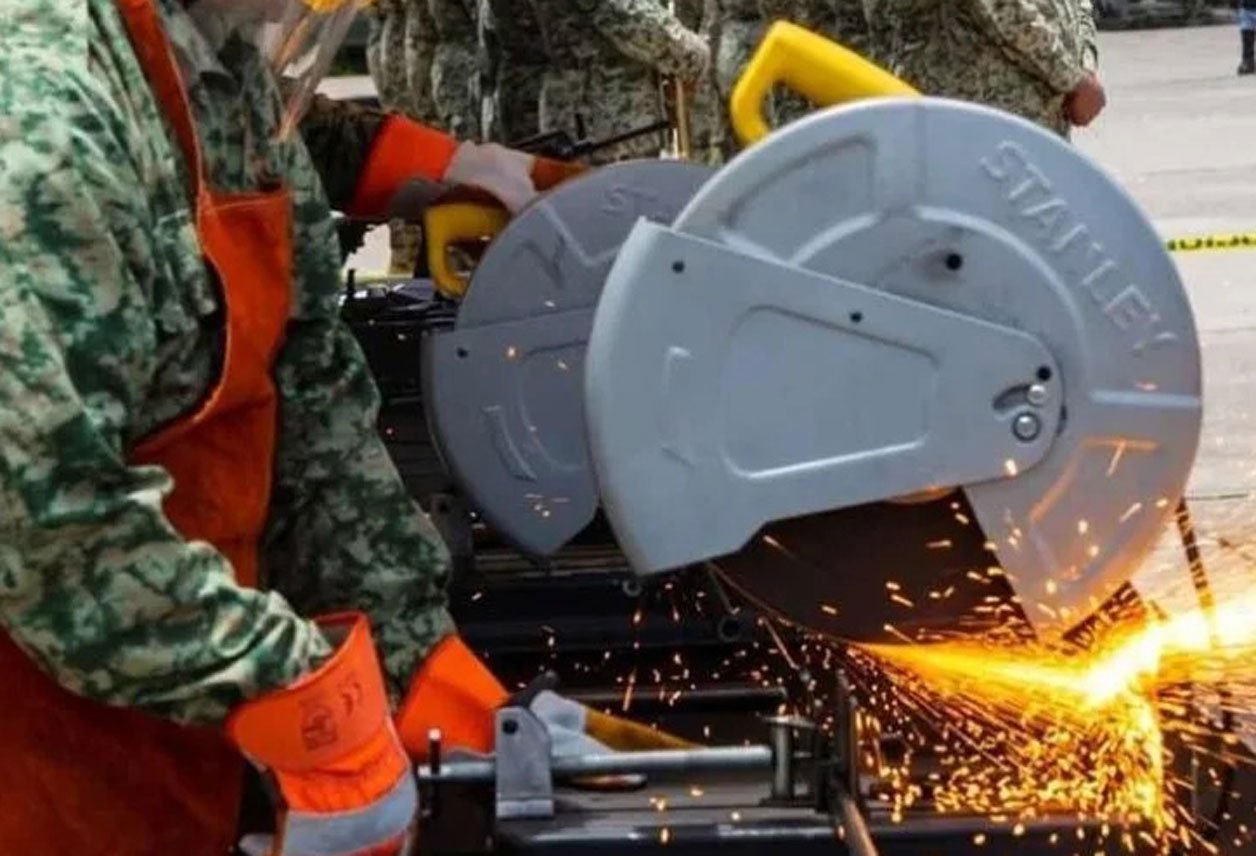
Meria, Yucatán — Mexican military authorities destroyed nearly 300 firearms seized in Quintana Roo and Yucatán during an official ceremony in Mérida, with the vast majority of the weapons having been confiscated in Quintana Roo.
A total of 293 firearms were rendered unusable on July 9, 2026, at the facilities of the 7th Combat Engineer Battalion in Mérida. The destruction was carried out by the Mexican Army as part of activities marking the International Day for the Destruction of Small Arms.
Of the 293 weapons, 259 had been seized in Quintana Roo, while the remaining 34 came from Yucatán. No weapons from Campeche were included in this particular destruction ceremony, despite the three states falling within the jurisdiction of Mexico’s 10th Military Region.
The arsenal included 85 long guns and 208 handguns, ranging from pistols and revolvers to rifles. Authorities also destroyed 468 magazines and 14,970 rounds of ammunition of various calibers.
The weapons had been confiscated in security operations and other law-enforcement actions before being placed under military control for destruction. Officials said permanently removing seized firearms from circulation reduces the possibility that they could later be lost, stolen, resold or used in criminal activity.
The ceremony brought together military and civilian authorities and formed part of a broader security strategy aimed at reducing the number of illegal weapons available for use in violent crimes.
The fact that nearly nine out of every 10 firearms destroyed came from Quintana Roo is particularly notable. While the event itself did not provide a breakdown of where within the state the weapons were seized, the figure offers a stark indication of the volume of firearms confiscated there compared with neighboring Yucatán.
Quintana Roo has faced persistent security challenges associated with organized crime, drug trafficking, extortion and targeted violence, particularly in tourism centers such as Cancún, Playa del Carmen and Tulum. The destruction of the seized weapons does not by itself indicate that all were connected to those crimes, and authorities did not release case-by-case details about their origins or use.
Still, officials emphasized the preventive value of the operation. Once a firearm has completed the required legal and administrative process and is authorized for destruction, military personnel physically render it unusable so it cannot return to circulation.
The July 9 event was not limited to symbolic destruction. Hundreds of magazines and nearly 15,000 cartridges were also eliminated, permanently removing a substantial quantity of weapons-related material from possible future use.
For authorities, the message was straightforward: every confiscated weapon that is permanently destroyed is one less weapon available to be used in a robbery, assault, homicide or other violent act.
For Quintana Roo residents, however, the most striking number may be the simplest one: 259 of the 293 firearms destroyed in Mérida had been seized in their state.
More Law Enforcement
- LIPU Bus Rear-Ends Van, Flipping It Off Highway 307 Near Playa del Carmen
- Woman Shot Dead on Motorcycle With Her Daughters in Playa del Carmen
- At Least Four Women Shot Dead Across Quintana Roo Over the Weekend
- Five Cozumel Firefighters to Receive Training in Houston
- Quintana Roo Prosecutors Search for 10 Missing People, Including Five Minors
More Quintana Roo
- Quintana Roo Identifies 780 Irregular Settlements, Prepares Regularization Strategy
- Quintana Roo Lawmaker Proposes Mandatory Child Support Registry Check Before Marriage
- Riviera Maya Forum Pushes Caribbean Mexico Toward Regenerative Tourism
- Childhood Obesity in Quintana Roo Up 18.5%, Diabetes Cases Rise
- Roberto Borge’s Return to Prison Hinges on Oct. 27 Hearing