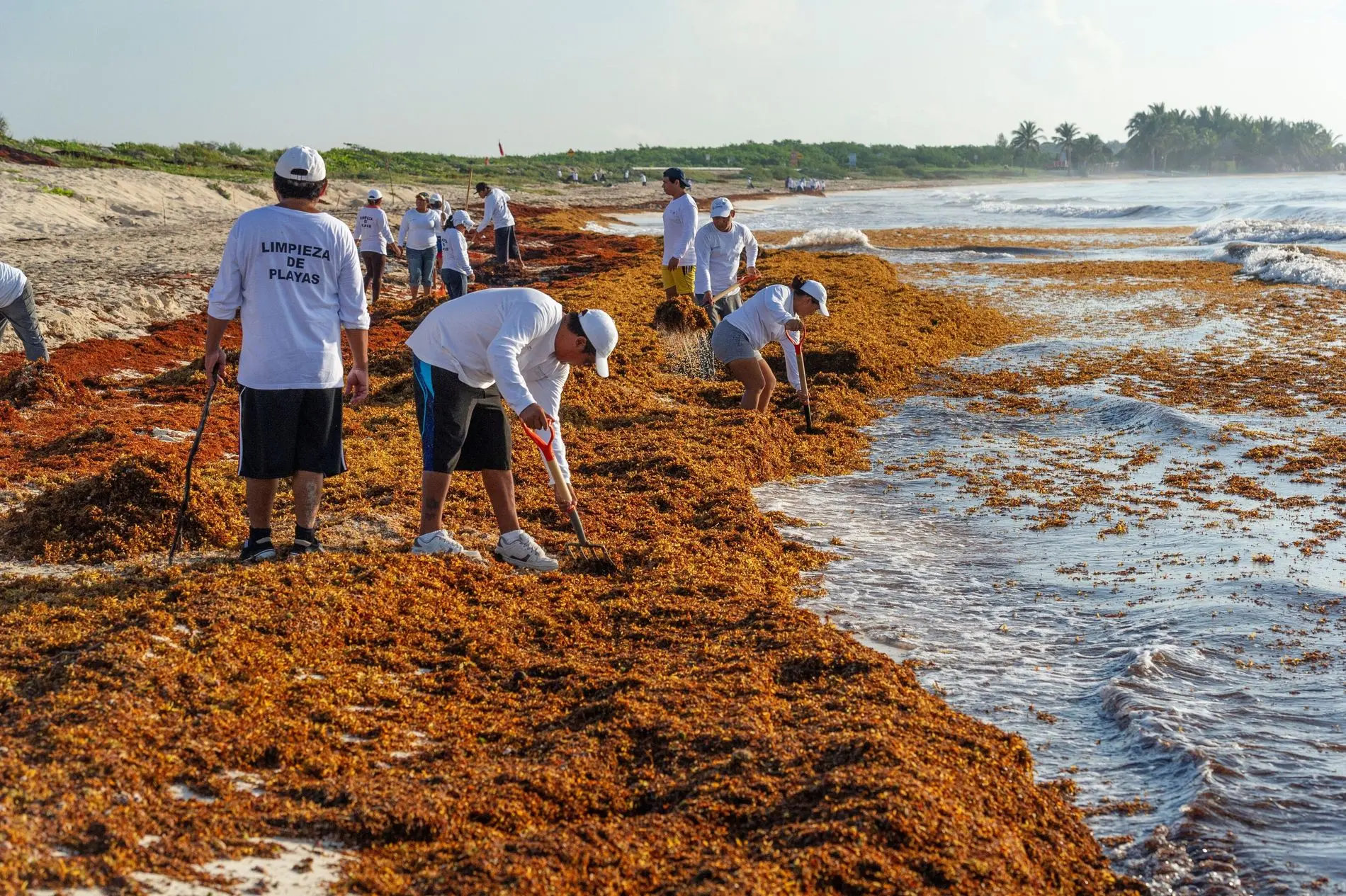
Quintana Roo, Mexico — The atypical accumulation of sargasso seaweed along the Mexican Caribbean coast is directly influencing travel decisions and booking trends among international tourists, according to a new report that contradicts official statements from state tourism authorities.
The study, conducted by the Center for Advanced Research in Sustainable Tourism (STARC), reveals significant shifts in consumer behavior among visitors from the United States, Canada, and Mexico. The findings challenge assertions by Quintana Roo’s Secretary of Tourism, Bernardo Cueto, who has downplayed the seaweed’s impact on visitor numbers.
US Travelers Adjust Plans by Region
The report details how American tourists’ responses vary by geographic origin:
- Northern and central US: A notable increase in online searches on platforms like TripAdvisor and Reddit, with travelers actively redirecting preferences to alternative beach destinations outside Quintana Roo, prioritizing cost-benefit.
- Southern US: No mass cancellations, but travelers modify itineraries to focus on pool facilities, local theme parks, and inland excursions.
Premium Exodus in Tulum
High-spending travelers are avoiding the immediate coastline to escape the visual and environmental impact of the seaweed. The Travel Sentiment Index (TSI) shows luxury clients rapidly shifting searches toward upscale resorts located away from the beachfront, particularly in Tulum.
Canadian Market Split
Canadian tourists show two distinct regional patterns:
- Western Canada: Spending intentions for the summer season have contracted due to higher flight costs combined with seaweed reports.
- Eastern Canada: Family vacation plans remain steady, with real-time monitoring of resort beach-cleaning updates via digital platforms.
Domestic Tourism Dynamics
Within Mexico, sargasso accumulation is altering booking patterns by city of origin:
- Guadalajara: Alerts are driving cancellations to the Caribbean, benefiting Pacific coastal routes.
- Mexico City: Purchase decisions depend entirely on aggressive promotional campaigns and installment payment plans.
- Monterrey: The least affected market, as travelers focus on exclusive experiences and high-end hotel offerings rather than beach activities.
Industry Challenges
Rodrigo de la Peña, president of the Hotel Association of Cancun, Puerto Morelos, and Isla Mujeres, acknowledged that the summer season will present significant operational and commercial challenges. In addition to the environmental factor, the US market is prioritizing domestic travel driven by the FIFA World Cup schedule.
Despite these indicators, the Quintana Roo Tourism Secretariat maintains that the state’s diverse offerings — from nature to gastronomy — mitigate the seaweed’s impact, even as air arrivals show a measurable decline.
More Tourism
- Starbucks Exits Tulum: Why the Hotel Zone Is Losing Its Buzz
- Puerto Morelos Plans Boat Procession, Altars and Contests for Mar de Almas
- Cozumel’s Reefs Get a 3D Map Divers Can Explore Before Entering the Water
- Canada Drives Mexican Caribbean Demand for Final Quarter of 2026
- Crocodile Surprises Tourists Swimming at Cozumel’s El Cielo Sandbar
More Quintana Roo
- Quintana Roo Identifies 780 Irregular Settlements, Prepares Regularization Strategy
- Quintana Roo Lawmaker Proposes Mandatory Child Support Registry Check Before Marriage
- Riviera Maya Forum Pushes Caribbean Mexico Toward Regenerative Tourism
- Quintana Roo Prosecutors Search for 10 Missing People, Including Five Minors
- Childhood Obesity in Quintana Roo Up 18.5%, Diabetes Cases Rise