Ensenada, Baja California — A Mexican researcher is developing a video game designed to help identify early indicators of dyslexia in children as young as four, potentially allowing specialists to intervene before reading difficulties begin to affect school performance and self-esteem.
The game, called Rhythm Heroes, was designed and developed at the Centro de Investigación Científica y de Educación Superior de Ensenada, or CICESE, under the leadership of postdoctoral researcher Dr. Katya Álvarez Molina. It uses music and rhythm-based challenges to evaluate abilities that researchers believe may be associated with later reading difficulties.
The approach is significant because dyslexia is often identified only after a child has already started struggling to read. By then, some children may have experienced academic delays, frustration or loss of confidence. Rhythm Heroes aims to detect possible risk indicators earlier, during the preschool years and before reading ability itself can be tested.
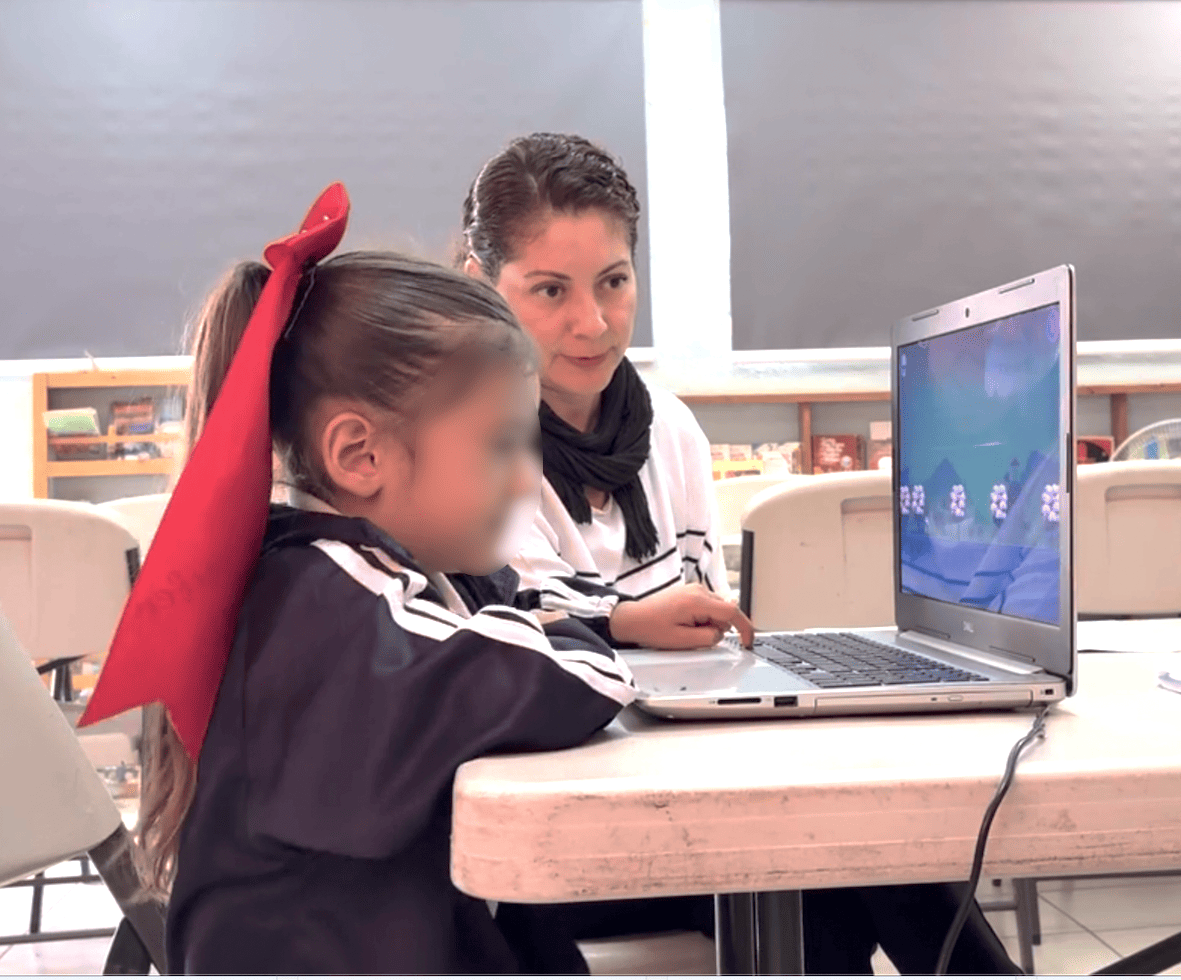
The game presents children with an interactive adventure built around four levels. Players complete tasks involving rhythmic synchronization, reproduction of patterns and rhythmic memory while the program records how they respond. The activities are designed for children aged four and older and require no reading.
The scientific premise is based on research examining connections between rhythm, timing, auditory processing and language development. Not every child with weak rhythm skills has dyslexia, and not every child with dyslexia will show the same pattern. For that reason, the researchers are careful to emphasize that Rhythm Heroes is not a diagnostic tool.
Instead, it is intended as a screening aid that could help specialists determine whether a child should receive a more comprehensive professional assessment.
“The game does not replace a clinical evaluation,” Álvarez has explained. Its purpose is to collect information about how children respond to different rhythmic exercises and help determine whether a specialized assessment may be appropriate.
The first prototype has already been tested with students at a public elementary school in Ensenada. That initial testing focused on whether children understood the activities and helped researchers make adjustments to the game’s design. The project is now undergoing further scientific validation through national and international collaborations.
The work is supported by a multidisciplinary team involving specialists in neuropsychology, speech and language therapy, music therapy, human-computer interaction and video-game development. Researchers from CICESE and the Autonomous University of Baja California, UABC, have also participated in related work on the project.
Álvarez’s own academic background reflects the unusual combination of disciplines behind Rhythm Heroes. She studied Electronic Engineering, completed a master’s degree in Music Technology at UNAM, conducted research in the Netherlands and earned a doctorate in Digital Media Engineering from the University of Bremen in Germany. She later returned to Mexico for postdoctoral research at CICESE focused on interactive music systems and video games.
The concept behind Rhythm Heroes was also described in a peer-reviewed 2024 paper, “Diseño de un Juego de Ritmo para el Cribado de la Dislexia,” published in the ReCIBE journal. The study explored how musical composition, game mechanics and visual design could be combined to support early dyslexia screening while keeping young children engaged.
Researchers ultimately hope the game could become a practical support tool in schools, psychological centers and specialist clinics. That goal, however, depends on completing scientific validation and showing that performance on the game reliably identifies children who are genuinely at higher risk of developing dyslexia.
For now, Rhythm Heroes remains a research project rather than a ready-to-use clinical test. But its potential lies in addressing one of the biggest challenges surrounding dyslexia: recognizing warning signs before a child has spent years struggling.
As Álvarez put it, identifying risk early creates the possibility of intervening sooner, potentially changing not only a child’s educational path but also the social and emotional consequences that can follow years of undiagnosed learning difficulties.
More Lifestyle
- Rabies Found in Fox That Scratched Baby in Cancún
- Quintana Roo Opens Addiction Rehabilitation Center in Cozumel
- Funeral Services in Cancún Can Top 100,000 Pesos, Workers Say
- Childhood Obesity in Quintana Roo Up 18.5%, Diabetes Cases Rise
- Feria Yucatán Xmatkuil 2026: Free Concerts and Full Lineup for November 6-29