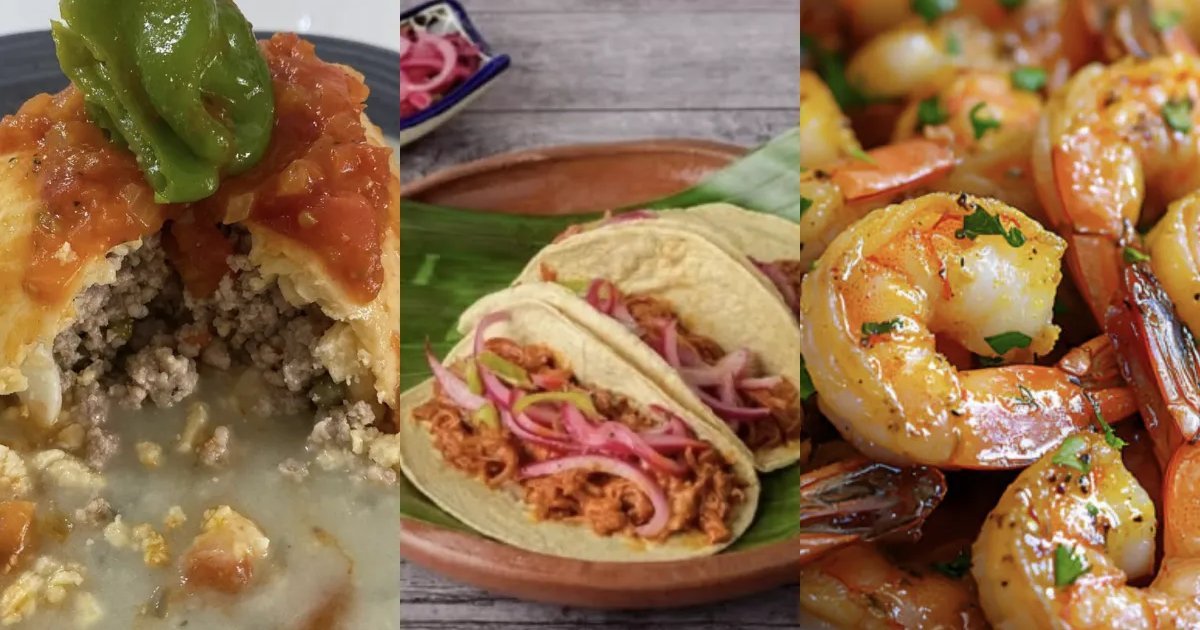
Quintana Roo — From fish grilled with achiote on the beaches of Isla Mujeres to rice and beans cooked with coconut milk in Chetumal, Quintana Roo’s food tells a more complicated story than resort buffets and tacos.
The state has now formally recognized that story by declaring Quintana Roo gastronomy part of its Intangible Cultural Heritage.
The decree, signed by Gov. Mara Lezama Espinosa on June 2 and published in the state’s official gazette on August 25, covers much more than a collection of recipes. It recognizes the traditional Maya, mestizo, coastal and Caribbean cuisines found across Quintana Roo, along with the ingredients, utensils, agricultural systems, cooking techniques and community knowledge that keep them alive.
Markets, food festivals and other social traditions connected to preparing and sharing meals are included as well.
The designation applies throughout the state’s 11 municipalities and took effect on August 26.
A cuisine shaped by jungle, sea and migration
Quintana Roo’s cooking has never belonged to just one tradition.
In the Maya communities of the state’s interior, food remains closely tied to the milpa, the agricultural system built around crops such as corn, beans, squash and chiles. Recipes and techniques have been passed between generations, often without being formally recorded.
Along the coast, fish and seafood take a larger role. One of the best-known examples is tikin xic, traditionally prepared by marinating a butterflied fish with achiote and sour orange before cooking it over fire, often with banana leaves.
In southern Quintana Roo, particularly around Chetumal, Caribbean and Belizean influences are easy to recognize. Coconut milk, rice and beans, Dutch Edam cheese and seafood appear in dishes that feel quite different from the cooking of northern Yucatán.
The state’s new gastronomic guide, Bocados de Mar y Tierra, highlights that range through foods such as tok seel, tikin xic, cantina-style ceviche with queso de bola, octopus tacos with castacán and Caribbean rice and beans. The guide follows the flavors and food traditions of Quintana Roo’s 12 tourism destinations.
By including the milpa, fishing traditions, markets and community celebrations, the decree acknowledges that culinary heritage begins well before a dish reaches a restaurant table.
What the designation is meant to accomplish
The declaration makes the preservation of Quintana Roo’s culinary heritage a matter of public and social interest.
The Institute of Culture and Arts must add the state’s gastronomy to the State Registry of Cultural Heritage within 30 business days. Tourism, education and cultural authorities are also expected to develop programs supporting documentation, research and the transfer of culinary knowledge to younger generations.
Those efforts may include recipe collections, exhibitions, educational programs, festivals and meetings involving traditional cooks, farmers, fishers, researchers and tourism businesses. The decree also calls for local communities and knowledge holders to participate rather than leaving preservation entirely to government agencies or the restaurant industry.
The goal is not simply to market local food to visitors. It is also to address the loss of traditional knowledge as eating habits change, communities grow and younger generations move away from agriculture and time-consuming cooking methods.
The official state announcement describes traditional cooks, producers and other holders of culinary knowledge as central to the preservation effort.
A local designation, not a new UNESCO award
The wording could easily cause confusion.
Quintana Roo’s cuisine has been declared cultural heritage by the state government. It has not received a separate UNESCO designation.
UNESCO added traditional Mexican cuisine to its Representative List of the Intangible Cultural Heritage of Humanity in 2010. That recognition describes Mexican cuisine as an entire cultural system combining agriculture, rituals, community participation, ancestral skills and cooking techniques, using the Michoacán tradition as its principal example. UNESCO’s designation applies to traditional Mexican cuisine nationally.
Quintana Roo’s decree builds on that precedent but operates at the state level. It creates a legal and administrative responsibility to document and promote the region’s traditions. It does not give the state ownership of recipes, prevent restaurants from preparing traditional dishes or guarantee funding for the people preserving them.
That distinction matters. A heritage declaration can create useful programs and visibility, but its value will depend on what follows the ceremony.
New state celebration added to the calendar
On August 28, state officials held a formal ceremony at the Museo Regional de la Costa Oriental in Tulum, attended by traditional cooks, chefs, restaurateurs, academics and tourism representatives.
During the event, Lezama also signed a separate decree establishing August 28 as the annual State Day of Quintana Roo Gastronomy.
The declaration arrives as the government promotes food as an increasingly important part of the state’s tourism economy. Quintana Roo now has internationally recognized fine-dining restaurants, culinary festivals and new gastronomic routes.
But the heritage being recognized did not originate in those dining rooms. It rests with the people who grow native crops, catch fish, tend bees, cook over wood fires and remember how a dish was made before it appeared on a tasting menu.
The real measure of the decree will be whether those communities receive meaningful support to keep doing it.
More Culture
- What Pluricultural Nation Day Means for Quintana Roo
- Puerto Morelos Plans Boat Procession, Altars and Contests for Mar de Almas
- Documentary Exposes 30 Years of Pollution in Cancún’s Chacmuchuch Lagoon
- Xcaret Says It Will Abide by Any Supreme Court Ruling on Use of Maya Culture
- Mérida to Host 2026 Mucbipollo Festival at San Sebastián Park
More Quintana Roo
- Maya Train’s Entire Route Gets Internet Next January
- Electoral Institute of Quintana Roo Opens 152 Jobs Paying Up to 23,000 Pesos a Month
- Maya Octopus Fishery in Quintana Roo Faces Crisis as Catches Fall and Microplastics Spread
- Morena Deputy Marybel Villegas Missed 52 of 197 Legislative Votes, Records Show
- Heavy Rains Drive Dengue Cases to 361 in Quintana Roo