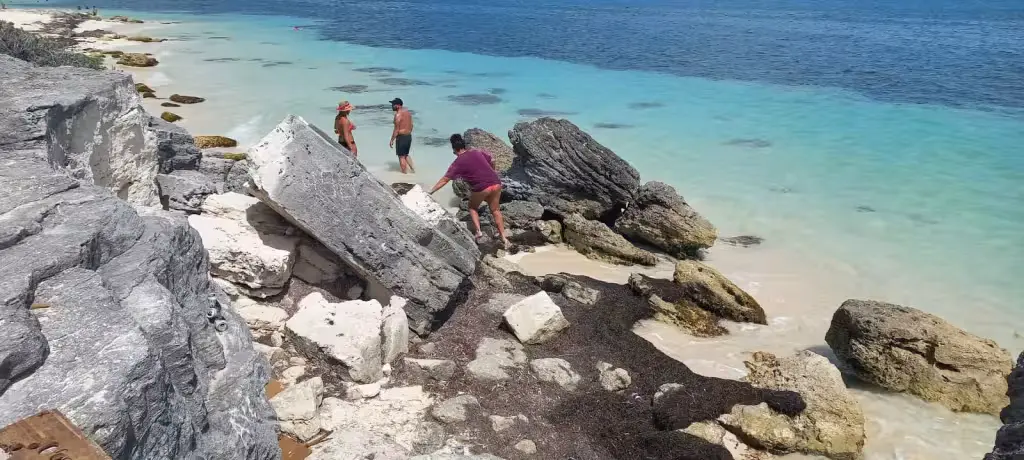
Cancún, Quintana Roo — The recovery of beaches in Quintana Roo will shift strategy, with concrete actions now expected no earlier than 2027, after the completion of a geographic atlas to precisely determine the extent of damage to the coastline, according to Esteban Amaro Mauricio, coordinator of the Sargassum and Environmental Monitoring Center.
Instead of resorting again to massive sand replenishments as an immediate measure, authorities from all three levels of government are developing a comprehensive restoration project that prioritizes rehabilitation of coastal ecosystems. However, implementation will not begin before 2027.
The initiative includes technical, environmental, and engineering studies to design a long-term strategy to combat erosion more effectively. It will also require a new Environmental Impact Statement (MIA) and the procurement of funds from federal, state, and municipal sources.
The Quintana Roo Secretariat of Ecology and Environment is working on the state’s first coastal zoning plan, a tool that will provide detailed knowledge of each beach’s conditions and facilitate future conservation and restoration efforts.
“It will be a geographic atlas, considering 18 polygons: 15 in the northern zone and three in the southern zone,” Amaro said.
The daily sargassum monitoring system covering 140 beaches in the state forms the project’s foundation, as data and indicators are collected daily to track coastal conditions.
Although erosion remains a problem for Mexico’s top tourist destination, authorities say the goal is to avoid temporary fixes and consolidate a scientifically based plan that guarantees lasting results for beaches and the coastal ecosystem.
Earlier this year, Óscar Rébora Aguilera, head of the Ecology and Environment Secretariat, announced that a comprehensive program was being prepared to halt deterioration and expand beach strips in Cancún, Puerto Morelos, Playa del Carmen, and Cozumel. He said the federal government was working to modify the Environmental Impact Statement and begin initial works in the first quarter of 2026.
Rébora noted that a valid environmental authorization exists and has been reviewed with the agency, so an expansion of the authorized polygon was requested. He acknowledged that the coasts are experiencing increasing erosion due to past construction practices on the dunes, causing various impacts.
He stressed the urgency of recovering the beaches, noting that Cancún has managed to hold on thanks to previous interventions, but warned that without timely action, the situation could worsen. The state requested that the federal environment ministry expand the authorized polygon for beach recovery and submitted complementary studies to strengthen the technical file.
The stretches included in the expansion are 12 kilometers in Cancún, 12 in Playa del Carmen, seven in Puerto Morelos, and 2.5 kilometers in Cozumel. Sand banks have already been analyzed through volumetric and bathymetric studies, and additional information was submitted for the federal authority to issue a resolution by early next year. Initial estimates put the investment at around 800 million pesos (about $40 million).
More Environment
- Cancún Orders Removal of Grounded Boats From Nichupté Lagoon
- Profepa Shuts Down Work Damaging Coastal Dune in Yucatán
- Yacht Grounded on Mahahual Reef Caused No Coral Damage, Conservationists Say
- Playa del Carmen Awaits Federal Approval to Return 20,000 Tons of Sand Recovered from Sargassum
- Playa del Carmen Councilor Questions Semarnat’s Indigenous Consultation Requirements
More Quintana Roo
- Cancún Mayor Ana Paty Peralta Says She Will Finish Her Term and Skip ‘Gino’ Segura’s Campaign
- Tren Maya Finds Reshape Understanding of the Maya ‘Collapse’
- Quintana Roo Enacts ‘Ley Nicole’ Banning Cosmetic Surgery on Minors
- Drought Crisis Forces Quintana Roo Wildlife to Seek Water Near Roads and Towns
- Quintana Roo to Add 10,000 Hotel Rooms by 2028