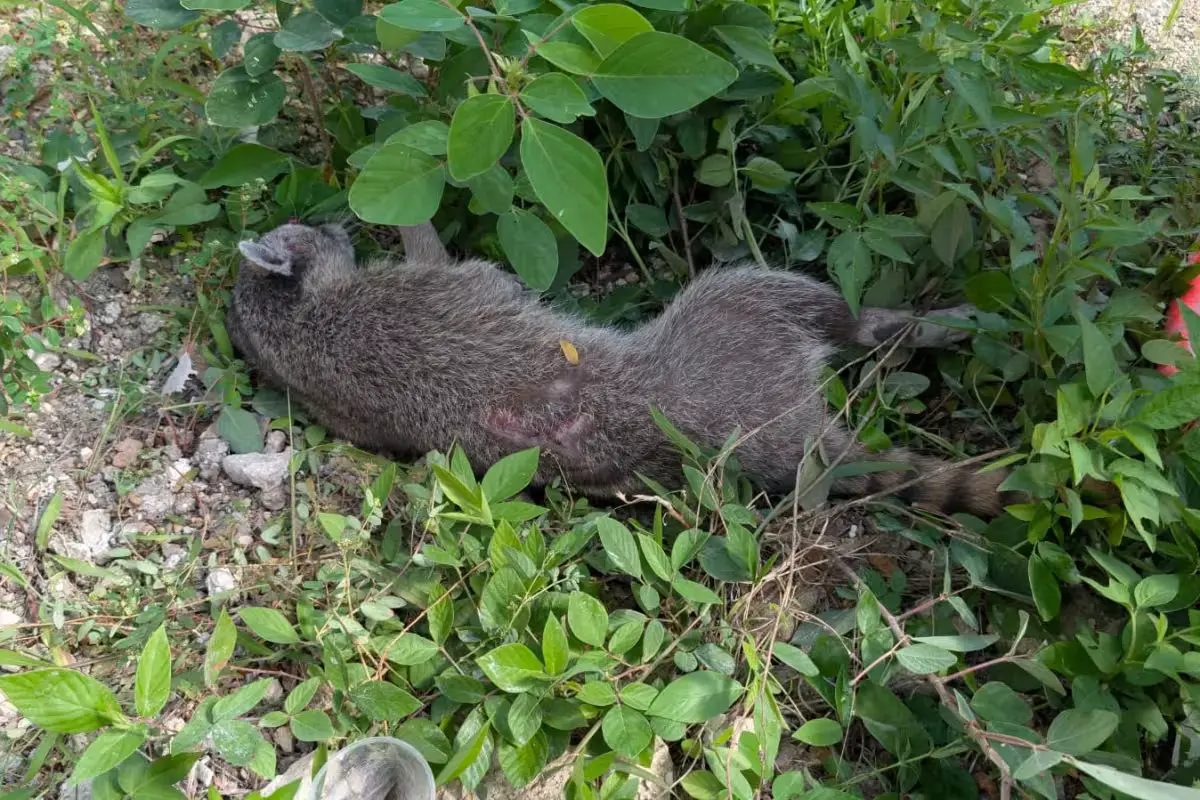
Tulum, Quintana Roo — A raccoon seriously injured after being struck by a vehicle on Kukulkan Avenue went without help for more than two hours despite repeated calls from witnesses, according to people at the scene.
The animal was hit in the morning at kilometer 3.6 of the hotel zone. Witnesses said the raccoon was still alive and they requested assistance, but no rescue workers had arrived by the time of this report.
“We’re worried it keeps suffering,” said one person who stayed with the raccoon. “It was reported more than two hours ago and no one has come. We just want some authority to rescue it before it’s too late.”
Bystanders set up an improvised barrier around the animal to protect it from being hit again. The raccoon lay motionless on the shoulder of the road with visible injuries but still showed signs of life.
The incident has raised concerns among residents and visitors because Kukulkan Avenue runs through a wildlife corridor where native species frequently cross, mainly in the early morning and at night. Environmental organizations and specialists have repeatedly warned about vehicle speeds on the road, which has seen a pattern of animal collisions.
More Environment
- Drought Crisis Forces Quintana Roo Wildlife to Seek Water Near Roads and Towns
- Dead Sea Turtle Hatchlings Found With Dog Bites at Playa del Carmen Beach
- Explorers Document New Underwater Cave System South of Cozumel
- Farm and Cattle Expansion in Quintana Roo Squeezes Native Wild Bees
- Activists Warn Playa del Carmen Real Estate Boom Is Driving Deforestation
More Tulum
- Gunmen Fire on Ride-Hailing Drivers Along Playa del Carmen-Tulum Highway
- Tulum Businessman Denounces Year-Long Extortion by Alleged Inspection Officials
- Tulum Taxi Union to Launch Xook App With Real-Time GPS Tracking
- Tulum Airport Receives US Deportation Flights Every Friday
- Tulum Delivers Free Medicines to Health Houses in Vulnerable Communities