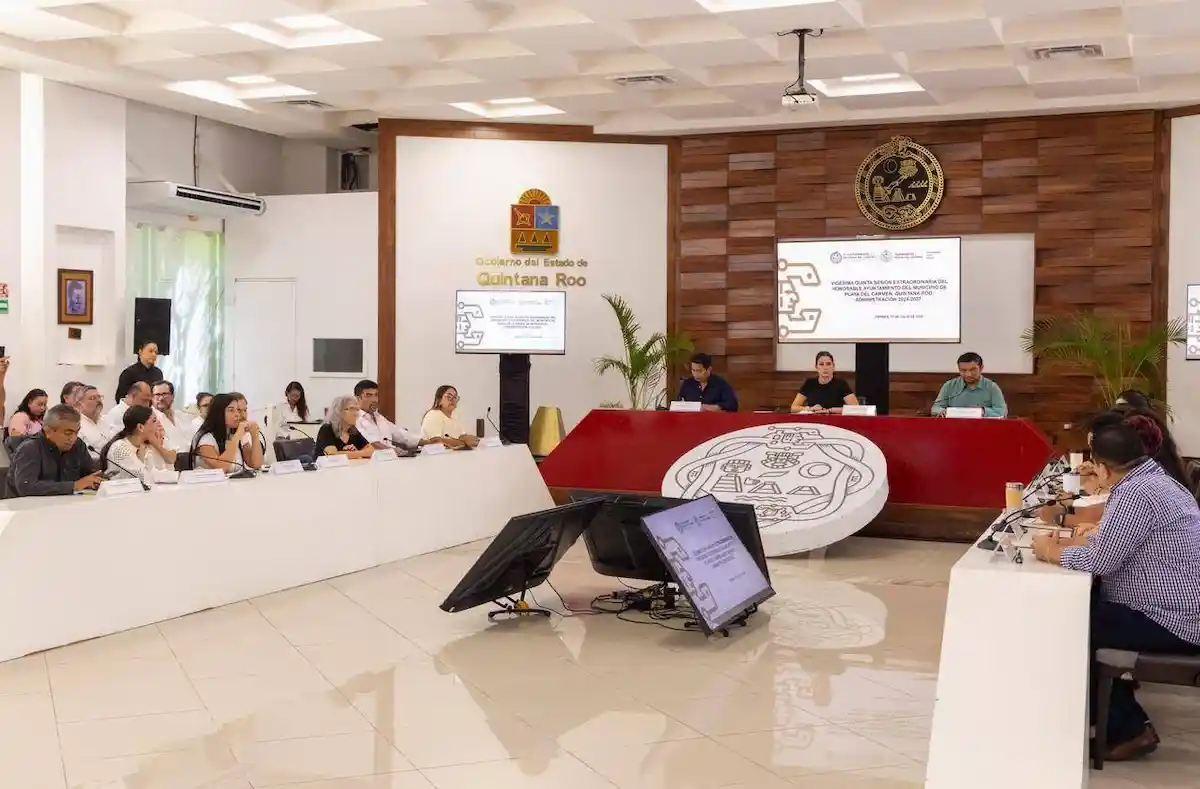
Playa del Carmen, Quintana Roo — The city council of Playa del Carmen has authorized a new short-term bank loan of up to 154 million pesos ($8.4 million) to cover the municipality’s immediate financial needs, deepening concerns about the local government’s fiscal health.
The loan, approved in an extraordinary session on July 3, brings the city’s total short-term debt to 251 million pesos, all of which must be repaid within a year. The new borrowing adds to an existing 47.6 million peso balance from a first short-term loan of 125 million pesos taken out in October 2025, and a 50 million peso advance from the state government of Quintana Roo against federal revenue sharing for this year.
Unlike the first short-term loan, which was contracted without council or public knowledge, the Mercado administration sought council approval this time. The 15 council members — both from the ruling party and the opposition — voted unanimously in favor, despite the agreement not specifying which municipal funds would guarantee repayment, whether federal revenue sharing or local resources. Mayor Estefanía Mercado did not explain the repayment guarantees or the financial situation that forced the city to borrow again.
Councilor José Luis “Chanito” Toledo Medina, before casting his approval vote, requested hearings with several municipal directors to report on the city’s financial status and the use of available resources. He called for appearances by the municipal treasurer, the director of revenue, the comptroller’s office, the director of street commerce, the urban development secretary, civil protection, the public security and transit secretary, and the Zofemat director — who oversees beachfront concessions — to ensure transparency on sargassum-related funds and federal support.
Last week, Municipal Treasurer Guillermo Brahms González stated that local revenue had dropped 30% to 40% this year, and that economic normalization was not expected until the year-end holiday season. The financial troubles stem from poor planning by the Mercado administration, which set unrealistic revenue expectations and inflated spending budgets, only to face a tourism downturn due to public security concerns and massive sargassum seaweed arrivals that created a hole in the city’s finances.
More Economy
- Mexico Extends Deadline for Electronic Customs Value Declaration to October 31
- Nacional Monte de Piedad to Reopen Chetumal Branches on October 7
- Quintana Roo Remains Far from Electronic Voting, INE Official Says
- Quintana Roo Development Agency Inherits Labor Disputes from Defunct Derimaya
- Rains and Port Restrictions Cut Cancún Nautical Tourism to 60%
More Playa del Carmen
- Playa del Carmen Takes Artisans to Guanajuato Day of the Dead Festival
- Playa del Carmen to Renew Eight Blue Flag Beach Certifications, Eyes Two More
- 20 Community Tourism Projects in Quintana Roo Seek to Formalize Their Operations
- New Power Outage Leaves Several Playa del Carmen Neighborhoods Without Electricity
- Xcaret Festival of Life and Death Returns for 20th Edition With Guanajuato as Guest State