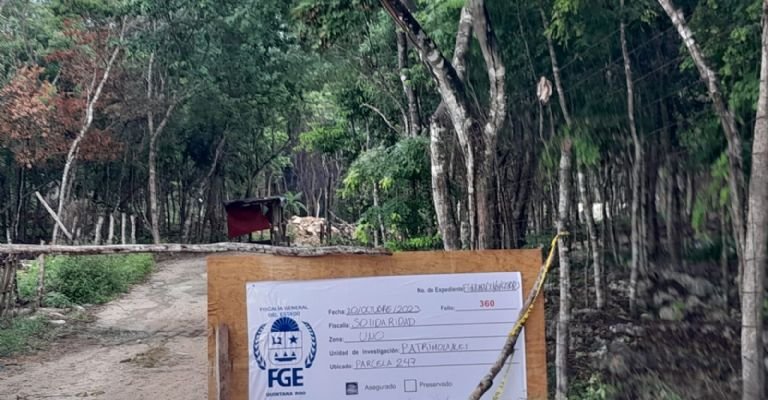
Chetumal, Quintana Roo — State authorities have identified 123 irregular urban developments and settlements across Quintana Roo, several of which are under investigation for suspected crimes including land invasion, dispossession, fraud, and the illegal sale of plots.
José Alberto Alonso Ovando, head of the state Secretariat for Sustainable Urban and Territorial Development (Sedetus), said the problem is most pronounced in Cancún, Isla Mujeres and Mahahual, where land continues to be marketed without proper legal procedures. That, he said, leaves families who buy such property without any certainty over their ownership rights.
“We have detected 123 irregular developments,” Alonso Ovando said. “There were 126, but some have already entered the regularization process. They are located in Isla Mujeres, Cancún and Mahahual, where national land has been sold illegally. There are 2,228 regular developments because we now have a state registry so that people who plan to invest can be confident they are buying property that meets all legal requirements.”
Illegal lot sales remain common across the state, Alonso Ovando said, including cases involving ejidos — communal agricultural land — where plots designated for common use are being offered for sale. Leaders of those communities have asked the government to investigate and take action against those responsible for possible illegal transactions.
Not all irregular settlements are in the same situation, he added. The state is working with the National Institute for Sustainable Land (Insus) to regularize neighborhoods built on land belonging to both state and federal governments.
“We see different types of problems regarding legal certainty over land,” Alonso Ovando said. “From north to south, we have national land that has been occupied irregularly, and the federal government is already taking action. There are also ejidos that have sold common-use plots, and Insus is carrying out a regularization process for several of them, as well as for neighborhoods established on state property.”
For communities settled on privately owned land, the official said regularization can be achieved through agreements with the legitimate owners. The main objective, he said, is to improve the quality of life for the people occupying these areas.
More Development
- Cozumel Boardwalk Renovation to Keep Historic Features and Traffic Flowing
- Quintana Roo Hoteliers Push Regenerative Tourism Amid Beach Access Disputes
- Cancún’s Route 17 Leona Vicario Draws More Than 16,000 Riders on First Free Day
- Quintana Roo Beaches Lose Up to 14 Meters of Sand a Year as Restoration Plan Advances
- Meliá Invests €50 Million in Paradisus Cancún Renovation
More Cancun
- Hells Angels Leader Arrested in Cancun Over Cartel Drug Trade
- Tourist Boat Traffic Slumps Across Quintana Roo Ports in September
- Cancún Waives 100% of Fines and Surcharges to Help Businesses Get Licensed
- Puerto Morelos Mayor Says Cancún Mansion Raided by Federal Agents Was ‘Lent’ to Her
- Mothers Keep Up Protest at Cancún Middle School Over Alleged Attack on Student