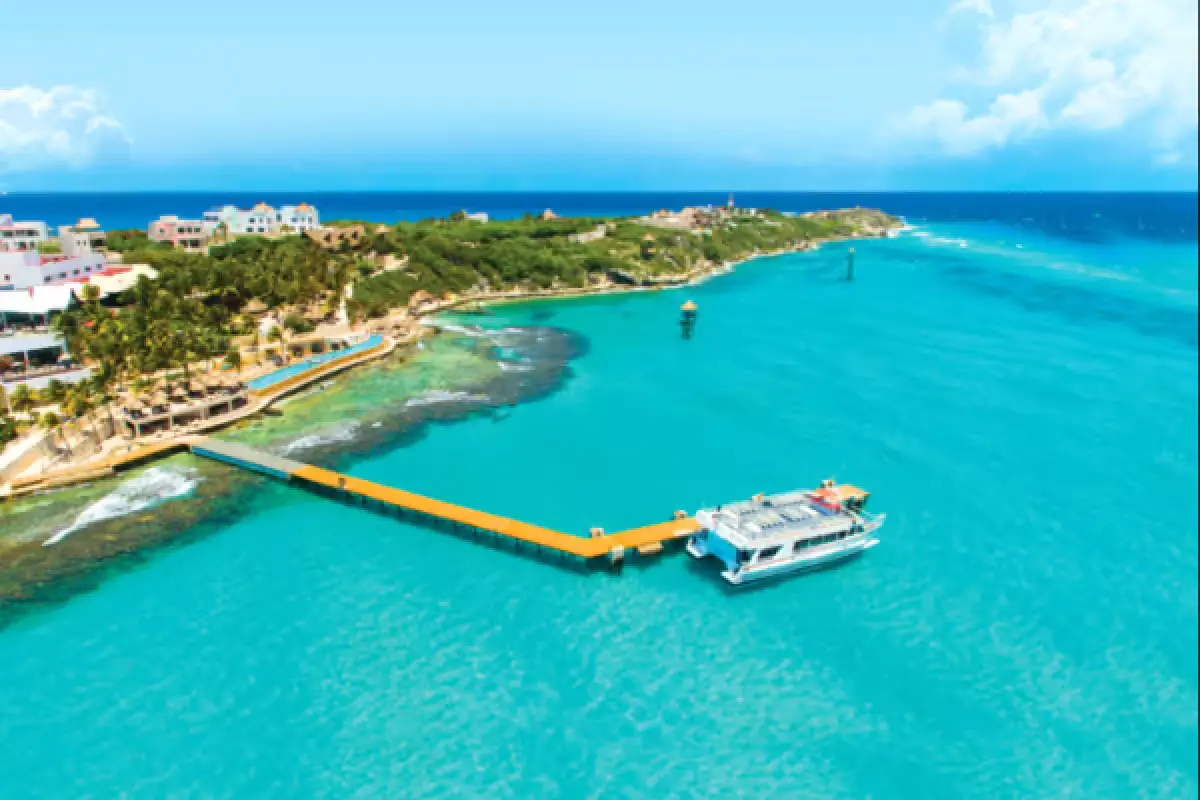
Isla Mujeres, Quintana Roo — The municipal government is expected to collect about 12 million pesos this year from the operator of Garrafón park, but community representatives say the funds have been managed without public scrutiny and are demanding that part of the money go toward repairing worn sidewalks and curbs on the southern end of the island.
Jorge Baas, one of the residents pushing for disclosure, asked the city government to publish an accounting of the revenue and its spending. He recalled that when the park’s operation was handed to the private sector in 1998 through Grupo Xcaret, authorities promised regular reports. Under that agreement, the company paid $16,000 a month in the first year with a 5% annual increase, Baas said. No subsequent administration, he said, has provided a public breakdown of how the money was used.
The arrangement eventually became a major income source for the municipality, in contrast with earlier periods when the site was operated directly by the city and generated little revenue while falling into disrepair.
With the current operating deal set to expire and negotiations expected in 2027 to renew it for another 30 years through a trust, Baas said it is essential to know when maintenance of the property will begin. Under the existing contract, the park must be handed back in good condition before the term ends.
Bartolo Gómez, who represents a business near the park, said the facilities are currently in acceptable shape. Gómez, who occasionally visits on Sundays when the park is free and recommends it to acquaintances from other cities, suggested the annual payment increase, set at 5%, could be raised to 7% — particularly in light of swings in the dollar-peso exchange rate.
Eréndira López, another community representative, said this year’s revenues should help pay for new sidewalks and curbs, which she described as a safety hazard for pedestrians, especially tourists. She said the need has grown as tourism activity expands and a luxury hotel has operated nearby for the past two years.
The municipal treasury was earning around $54,000 monthly from the park through 2024, according to estimates cited in the discussion, and revenue could reach $65,000 a month by 2027 — roughly 1.3 million pesos per month, depending on exchange rates.
The park’s chief attraction, a coral reef, has recovered well after restoration and transplanting work eight years ago. The reef was damaged by Hurricane Wilma, according to the National Commission of Natural Protected Areas (CONANP). “The corals have recovered very well in recent years,” said the specialized team in charge of reef maintenance for the company that operates the park.
More Government
- Puerto Morelos launches weekly sargassum watch until 2026
- Why Mexico’s Treason Charge Over a U.S. Raid Matters
- Hells Angels Leader Arrested in Cancun Over Cartel Drug Trade
- Mexico’s Lower House Approves ‘Anti-Meme’ Law as Opposition Warns Over Free Speech
- Senate to Review Legality of IMSS Changes to Modality 40 Pension Scheme