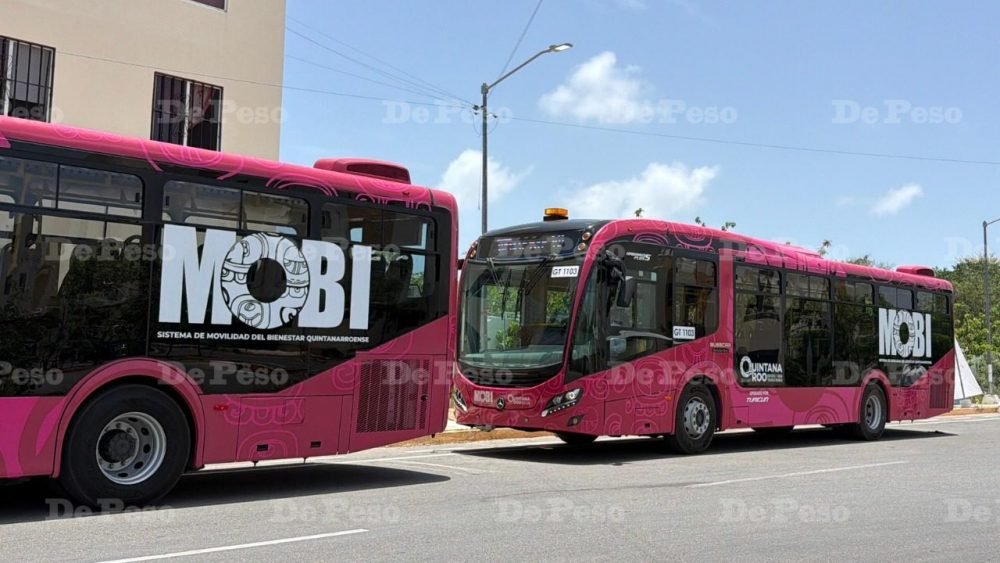
Cancun, Quintana Roo — The MOBI Route 27 bus service began operations Friday, becoming the first official urban public transit route to use the new Nichupté Bridge.
The service is in a pilot phase, offering free rides for the next two weeks. During this period, the Quintana Roo Mobility Institute (Imoveqroo) will evaluate actual travel times to set the fare for formal operations.
The 64-kilometer route connects key areas of the city, starting at Cielo Nuevo, passing through Prado Norte, Villas Otoch Paraíso, López Portillo Avenue, Nichupté Avenue, Gran Plaza, and Kabah Avenue, before crossing the Nichupté Bridge toward the Hotel Zone.
Authorities said the new service will directly benefit more than 150,000 residents, serving 155 neighborhoods in Cancun and providing a new mobility option for workers, students, and daily commuters between the city and the tourist corridor.
Juan Noya Callejo, director general of Turicun, said the company invested nearly 100 million pesos to acquire 38 buses, with 32 units operating in the initial stage.
After crossing the 11-kilometer Nichupté Bridge, buses will continue through the Hotel Zone to the Hard Rock hotel, then return to the city center, making their final stop at Plaza Caracol before heading back to Cielo Nuevo.
The system plans to gradually introduce digital payments via smart card, mobile app, and later, bank cards.
More Lifestyle
- Jazz Festival Organizors Announce New Live-Music Club in Playa del Carmen
- US Woman Filmed Insulting Taquería Orinoco Staff in Mexico City (Video)
- AI Could Leave Indigenous Communities Behind, Mexico Warns
- Mexico City’s 32-Meter Catrina Aims for Guinness World Record
- Quintana Roo Expands Free Mental Health Care Network Across the State