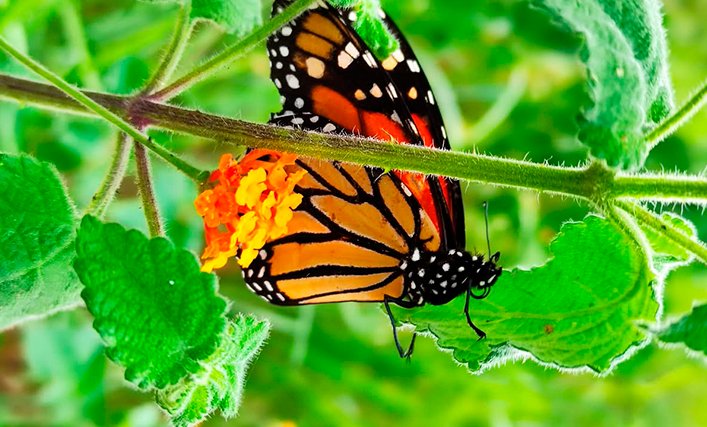
Cancún, Quintana Roo — Monarch butterflies, long considered mere seasonal visitors to Mexico’s Caribbean coast, are now breeding in Quintana Roo, according to research by the environmental group Alas Mayas. The finding could turn the region into one of the species’ most important refuges.
Cecilia Álvarez, head of environmental education at Alas Mayas, said seven years of monitoring confirmed that monarchs complete their entire life cycle in the area, from egg to adult butterfly. The results are supported by a scientific study published in 2023 by Dr. Cristina Muñoz.
Unlike the monarchs that follow the traditional migration to central Mexico’s temperate forests, this population follows a different route. It departs from Florida, crosses Cuba, and enters Mexico through the Yucatán Peninsula, according to Álvarez.
Alas Mayas is now mapping the sites where monarchs gather and reproduce in hopes of identifying areas that could become sanctuaries or receive some form of protection. “First we must know where they are, and then protect those spaces,” Álvarez said.
The project relies on citizen participation through the iNaturalist platform and the organization’s social media channels. More than 200 people have already reported sightings in places such as the Nichupté mangroves, Holbox, Isla Mujeres, Cozumel, and other areas of the peninsula.
On Isla Mujeres, the impact is already measurable. On April 11, 2026, the municipal Monarca Committee conducted its first formal bio-registration, counting 75 caterpillars, 15 chrysalises, 5 eggs, and 2 adult butterflies.
Beyond habitat protection, Alas Mayas is promoting gardens with native plants to support monarch butterflies and other pollinators. The organization urges the public to photograph and log every sighting, saying citizen involvement will be key to establishing the Mexican Caribbean as a priority conservation site for the emblematic species.
More Environment
- Pacific Tropical Depression Forecast to Become Hurricane Polo, Possibly Category 3
- Isla Contoy Cleanup Removes 249 Kilos of Waste From Marine Park
- Cancún Ranks Second in Mexico for Food Waste as Residents Discard 260 Grams Daily
- Quintana Roo Reports 33 New Dengue Cases, Reinforces Prevention Efforts
- Tropical Wave 40 Lashes Quintana Roo, Toppling CFE Pole and Cutting Power in Cancún
More Cozumel
- Marc Dubrick Dominates Ironman 70.3 Cozumel, Wins Wire-to-Wire
- Cozumel Opens Applications for 2027 Carnival Kings and Queens
- Tulum Tour Guides Pin Recovery Hopes on Cruise Ships and Year-End Holidays
- Cozumel Opens Registration for Day of the Dead Catrina Costume Contest
- Cozumel to Welcome More Than 2,500 Triathletes for Ironman 70.3