
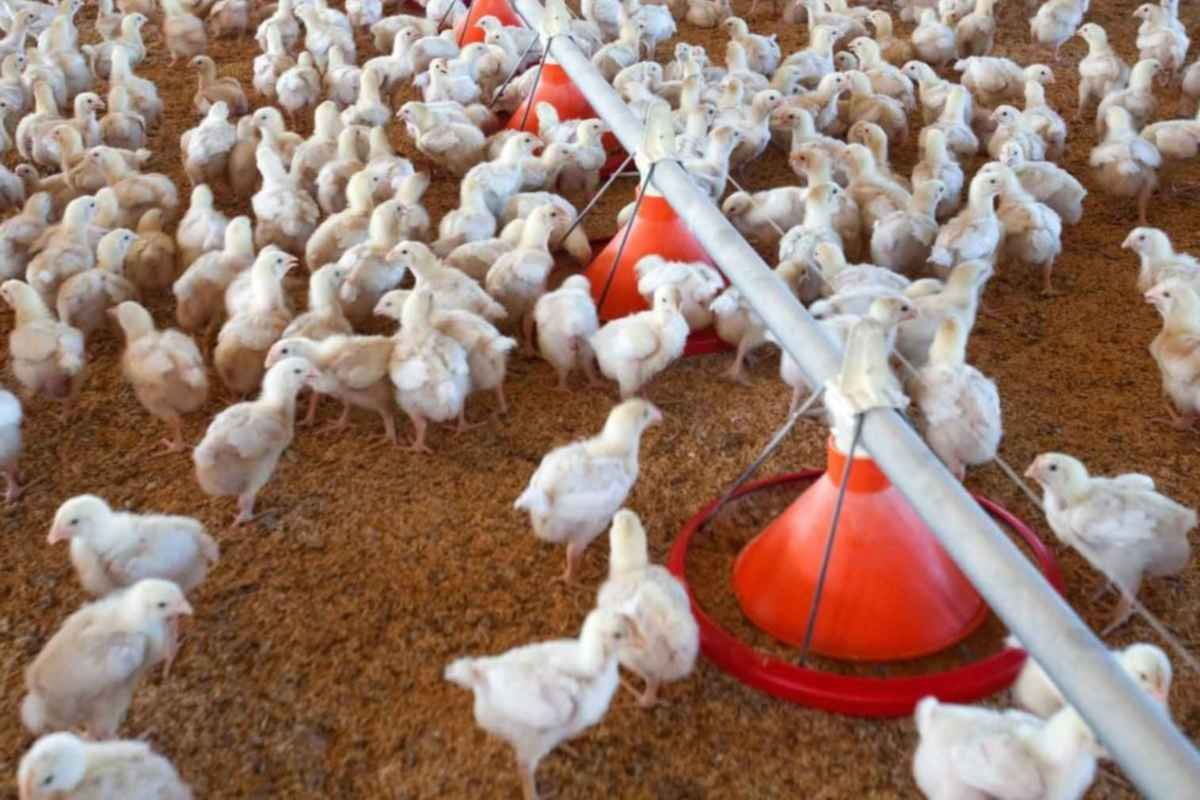
Umán, Yucatán — Mexico’s Agriculture Ministry has confirmed a case of highly pathogenic H5N1 avian influenza at a commercial table-egg farm in Umán, Yucatán, where 862 birds died unexpectedly out of a flock of 225,860. Health authorities have activated international protocols to contain the virus and rule out its spread to other production sites.
The National Service for Agrifood Health, Safety and Quality (Senasica) confirmed the case in less than 24 hours after receiving a report from the farm’s veterinarian, the ministry said. Official personnel went to the site to collect samples under strict biosecurity measures, and those samples tested positive for the H5 subtype at the Level 2 Biosafety Laboratory in Mérida.
The samples were then sent to the Level 3 Biosafety Laboratory of the Mexico-U.S. Commission for the Prevention of Foot-and-Mouth Disease and Other Exotic Animal Diseases (CPA) in Palo Alto, Mexico City, where further isolation and genetic sequencing tests will be carried out.
The affected farm accounts for 0.09 percent of Mexico’s national poultry inventory, according to the ministry, which said the outbreak does not threaten market supply or the national availability of eggs and chicken. It said both remain completely safe to eat.
Quarantine and 10-kilometer perimeter
As part of containment efforts, CPA-Senasica specialists established a 10-kilometer risk perimeter around the site and placed the farm under definitive quarantine. Authorities ordered the total depopulation of the birds, the sanitary disposal of the carcasses and the destruction of contaminated waste and materials, along with cleaning and disinfection of the facilities.
Once the sanitary downtime period ends, sentinel birds will be introduced to verify the virus is no longer present before the farm is allowed to restock.
In the meantime, CPA technicians are taking samples at every broiler, commercial laying and breeding operation inside the perimeter to determine whether other farms are affected. Based on those results, Senasica’s General Directorate of Animal Health will assess whether to authorize an emergency vaccination campaign for birds at farms near the infected site.
Search for the source
Investigators are also trying to establish how the infection began. Authorities are inspecting bodies of water near the farm, where migratory wild birds from the northern part of the continent typically arrive during the winter season.
A team of wildlife epidemiological surveillance specialists will arrive in the coming days to carry out a targeted, systematic search for cases among free-ranging birds and determine whether the source of infection is linked to infected migratory species.
With the winter season under way, the ministry said it will step up epidemiological surveillance across the country and urged poultry producers to strengthen biosecurity measures at their facilities and to report any suspected case immediately.
Reports can be made to Senasica by calling 800 751 2100, messaging WhatsApp at 55 3996 4462 or emailing gestioncpa.dgsa@senasica.gob.mx.
More Environment
- Firms Pursue Battery Storage Plant in Playa del Carmen Despite Semarnat Rejection
- Aguakan Invests 7 Million Pesos in New Sewer Line in Puerto Morelos
- Aquaponics Arrives in Quintana Roo With First Agrotourism Farm in the Riviera Maya
- Quintana Roo Promotes Underwater Tourism at DEMA Show 2026 in New Orleans
- Peccary Struck by Vehicle on Cozumel Road Prompts Call for Wildlife Warning Signs