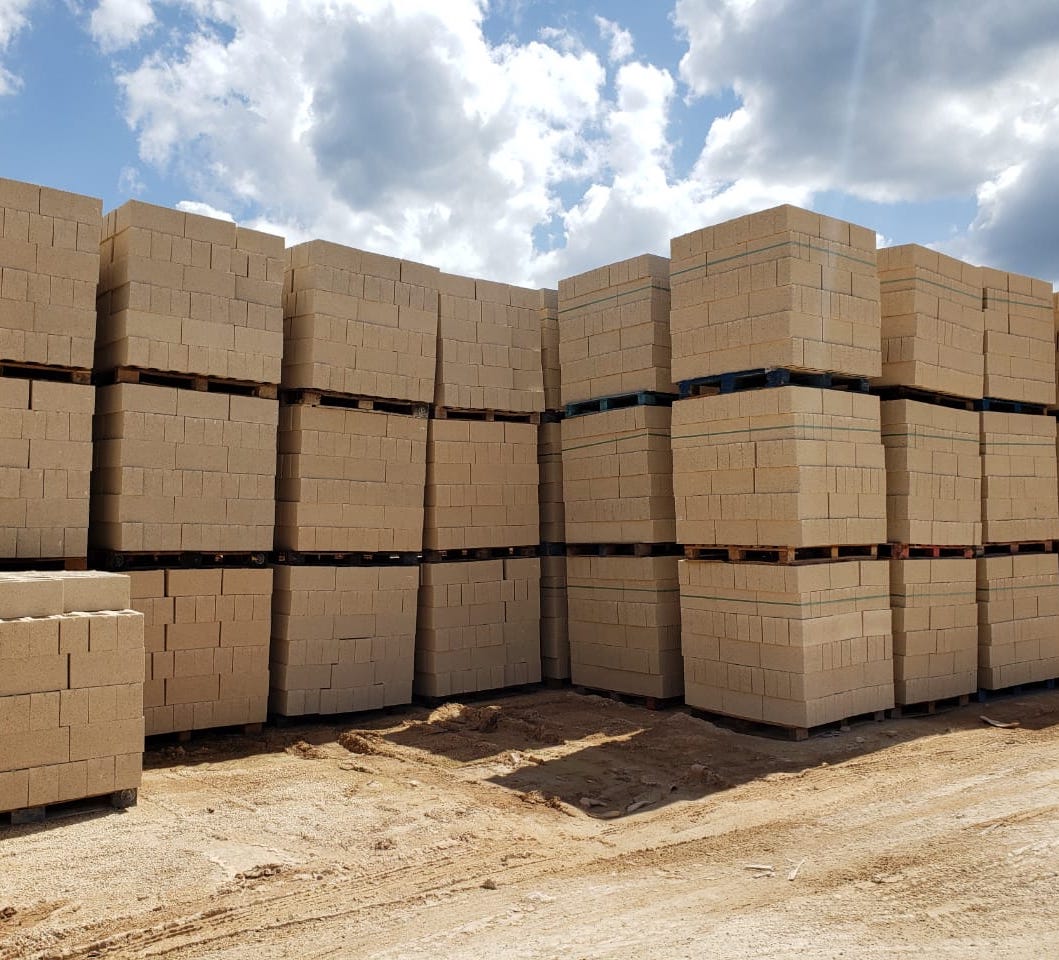
Mexico City — Mexico’s Ministry of Infrastructure, Communications and Transport (SICT) has confirmed it is testing the use of sargassum to produce fibers for manufacturing paving stones and other construction materials as part of a circular economy strategy in Quintana Roo.
During Wednesday’s morning press conference, SICT head Jesús Esteva Medina announced official trials to transform the seaweed into fibers for paving stones destined for sidewalks. The resulting material, commercially known as “sargacreto,” is a concrete mix incorporating sargassum that aims to turn the natural waste into infrastructure products.
The initiative focuses on urban and road infrastructure in Quintana Roo, including sidewalks and curbs. The technology will be formally incorporated into modernization projects, such as the Cancún-Isla Blanca highway segment.
The approach converts a biological waste into a construction input, reducing the extraction of traditional materials and lowering costs associated with sargassum disposal.
Comprehensive Sargassum Strategy
The government of Quintana Roo, led by Governor Mara Lezama Espinosa, is implementing a comprehensive strategy to address sargassum, structured in four phases: early warning monitoring, maritime containment, operational beach response, and sustainable valorization of the seaweed.
Key actions include the installation of over 16,000 meters of anti-sargassum maritime barriers at strategic points such as Mahahual, Puerto Morelos, and Playa del Carmen. In coordination with the Mexican Navy (Semar) and the Ministry of Environment and Natural Resources (Semarnat), authorities announced the addition of a new specialized ocean vessel that will begin operations in July 2026. The ship will be twice the size of the Natans vessel and triple the collection capacity in open water.
Currently, 11 coastal sargassum collection boats and various smaller vessels equipped with collection systems operate permanently. The Ministry of Ecology and Environment (SEMA) maintains worker brigades in six affected municipalities to manually remove the algae. In coordination with the Federal Maritime Terrestrial Zone (Zofemat), mechanical sweepers, sand sifters, and low-impact tractors are used to prevent beach erosion.
Quintana Roo operates a monitoring system backed by technology from the European Space Agency, which forecasts the trajectory and volume of sargassum several days in advance. The Sargassum Traffic Light is updated daily to guide tourists and cleanup crews to the most affected areas.
The state government is promoting the Comprehensive Center for Circular Economy of Sargassum (CISEC), which aims to produce clean energy and biofuels from the seaweed. It is also developing the Circular Economy Development Pole for Well-being (PODECIBI), which seeks to encourage private companies and scientific institutions to industrially exploit sargassum, including the manufacture of construction materials.
More Business
- Mexico’s New Digital Law: What Happens to Cash?
- Cancún–Isla Mujeres Boat Cooperatives Sink Under Heavy Losses as Only 20 of 130 Vessels Stay Active
- Vacation Rental Host Confronts Visitax Charge at Cancún Airport
- Quintana Roo Grants Tax Breaks to Mototaxi Operators
- AMEXME Riviera Maya Holds First General Assembly of Members in Playa del Carmen
More Quintana Roo
- Quintana Roo Human Rights Commission Closes 930 Complaints With Only 13 Recommendations
- Experts Warn of Climate Crisis in Mexican Caribbean, Urge Urgent Action
- Quintana Roo Exports Plunge 75.1% in Second Quarter, Ranking Last Nationally
- Quintana Roo Builders Pin 2026 Hopes on Public Works
- Hells Angels Arrest in Cancún: Mexico’s Cartel Link?