
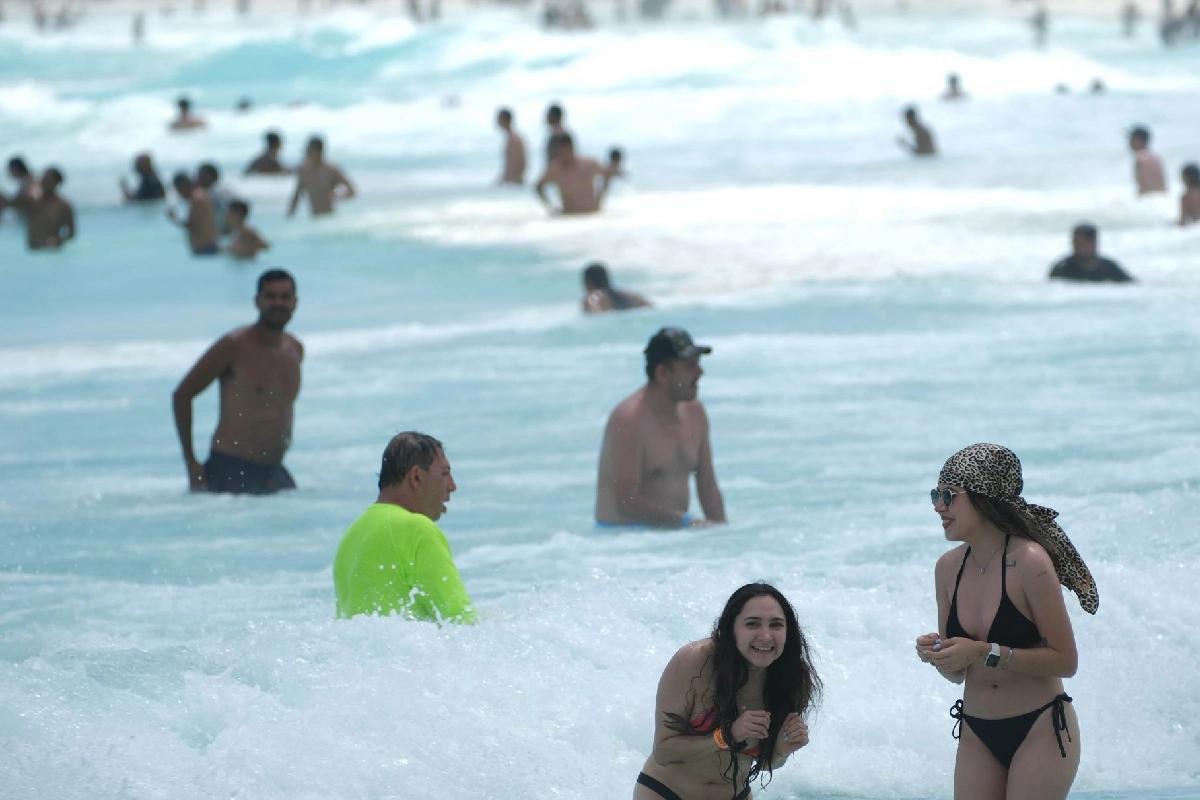
Cancún, Quintana Roo — Hotel occupancy across Quintana Roo’s nine tourist destinations averaged 60% during the 2026 summer season, below the 69% reached in 2025 and far short of what the industry expected. The decline was even more pronounced than in summer 2025, a season already viewed as moderate.
Tourism officials and industry representatives attribute the fall to shifts in global travel patterns, the international economic outlook, higher air fares and the recurring arrival of sargassum on Caribbean beaches.
The slowdown predates this year. Figures from Situr, the tourism information system managed by the Quintana Roo Tourism Secretariat (Sedetur), show tourism fell 4.1% from January to August 2025 compared with the same period in 2024, while passenger traffic contracted 3.2%.
Quintana Roo has 1,481 hotels and 140,760 rooms. Playa del Carmen accounts for 34% of those rooms, or 47,639; Cancún has a similar share, 47,386, closely followed by Isla Mujeres with 10%, Tulum 8%, Puerto Morelos 6%, Cozumel 3%, Lázaro Cárdenas 2%, Chetumal 2% and Bacalar 1%.
Occupancy slid through the holiday period
In the week just before the summer holiday period began, July 11-17, average occupancy stood at 61.7%, with 411,866 tourists and 1,701 flights arriving at the state’s four international airports: Chetumal, Cozumel, Tulum and Cancún. Those airports connect the state with 99 foreign cities, including eight in Canada, 37 in the United States, 14 in Latin America and 18 in Europe.
During the first week of the holidays, in late July, occupancy rose to an average 67%. The state welcomed 449,758 tourists; 35.8% came from the United States, 32% from elsewhere in Mexico and 16.3% from Canada. A total of 1,717 flights arrived, most at Cancún’s airport.
In the first week of August, the summer trend turned. Average occupancy fell to 63.5%, with Cancún at 67.6% and Tulum reporting the lowest rate among resort destinations at 52%. The week brought 428,045 tourists and 1,629 flight arrivals.
Between Aug. 8 and Aug. 14, occupancy slipped to 58.4% and flight arrivals dropped to 1,510. In the penultimate week, Aug. 15-21, occupancy fell again to 56.1%, with 1,417 flights arriving. U.S. visitors remained the largest segment at 36.8%.
Occupancy in the final summer week stood at 55%, 12 percentage points below the level recorded at the start of the holiday period, with 368,000 tourists and 1,381 flights arriving. That left the season’s average at 60%. Cancún International Airport logged some days with as few as 166 arrivals but peaked in late July at 252 flights in one day. By the first week of September, occupancy had fallen to 45.8%.
Tourism secretary calls season ‘complicated’
Bernardo Cueto Riestra, Quintana Roo’s tourism secretary, described the summer as “atypical and complicated.” He cited rising jet fuel prices as a factor pushing airlines to adjust their route strategies. “We have had airline failures such as Spirit, which caused us to lose 140,000 airline seats, and Magnicharters,” he said.
The summer posed “many challenges and many difficulties” for the Mexican Caribbean, Cueto said, including global and economic pressures such as the strength of the peso against the dollar, higher fuel costs, airline closures and sargassum. He said he expects better occupancy and tourism arrivals in November and December and plans to use September and October for promotional campaigns and sporting, cultural and convention events. He added that the state, with the federal government, is working to get airlines to restore routes.
Tulum hoteliers warn of a long low season
In Tulum, one of the destinations hit hardest over the summer, David Ortiz Mena, president of the local hotels association, said the season was atypical and below last year’s levels. Occupancy averaged 40% at all-inclusive properties and no more than 20% at hotels operating on the European Plan, where meals are not included in the room rate.
“It is a very difficult situation, and the exchange rate does not favor us,” he said. “These are the months when we have to confront sargassum, which entails a significant investment, so the hotel sector is making a major effort to sustain employment and attend to beach cleaning.”
Ortiz Mena said the low season in Tulum began in May and will not end until October, making it even harder to sustain occupancy levels. He warned that coastal hotels are turning to seasonal operations, a move he described as “serious for employment.”
More Economy
- Playa del Carmen Taps HR Directors to Boost Local Hiring
- Mexico Hoteliers Warn of 1.1 Million Air Tourist Loss as U.S. Arrivals Slump
- Cancún’s Route 17 Leona Vicario Draws More Than 16,000 Riders on First Free Day
- FIRA Issues Mexico’s First Biodiversity Bond Worth Over 1.6 Billion Pesos
- Aeromexico Eyes New U.S. Routes After Mexico City Limits End
More Quintana Roo
- Quintana Roo Tops 152,000 Metric Tons of Sargassum as Playa del Carmen and Cancún Lead
- Court Gives Profepa 72 Hours to Clarify Tren Maya Closure Order
- Quintana Roo Beaches Lose Up to 14 Meters of Sand a Year as Restoration Plan Advances
- Quintana Roo Youth Sailors Join Mexico’s Team for Optimist Championship in Uruguay
- Mara Lezama Hands Out 100 Sewing Machines in Chetumal to Boost Women’s Self-Employment