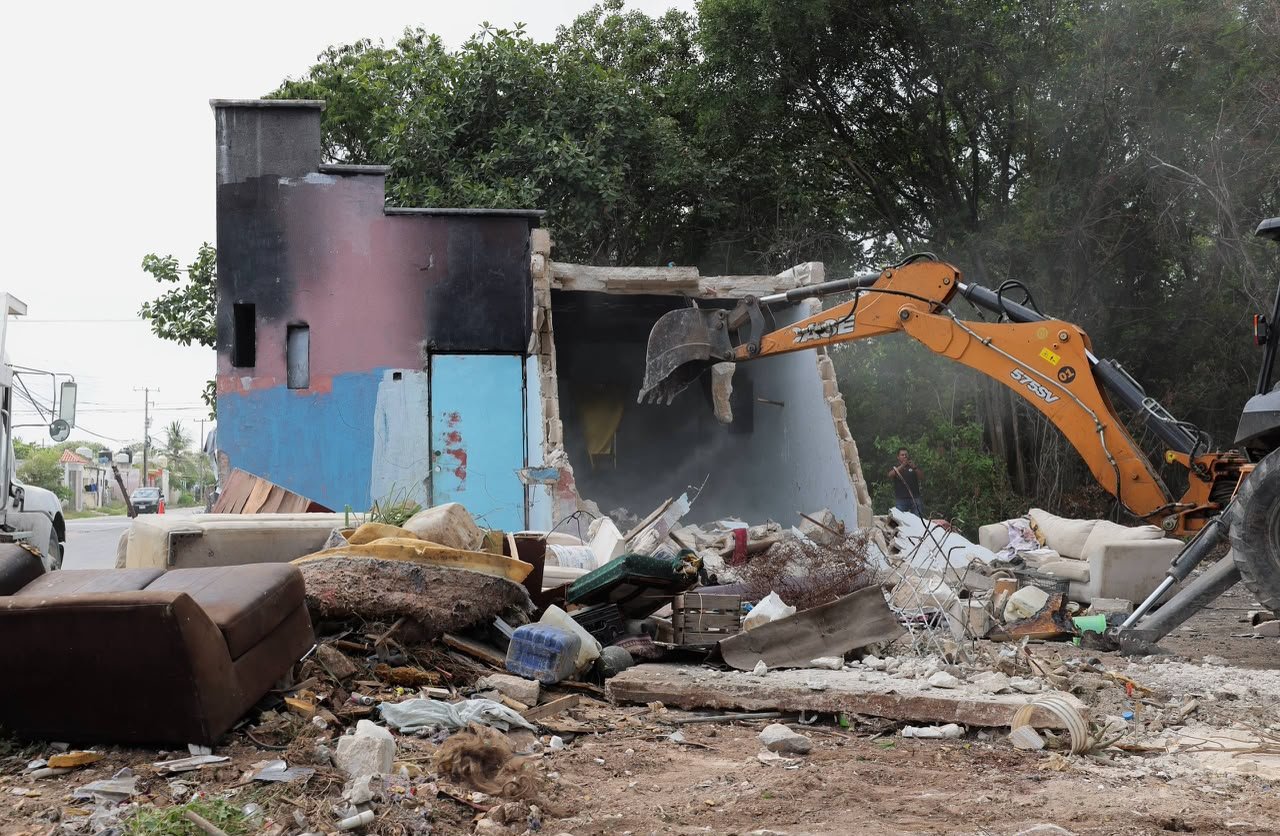
Cancún, Quintana Roo — About 78 tons of trash have been cleared from two illegal dumping sites in Cancún’s Supermanzana 212 and 254 neighborhoods.
The cleanup, conducted by SIRESOL, the city’s solid-waste program, removed 75 tons of mattresses, furniture, wood, plastics, construction debris and other household items from a site on Flamingos Street in Supermanzana 212. Workers used a backhoe and two dump trucks for the job.
An additional three tons were taken from a second site in Supermanzana 254. Crews also began cleaning an abandoned building on a vacant lot there, which residents said had become a spot for dumping and burning trash and had attracted people responsible for security problems.
In the same neighborhood, 38 workers from the municipal Parks and Gardens Department cleaned a park and a multi-use court, pruned trees and swept sidewalks and medians.
Residents also asked officials to restore an urban cenote that had been used as a waste dump, while in nearby Supermanzana 233 a 10-person team cleared three absorption wells using specialized equipment.
The city said the work responds to citizen reports about garbage and urban maintenance, with the goal of eliminating trash hotspots and improving public spaces.
More Environment
- Activists File Complaints Over Heavy Machinery on Cancún’s Playa Delfines Dune
- Semarnat Denies Permit for Beach Restoration Project in Puerto Morelos
- Cancún Hoteliers Push to Reactivate Beach Recovery Trust
- Experts Warn of Climate Crisis in Mexican Caribbean, Urge Urgent Action
- Scientists Say Sargassum Must Be Stopped in the Atlantic, Not on Cancún’s Beaches
More Cancun
- Same-Sex Couples in Cancún Face Hurdles Certifying Concubinage
- Cancún–Isla Mujeres Boat Cooperatives Sink Under Heavy Losses as Only 20 of 130 Vessels Stay Active
- Vacation Rental Host Confronts Visitax Charge at Cancún Airport
- Graffiti Artists Erase Cancún’s ‘Wall of Corrupt Politicians’ as Activists Prepared to Restore It
- Cancún Named World’s Most Active City in World Wellness Weekend 2026