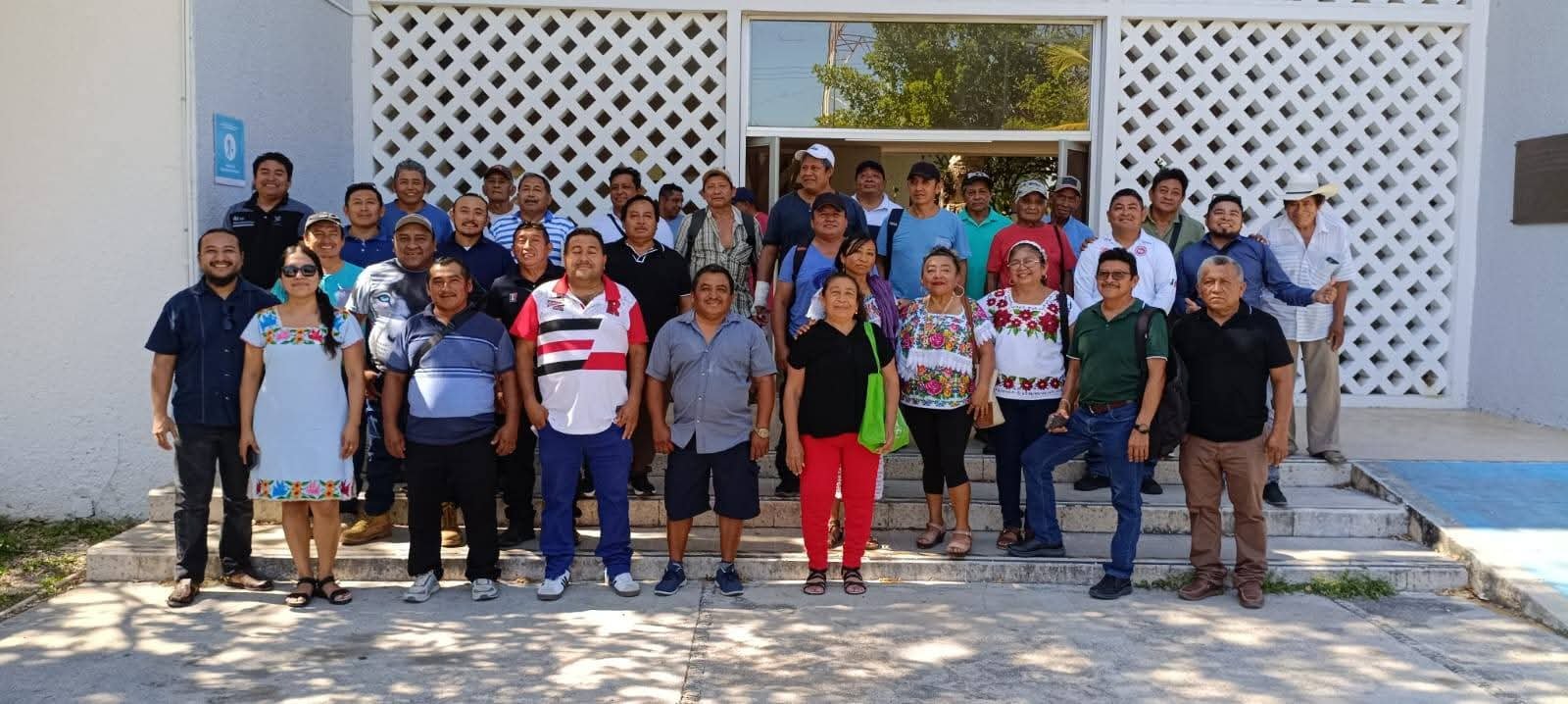
Mérida, Yucatán — Members of the Indigenous Government Council of Pisté, along with ejido authorities and the Indigenous Struggle Committee of Telchaquillo, participated in the first formal dialogue table to resolve conflicts at the Chichén Itzá and Mayapán archaeological sites. The meeting took place behind closed doors at the Yucatán center of the National Institute of Anthropology and History (INAH), with officials from four federal agencies in attendance.
According to a statement from the group “Communities for Autonomy,” the communities requested entry to the Chichén Itzá archaeological zone through the Tourist Stop and the Visitor Attention Center (CATVI), but no proposal was made to reopen Mayapán.
The communities expressed frustration with the lack of transparency from the INAH Yucatán center, which has not released any information about the meeting.
During the dialogue, community representatives told INAH Yucatán director Joel Omar Vázquez Herrera: “On the part of the communities, we remain somewhat incredulous due to the repeated way we have been treated — promising and not fulfilling — but we are willing to continue the dialogue.”
The communities of Pisté and Telchaquillo announced that the first formal dialogue table was held on April 29 with INAH, the National Institute of Indigenous Peoples (INPI), the Agrarian Prosecutor’s Office (PA), and the Ministry of the Interior (Segob).
“This is a great achievement for the communities, the result of much organization, after several years of requesting formal and serious dialogues,” the statement read. “With this meeting, we reaffirm what we have said through all media: that the communities have a firm will to dialogue to reach agreements that benefit the majority of the residents.”
Following the initial talks on April 15, representatives from Pisté and Telchaquillo traveled to Mexico City to pressure institutions and hold meetings.
First Results
As a result of the dialogue table, INAH recognized the communities as subjects of public law with legal personality and their own assets. It also legitimized their community representations: for Pisté, the Indigenous Government Council as community authority; for Telchaquillo, the agrarian authority and the Indigenous Struggle Committee as legitimate representatives with legal capacity to sign agreements with INAH.
Both representations are now responsible for continuing dialogues to build agreements that will resolve the respective issues.
The joint and organized force of the communities has advanced these dialogue tables, and the topics decided by the respective assemblies are now on the table: co-administration and a request for retroactive payment for the use and occupation of Mayapán.
In the case of Pisté, the communities demand that the traditional entrance to the site not be closed, that artisans not be evicted, and that at least 50% of tour operators pass through the traditional entrance.
More Business
- 40-Hour Workweek in 2027 Will Speed Up Robots and AI in Hotels, IMEF Says
- Mexico’s Supreme Court Blocks Telmex Bid for Automatic Pay TV Access
- Mexico and EU Bring Modernized Global Agreement to Congress as Senate Ratification Looms
- Lawmakers Propose One Tree Every 15 Meters in New Quintana Roo Developments
- Moody’s Warns Mexico Faces Negative Fiscal Trend on Rising Debt and Weak Growth