
Playa del Carmen, Quintana Roo — A recent ruling by Mexico’s Suprema Corte de Justicia de la Nación involving Grupo Xcaret is being seen as a partial victory for Indigenous rights—but one that stops short of resolving the broader issue of how Maya culture is used in the region’s tourism industry.
The case centers on the use of Maya cultural expressions, imagery, and identity within Xcaret’s parks and experiences—elements that critics say have been incorporated into commercial tourism offerings without proper consultation or consent from Maya communities.
The Supreme Court did not issue a final ruling on whether Xcaret violated Indigenous rights. Instead, it nullified part of the earlier legal process, finding that cultural heritage considerations were not adequately evaluated. The case now returns to a lower court, where a definitive ruling will be made.
That distinction matters.
Depending on how the case proceeds, the outcome could have significant implications for Xcaret. A final ruling against the company could require:
- Greater consultation with Maya communities before using cultural elements
- Changes to how cultural performances, symbols, and narratives are presented
- Possible restrictions on the commercial use of certain traditions or imagery
- In a more extreme scenario, modifications to specific attractions or programming
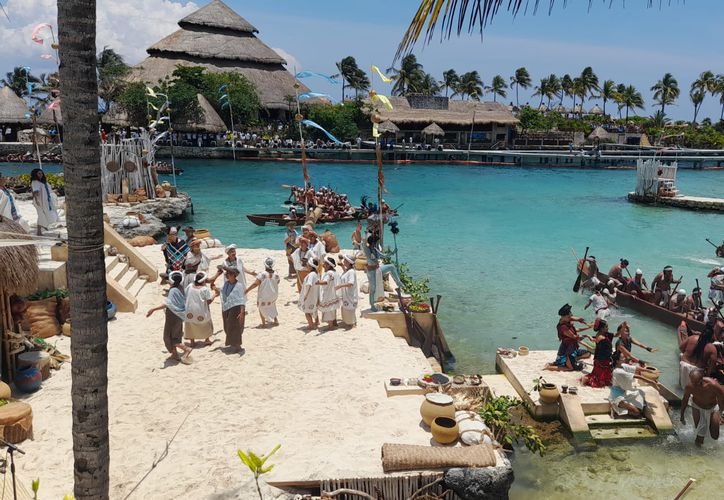
At issue are the ways Maya culture is currently represented across Xcaret’s parks—from staged performances and reenactments to architectural design, branding, and storytelling used in attractions that draw millions of visitors each year.
Pedro Uc Be, a member of the Assembly of Defenders of the Maya Territory Múuch’ Xíinbal, said the ruling acknowledges the problem but does not go far enough.
“This decision is important, but it should have come much sooner,” he said. “The underlying issue remains—Indigenous heritage continues to be used without meaningful participation from the communities it belongs to.”
Uc Be also pointed to broader concerns that extend beyond private companies. He argues that the Mexican state itself has played a role in allowing or promoting the use of Indigenous heritage for economic development without proper consultation.
He cited projects such as the Tren Maya, as well as the extraction of materials used in its construction, as examples of ongoing disputes over land use and cultural rights.
For its part, Grupo Xcaret stated that its parks continue to operate normally and that it will comply with the Court’s decision. The company enters the busy Easter holiday period with no immediate operational changes required.
While the ruling is not final, it is being closely watched. If upheld in a future decision, it could set a national precedent for how Indigenous culture can be used in tourism and commercial development—not just in the Riviera Maya, but across Mexico.
For now, the case highlights a growing tension: how to balance economic success driven by cultural tourism with the rights of the communities whose heritage is at the center of it.
More Business
- El 19, 3 Others Arrested in Puerto Morelos Extortion Case
- Chetumal Airport Customs Nears Full Operation Next Year
- Hotels in Cancún and Puerto Morelos Restore Coastal Dunes With Native Plants
- Quintana Roo Gains Power to Inspect Tourism Service Providers
- Quintana Roo Hoteliers Urge Action to Protect Mexican Caribbean Tourism Competitiveness
More Playa del Carmen
- Why Quintana Roo’s Sewer Gap Is Polluting Cenotes and Coasts
- Calica Mine Lands to Become Ecological Restoration Zone, Conanp Says
- Bull Shark Diving Hits Carrying Capacity in Playa del Carmen
- Playa del Carmen Plans to Restore 750 Meters of Beach in November Using Sand Recovered from Sargassum Cleanup
- Federal Court Halts Macondo Playacar Construction, Voids Building Permit
