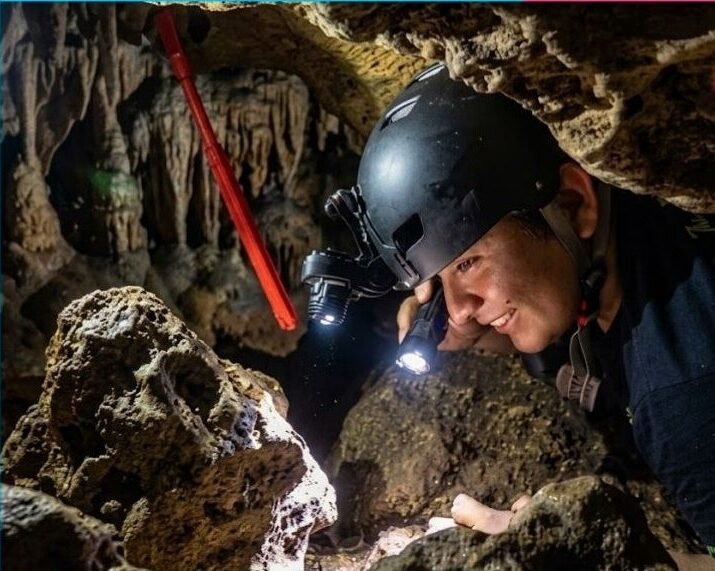
Cancun, Quintana Roo — Beneath the turquoise waters and sprawling resorts that define Cancun’s international image lies a hidden world of ancient caves, cenotes, lagoons, and Maya ruins that continue to reveal the region’s history.
Angelluz Carmona Mejia, a Veracruz native who has lived in Cancun for nine years, has spent much of his free time exploring and documenting these natural spaces through his project, Preservacion Ambiental de Angelluz Carmona del Planeta, aiming to promote care for Quintana Roo’s ecosystems and cultural heritage.
During a recent exploration of Laguna El Pedregal, near the city’s Region 531, Carmona noted that many of these sites hold geological and environmental features unknown to most residents. The lagoon’s depth varies from one to two meters in some areas to nearly 20 meters in others, requiring caution for those entering the water unaware of conditions.
He highlighted that one of the main problems these spaces face is waste accumulation and lack of environmental awareness, affecting natural areas that are part of Quintana Roo’s underground water system.
More than 60 cenotes survive between jungle and city
Carmona said he has identified more than 60 cenotes distributed across various parts of Cancun, including areas near urban parks, neighborhoods, and housing developments where bodies of water and little-explored caves still exist.
Several of these sites are threatened by urban expansion, as some cenotes have been covered or affected by housing developments, even though they remain part of the city’s subsoil.
Maya ruins remain hidden in Cancun
During his investigations, Carmona has also documented archaeological remains and ancient Maya structures located in various points of Cancun and its surroundings, some near cenotes and caves that preserve evidence of the region’s pre-Hispanic past.
He emphasized that preserving these spaces is essential to protect Quintana Roo’s historical and cultural memory, as well as to maintain natural resources that have been sources of water and refuge for diverse species for decades.
Often accompanied by his family, Carmona said one of his main goals is to convey to new generations the importance of respecting nature, avoiding pollution, and conserving the ecosystems that still survive within the city.
As Cancun continues to grow as one of the world’s most important tourist destinations, beneath the vegetation, along forgotten trails and hidden bodies of water, a natural and cultural wealth remains waiting to be discovered, studied, and preserved for future generations.
More Environment
- Mexican Army Nears Completion of 16-Kilometer Jungle Road Over Tulum’s Sac Actún Cave System
- Akumal Halts Turtle Swim Tours Through September
- Mexico Assigns $110 Million Navy Budget to Fight Sargassum in Quintana Roo
- Mérida Opens First Green Corridor to Fight Climate Change
- El Niño Keeps Atlantic Hurricane-Free, Setting Record for Latest First Storm in Decades
More Cancun
- Cancún Airport Transporters Blame ASUR for Steep Fees
- Cancún Installs More Than 100 Traffic Signs Across the City
- Profeco to Inspect Businesses Across Mexico During Independence Day Festivities
- Cancún Commuters Face Waits of Up to Three Hours on Crumbling Public Transport
- Rising Crime Reports in Quintana Roo Signal Greater Trust, Official Says