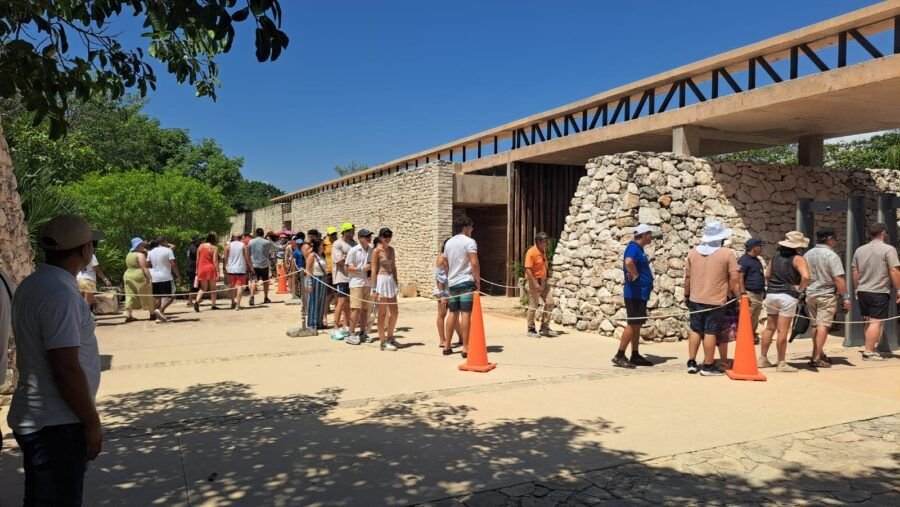
Tulum, Quintana Roo — The Mexican government’s decision to offer free entry to the Jaguar Park for nationals is a step forward, but it does not solve the practical challenges of reaching Tulum’s public beaches, according to local businesswoman Valeria Blanco.
Blanco argued that while eliminating the entrance fee benefits domestic visitors, those arriving by car still face additional costs for transportation within the area.
“In the end, we have free beaches, quote-unquote. If we want to take the little truck, we have to park at the museum and pay for the truck to get to the beaches,” she said.
The lack of parking within the Jaguar Park forces visitors to leave their vehicles outside the perimeter and either use internal shuttles or seek alternatives linked to hotels and beach clubs, Blanco explained.
She highlighted Playa Pescadores, one of the traditional access points to Tulum’s coastline, as an example. “We cannot access Playa Pescadores, which is a public beach, without a reservation. That means we are forced to spend money to go to the beach,” she stated.
Blanco noted that although beaches remain legally public, the current mobility and parking conditions can generate expenses for those trying to reach them. She said the free entry to Jaguar Park will have a greater impact once it is paired with infrastructure and mechanisms that allow residents and visitors to access beaches without relying on spending at private establishments.
The remarks come after the federal government confirmed free access to Jaguar Park for Mexican nationals as part of measures to boost tourism and improve the experience in Tulum. Blanco stressed that the next challenge is ensuring that free park entry also translates into effective access to public beaches, particularly for those traveling by car.
More Community
- What Salt, Water, Candles and Flowers Really Mean on a Day of the Dead Altar
- Cave Divers Push to Revive Jacinto Pat Museum in Tulum to Showcase Caves and Underground Rivers
- Bacalar’s Paseo de las Almas to Feature More Than 20 Decorated Boats
- Quintana Roo Hands Two Artisan Carts to 33 Craftspeople in Playa del Carmen
- Snakes Account for Nearly Half of Cancún’s Wildlife Reports, Firefighters Say
More Tulum
- Gunmen Fire on Hotel Facade in Tulum’s La Veleta, No Injuries Reported
- Cancún Named World’s Most Active City in World Wellness Weekend 2026
- Tulum Drivers Push to Overhaul Traffic Rules Over Costly Towing
- Tulum Business Owners Say Police Still Extorting Tourists and Residents
- Tulum Airport Gets Three More Years of Full Airline Incentives