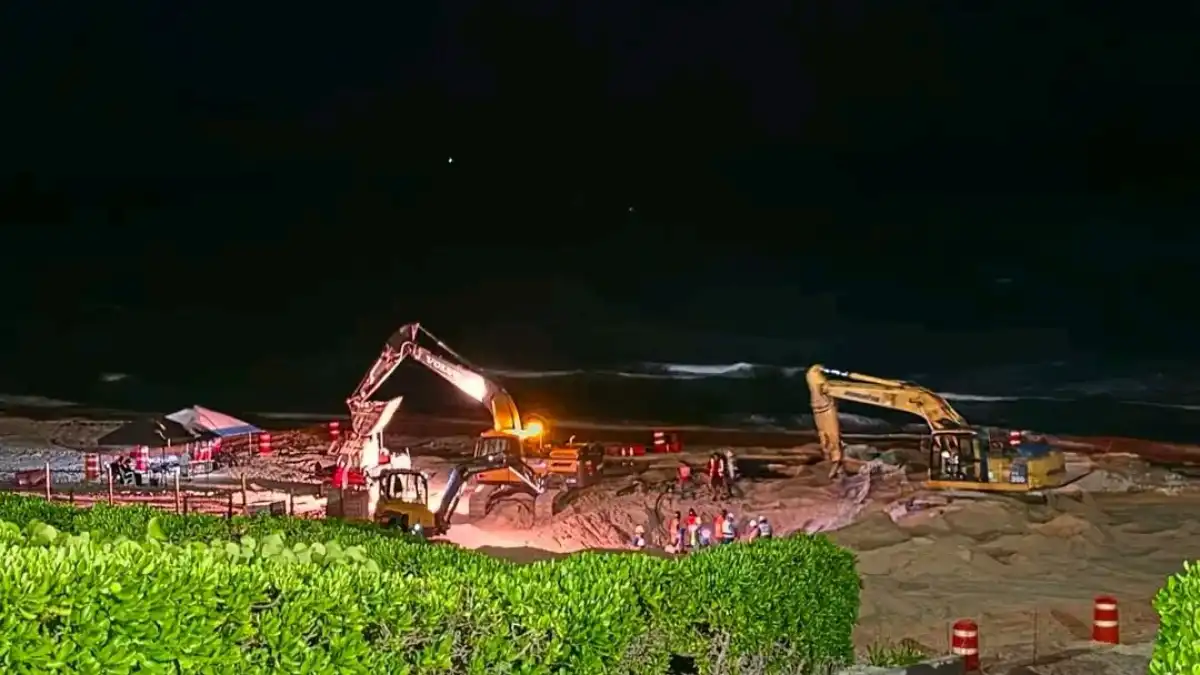
Cancún, Quintana Roo — Heavy machinery operating overnight on Playa Delfines, one of the city’s most visited beaches and a nesting ground for sea turtles, caught tourists by surprise and raised questions about the work being carried out along the shoreline and the safeguards in place to protect it.
The activity drew attention because the site is an environmentally sensitive area where sea turtles come ashore to lay their eggs during nesting season. The presence of heavy equipment on the sand raised doubts about the precautions taken to prevent damage to the ecosystem.
The use of such machinery carries risks that must be controlled, including possible spills of fuel, lubricants or hydraulic fluids, as well as alterations to the surface of the beach. That makes it important to know what kind of work is being done, the conditions under which it was authorized and what environmental protection measures are planned.
After seeing the scene, residents turned to social media to ask who is in charge of the work, whether the necessary permits are in hand and what steps are being taken to protect the areas turtles use to deposit their eggs.
More Environment
- Mexico’s Environment Agency Rejects Four Major Tourism Projects in Quintana Roo
- Sargassum Closes In on 53 Quintana Roo Beaches as Tulum and Puerto Morelos Take the Worst Hit
- Semarnat Denies Environmental Permit for GL Dreams Subdivision in Puerto Morelos
- Caribbean Sargassum Becomes Fertilizer for Global Beer Brands
- Tulum Tour Guides Train to Protect Ecosystems Visited by Tourists
More Cancun
- Buen Fin 2026 Set for November 13-17 With Five Days of Deals in Cancún
- Morena Ratifies Gino Segura as Quintana Roo State Coordinator
- Mexican Caribbean to Lose 435,000 US Airline Seats by End of 2026
- Gunmen Kill Woman Riding Motorcycle With Her Two Children Near Plaza Las Américas in Cancún
- UT Cancún Launches Virtual Diploma to Professionalize Public Service