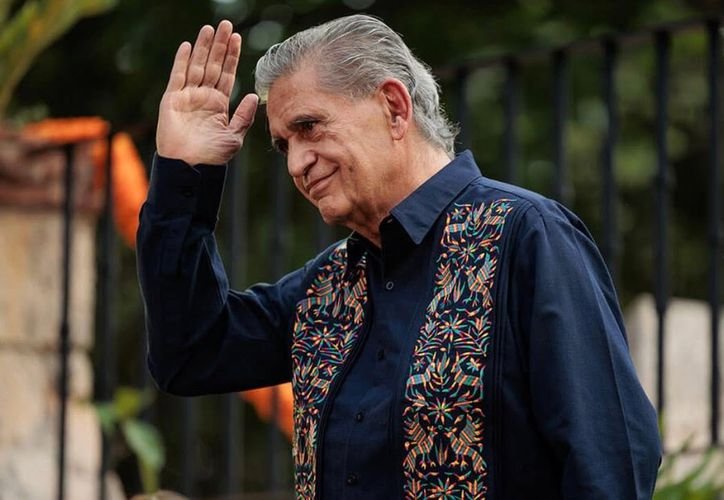
Quintana Roo — Miguel Quintana Pali, the entrepreneur who turned a five-hectare property south of Playa del Carmen into one of Mexico’s largest tourism groups, has been selected for the 2026 Hall of Fame of the International Association of Amusement Parks and Attractions.
IAAPA announced Quintana Pali as one of four members of its 2026 class, recognizing his role in developing a new kind of destination attraction that combines natural surroundings, Mexican culture, hotels and immersive entertainment.
The formal induction will take place Nov. 16 during the IAAPA Expo in Orlando, Florida. Quintana Pali will enter the Hall of Fame alongside original Disney Imagineer Bob Gurr, water-park executive and former IAAPA head Chip Cleary, and aquatic-safety specialist Jeffrey Ellis.
IAAPA is the world’s largest trade association for the attractions industry. Founded in 1918, it represents amusement parks, water parks, museums, aquariums, resorts, zoos and attraction suppliers in more than 100 countries.
The company said Quintana Pali’s work demonstrated that environmental stewardship and cultural experiences could coexist with commercial success, establishing Grupo Xcaret as an international reference for destination tourism.
From a private home to a tourism empire
The origins of Xcaret are markedly different from those of a conventional theme park.
Quintana Pali originally purchased five hectares in the Riviera Maya in 1984 with plans to build a home. As the property was cleared, workers uncovered cenotes and underground rivers. The discovery persuaded him to abandon the residential project and develop an attraction organized around the site’s natural features.
He established Promotora Xcaret in 1986. Three years later, brothers Oscar, Marcos and Carlos Constandse joined the project as partners, providing the resources needed to expand the original concept. Xcaret Park opened in December 1990.
At the time, the Riviera Maya had not yet become the densely developed tourism corridor it is today. Cancún was the region’s dominant destination, Playa del Carmen was still a small coastal town and large-scale resort construction south of the city was only beginning.
Xcaret offered something different from the ride-centered amusement parks common in the United States. Visitors could swim through underground rivers, explore natural areas and archaeological remains, see regional wildlife and attend performances presenting Mexican history, music and dance.
Its nightly México Espectacular production eventually became one of the park’s defining attractions, bringing hundreds of performers together in a large presentation of Mexican history and regional traditions.
Xcaret expands beyond the original park
The company’s growth accelerated after the Quintana Roo government granted it permission to operate Xel-Há in 1995. That natural inlet became the group’s second major attraction.
Grupo Xcaret later added Xplor, Xplor Fuego, Xenses and Xoximilco, along with tours to cenotes and archaeological sites. Its Xailing division operates ferries and catamarans, while its hospitality portfolio includes Hotel Xcaret México, Hotel Xcaret Arte and the smaller luxury property La Casa de la Playa.
The group reported serving more than six million travelers across its parks, hotels, tours and maritime operations in 2024.
This expansion also changed the way the company sells the destination. Hotel guests receive transportation and access to multiple parks and tours through the group’s “All-Fun Inclusive” model, connecting lodging, dining, transportation and attractions within a single Xcaret-operated system.
That approach has since become one of the company’s most influential industry innovations. Instead of treating a theme park as a one-day excursion, Grupo Xcaret developed an interconnected vacation experience capable of keeping guests within its network for most of their stay.
Sustainability became part of the product
IAAPA specifically cited Quintana Pali’s combination of commerce, environmental protection and cultural identity.
Grupo Xcaret operates wildlife breeding and conservation programs involving sea turtles, scarlet macaws and other native species. Its properties report using wastewater-treatment systems, waste-separation programs, refillable containers and locally sourced products. Xcaret and Xel-Há have also received EarthCheck environmental certification.
The company has supported the Sacred Maya Journey, the Festival of Life and Death Traditions and cultural performances involving artisans and communities from different parts of Mexico.
These programs have helped make Mexican history and tradition central to the visitor experience rather than simply decorative elements surrounding conventional rides.
However, describing any large tourism company as sustainable remains complicated. Parks and luxury hotels consume substantial amounts of water and energy, generate traffic and place additional pressure on a rapidly developing coastline. Wildlife held or displayed at commercial attractions, particularly dolphins, also remains controversial among animal-welfare advocates.
The Hall of Fame recognition reflects the attractions industry’s assessment of Quintana Pali’s model. It is not an independent environmental audit of every Grupo Xcaret development or activity.
A growing presence within the international industry
The Hall of Fame selection follows several earlier international honors.
In 2018, Xcaret received the Liseberg Applause Award, presented through the attractions industry to a park recognized for excellence, originality and management. Quintana Pali has also received tourism awards from the Quintana Roo government, Mexico’s National Tourism Business Council and UN Tourism.
Grupo Xcaret’s position within IAAPA became especially visible in May, when Hotel Xcaret México hosted IAAPA Honors 2026. The three-day gathering brought international attraction executives and designers to the Riviera Maya for professional sessions, park tours and an awards gala.
During that event, Rodrigo Quintana received IAAPA’s Regional Young Professional Award. The organization highlighted his work with the Xurreal Innovation division and Manos Xuaves, a program that incorporates deaf performers into entertainment experiences. Xcaret Park also received a Brass Ring Award for the design and presentation of its main plaza store.
The recognition of two generations in the same year suggests the company is preparing to carry Quintana Pali’s model forward as it expands into new attractions and destinations.
For Quintana Roo, the Hall of Fame announcement recognizes more than the success of a single park. Xcaret helped reshape the Riviera Maya from a collection of beaches and archaeological excursions into a destination where cultural entertainment, nature-based attractions and resort hospitality are sold as one integrated experience.
What began with the discovery of cenotes beneath land intended for a private home has become a tourism operation serving millions of visitors. That transformation is ultimately what earned Miguel Quintana Pali a place alongside some of the most influential figures in the global attractions industry.
More Business
- Canada Drives Mexican Caribbean Demand for Final Quarter of 2026
- Funeral Services in Cancún Can Top 100,000 Pesos, Workers Say
- Riviera Maya Forum Pushes Caribbean Mexico Toward Regenerative Tourism
- Xcaret Says It Will Abide by Any Supreme Court Ruling on Use of Maya Culture
- Coparmex Quintana Roo Prepares Businesses for Shorter Workweek
More Playa del Carmen
- LIPU Bus Rear-Ends Van, Flipping It Off Highway 307 Near Playa del Carmen
- Woman Shot Dead on Motorcycle With Her Daughters in Playa del Carmen
- At Least Four Women Shot Dead Across Quintana Roo Over the Weekend
- Playa del Carmen Calls Volunteers to Clean More Than 7 Kilometers of Beach
- Morena Launches 11 Municipal Races in Quintana Roo: Who’s In?