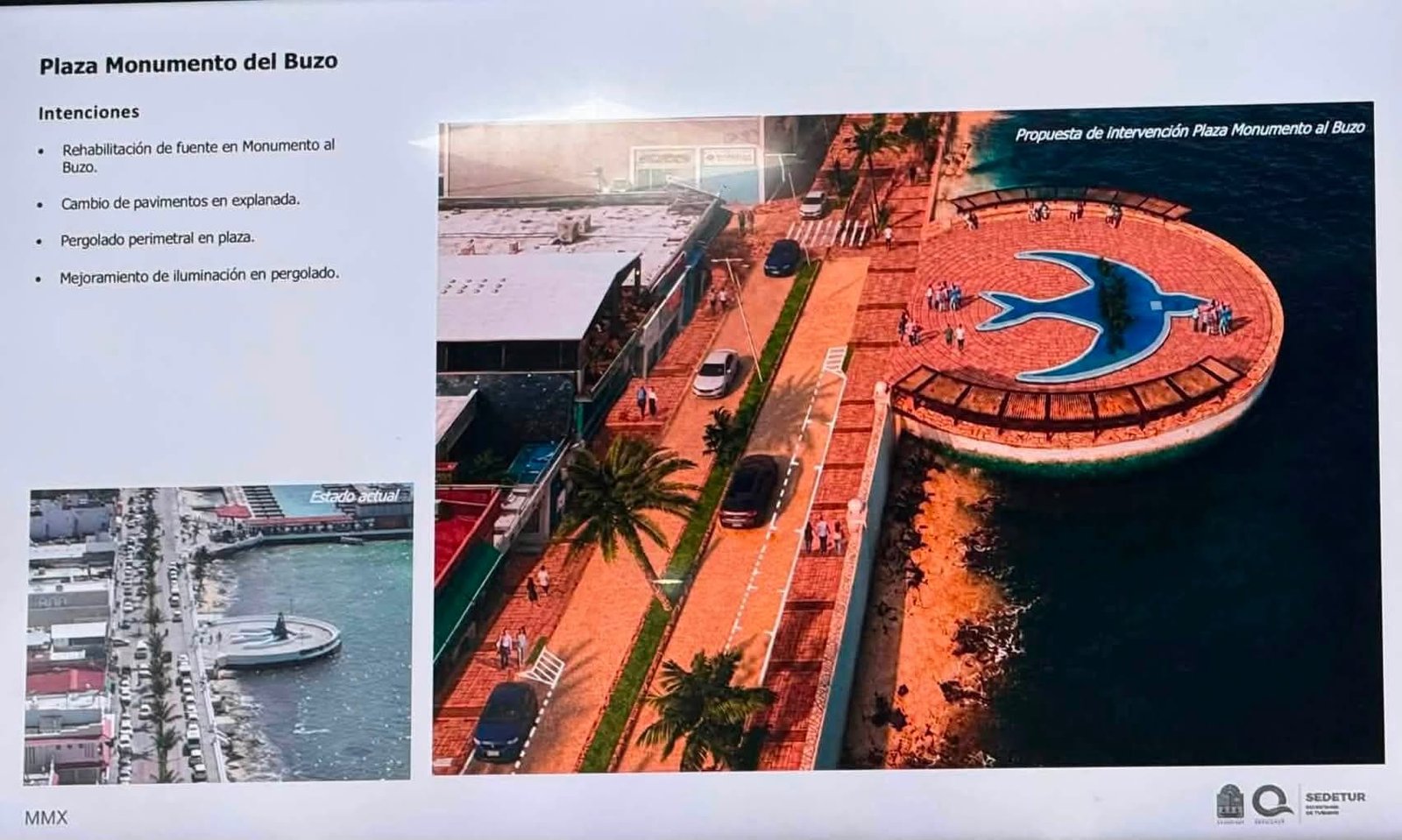
Cozumel, Quintana Roo — Cozumel’s familiar waterfront could look and feel considerably different under a major modernization project planned for Rafael E. Melgar Avenue and approximately 1.3 kilometers of the downtown Malecón.
The proposal includes better lighting, clearer signage, safer pedestrian crossings, wheelchair-accessible ramps, new benches and street furniture, restored fountains, historical information displays and a children’s park. Officials are also considering the recovery of small beaches and sandy areas that have disappeared from sections of the downtown shoreline.
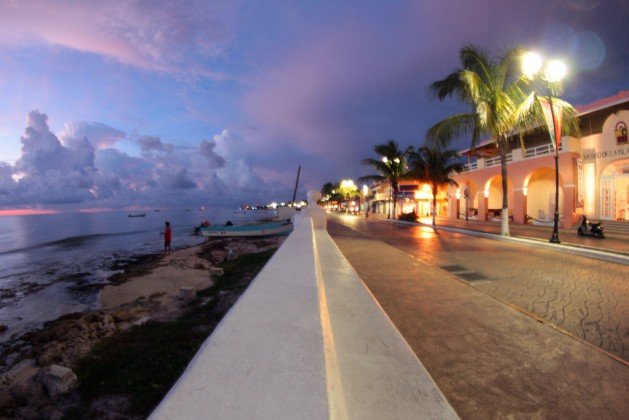
For people who visit Cozumel regularly, the changes could make the waterfront easier to enjoy after a day of diving, shopping or touring the island. Improved lighting and pedestrian access may be particularly noticeable in the evening, when the Malecón becomes a popular place for walking, watching the sunset and visiting downtown restaurants.
The work is being developed through the Fideicomiso para el Bienestar del Turismo Crucerista, or FICQROO, the state trust created to direct cruise-passenger contributions toward infrastructure, security and tourism projects in Cozumel and Mahahual.
The cost is not yet entirely clear
The most recent presentation to Cozumel’s Tourism Advisory Council placed the project at approximately 116 million pesos. However, other state and municipal presentations have cited figures ranging from 136 million to 139.2 million pesos.
That difference may reflect changes in the project’s scope or different phases of work, but authorities have not yet released a final public budget clearly reconciling the amounts.
The Malecón project is part of a larger package approved for Cozumel. In April, Mayor José Luis Chacón said the cruise-tourism trust had authorized more than 170 million pesos for island projects, including the waterfront renovation, new firefighting vehicles and a feasibility study for restoring beaches along the island’s western shoreline. The municipality outlined that wider package following the first Tourism Advisory Council session.
The trust is funded through a charge collected from cruise passengers. Those funds have already been used to purchase 21 police and emergency vehicles for Cozumel, representing an investment of approximately 25 million pesos. The state government delivered that equipment in April.
What will not change
Officials have emphasized that Rafael E. Melgar Avenue will retain its existing two lanes in each direction. The large flagpole overlooking the waterfront will also remain in its present location.
Those assurances appear intended to address concerns that the project could substantially alter traffic circulation or remove familiar elements of the city center.
The plans call for improved rather than reduced vehicle and pedestrian movement, including new crossings, ramps and more organized public spaces. Historical displays would also be added to help visitors better understand Cozumel’s past rather than experiencing the Malecón only as a strip of shops and restaurants.
However, the complete engineering plans, construction phases and street-closure schedule have not yet been made public. That information will be important for travelers arriving by passenger ferry, as well as businesses, taxi drivers and residents who rely on Rafael E. Melgar every day.
Why regular visitors should pay attention
The Malecón is the first part of the island seen by most passengers arriving on ferries from Playa del Carmen. It also connects the downtown ferry terminal with restaurants, dive shops, stores, hotels and the Punta Langosta cruise pier.
Better crossings and accessible sidewalks could make it easier for visitors to explore San Miguel on foot, especially families with strollers and travelers who use wheelchairs or have limited mobility. New lighting could also encourage more activity after sunset, when the downtown waterfront is quieter than it is during cruise-ship hours.
The proposed park and shoreline areas could give families more reasons to linger downtown without having to purchase an excursion or enter a private beach club.
That matters to local businesses. Cozumel received approximately 4.7 million cruise passengers aboard more than 1,300 ships in 2025, according to the municipal government. Yet many passengers remain on the island for only a few hours, and a large share of their spending is concentrated around the cruise piers or within prearranged tours.
Officials hope a more attractive nighttime waterfront could eventually persuade cruise companies to keep some ships in port later or schedule overnight stays. That could benefit restaurants, bars, musicians, taxis and locally owned shops that currently see business fall sharply when ships depart in the afternoon.
However, a renovated Malecón will not by itself produce overnight cruise calls. Cruise itineraries are planned well in advance and depend on port capacity, operating costs, security, passenger demand and schedules throughout the Caribbean. Chacón has acknowledged that the island would have to begin promoting the new experience to cruise companies after the work is completed, with itinerary planning generally occurring at least a year ahead.
Residents are asking questions
The proposal has generated debate in Cozumel, including calls for public demonstrations against the remodeling. Some residents have questioned the cost, the priorities behind the work and whether the final design adequately reflects the needs of people who live on the island.
Chacón said the project resulted from more than 10 meetings with business representatives and promised a broader presentation for community organizations and residents. State officials say the plan remains in a consultation and “socialization” stage, meaning some details may still change before construction begins.
The Tourism Advisory Council includes representatives from government, tourism businesses and civil society. During its latest working session, officials said the project had been reviewed by state departments responsible for tourism, public works, finance, environmental protection, mobility and government oversight. The current proposal includes ramps, pedestrian crossings, lighting, historical elements and restored public spaces.
For frequent visitors, the Malecón renovation has the potential to produce a safer, more attractive and more walkable downtown waterfront. The unanswered questions are when construction will begin, how long it will last, which sections will be closed and what the final project will cost.
More Development
- Yucatán Peninsula Lost 285,580 Hectares of Jungle in 4 Years
- Cancún Residents Call Protest Against Aguakan Over Unsafe Roadworks on Avenida Colegios
- Cancún Real Estate Fraud Suspect to Face Trial at Liberty After Judge Rejects Pretrial Detention
- Yucatan Drafts Rules for Artificial Lakes After Worker Dies of Amoeba Infection
- Technical Study Advances for Quintana Roo’s Grand Subterranean Rivers Reserve
More Cozumel
- Quintana Roo Wins SEMARNAT Approval to Restore 33.5 Km of Beaches
- CONANP Closes Four Cozumel Reefs for Two Months to Aid Coral Recovery
- Trash and Sargassum Trap Dozens of Sea Turtle Hatchlings on Cozumel
- Cozumel Unveils First Pueblos Mágicos Triathlon in Mexico City
- OXXO Round-Up Drive to Fund School Breakfasts for 680 Children in Cozumel