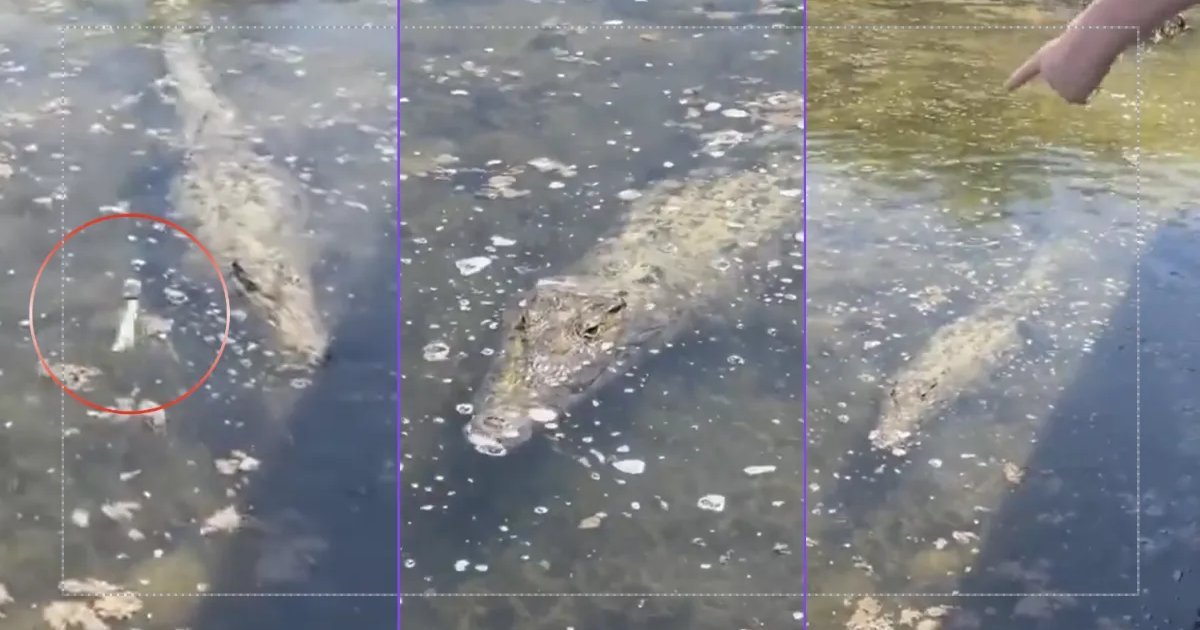
Cozumel, Quintana Roo — A tour guide at Punta Sur Ecotourism Park has been disciplined after being filmed using a bone tied to a fishing rod to lure a crocodile at Laguna Colombia, park officials said.
The guide, an internal employee of the park, was also required to take a course on environmental best practices, according to Jesús Benavides Andrade, the park’s director.
The incident came to light after a foreign tourist posted images of the encounter on social media, triggering backlash from environmentalists and island activists who demanded stronger oversight at the site, which is managed by the Fundación de Parques y Museos de Cozumel (Cozumel Parks and Museums Foundation).
Benavides said the worker was fully identified. He added that the sanctions were not limited to a penalty, as the guide must also complete a course on good environmental practices taught by a local institution.
Some social media users suggested the guide may have acted to win a larger tip, but Benavides said park management does not know what motivated the employee’s actions.
Officials warned that such behavior can put both tourists and park workers at risk. Benavides called on internal and external guides to follow environmental best practices inside the protected natural area, noting that feeding wildlife can alter animals’ natural behavior and affect how species interact with people.
The episode went viral and quickly prompted debate among environmentalists and activists in Cozumel, who questioned the level of oversight at the spot where the encounter occurred.
Laguna Colombia, where the incident took place, is home to more than 200 crocodiles and is considered one of the area’s most important sites for wildlife watching.
Park administrators said the measures taken against the guide are part of broader efforts to ensure that those who lead visitor activities respect environmental rules and avoid actions that could disrupt the animals’ natural conduct.
More Environment
- Greenpeace Finds Contamination at 17 Yucatán Wells and Cenotes as Maya Communities Demand Action
- Quintana Roo Tops 152,000 Metric Tons of Sargassum as Playa del Carmen and Cancún Lead
- Profepa Shuts Down Los Rápidos Swimming Spot in Xul-Ha Over Missing Environmental Permit
- Court Gives Profepa 72 Hours to Clarify Tren Maya Closure Order
- National Geographic Names Maya Ka’an Among Top Destinations to Visit in 2027
More Cozumel
- Cozumel Hosts First Pueblos Mágicos Triathlon as Evelyn Rejón and Flavio Morandini Win
- Quintana Roo Names Winners of 2026 State Craft and Embroidery Prizes
- Cruise Tourism Trust Fund Spends 1.27 Billion Pesos Across Quintana Roo
- CFE and Playa del Carmen to Review Plan for Submarine Power Line to Cozumel
- Cozumel’s Museum of the Island Opens Exhibition by Architect José Manuel Sáenz ‘Txepo’