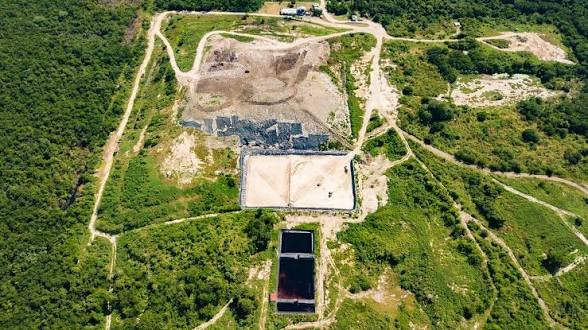
Cozumel, Quintana Roo — Cozumel’s landfill receives so little sargassum that it has no need to adopt the practice, already used in Playa del Carmen, of mixing the seaweed into an alternative cover material for solid waste, according to the manager of the company that operates the site.
Augusto Angulo Gómez, manager of PASA on the island, said in a telephone interview that the landfill does receive sargassum collected mainly by hotels and beach clubs, but in amounts far below those seen at other destinations in northern Quintana Roo.
“Here in Cozumel we don’t receive a large volume of sargassum,” he said. “We haven’t had to look for an alternative because the volume is really minimal.”
The algae that does reach the landfill is placed on top of solid waste and later covered during normal operation of the landfill cells, Angulo Gómez explained.
He added that because sargassum is organic and biodegradable, it could be put to greater use if intake increased. Playa del Carmen has already adopted such an approach: sargassum there is mixed with sascab, a loose limestone material, and used as an alternate cover for waste.
“It can be done, as Playa del Carmen does,” Angulo Gómez said. “They mix it with sascab and use it as cover. It gives a certain stability, because sargassum tends to form a kind of net.”
The difference between the two municipalities comes down to volume, he said. Cozumel receives far less sargassum because the island’s geography protects its western tourist beaches from the seaweed that reaches Playa del Carmen, the Riviera Maya and Cancún.
For now, the landfill’s main alternative cover is ash and incinerated waste left over from the old municipal dump. PASA uses an estimated 35 to 40 cubic meters of that material per day to cover incoming waste, while clean quarry stone is reserved mainly for the internal roads used by collection trucks.
More Environment
- Cancún Sends 30 Brigades to Clear Flooded Streets
- Leaks Flood Cancún Airport Terminal 2 as Heavy Rain Soaks Check-In Area
- Flamingos Banded in Yucatan Peninsula Travel as Far as Venezuela, Tracking Shows
- Cutaneous Leishmaniasis Cases Jump 387% in Mexico’s Yucatan Peninsula
- Sheinbaum Reviews Sargassum Monitoring in Cancún as Quintana Roo Shifts to Early Intervention
More Cozumel
- Mexican Caribbean Destinations and Resorts Win Across 2026 World Travel Awards
- Cozumel Wins World Travel Award as Mexico’s Best Beach Destination
- Playa del Carmen Hosts Second National Firefighters Congress With 750-Plus Participants
- Cozumel Freezes New Street Vendor Permits as Review Committee Stalls
- FPMC Opens Txepo’s Art + Architecture Dreamscape in Cozumel