
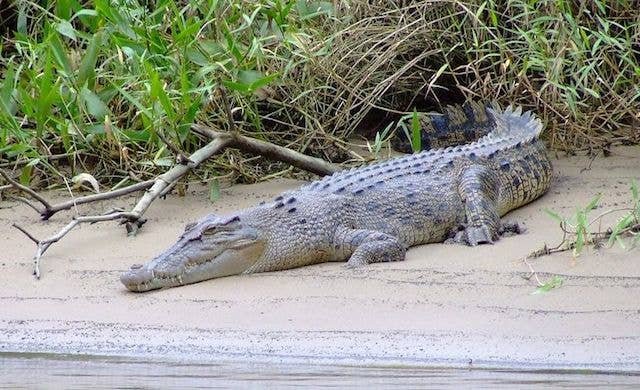
Cozumel, Quintana Roo — A man who lost his right arm after a serious injury at a beach club on Wednesday morning has been identified in local reporting as Esteban G. G., a roughly 30-year-old security worker from Chiapas. The reports name the location as Paradise Beach, on Cozumel’s southern coast. Authorities have not publicly confirmed how he was injured or established that a crocodile was involved.
Esteban was taken to a private clinic at around 6 a.m. on September 23. Initial accounts describe a suspected crocodile attack, but key details remain unresolved, including precisely where the injury occurred and whether anyone witnessed it.
Alfredo Arellano Villaseñor, Cozumel’s director of Civil Protection, said his agency had received no official report by midday Wednesday. According to reporting on his remarks, beach clubs must promptly notify 911 or Civil Protection of emergencies. Officials are expected to examine what happened and whether the required response was followed; any penalty would depend on that review. No finding against the club has been announced.
Crocodile Captured Elsewhere on the Coast
The injury has also drawn attention to a separate crocodile sighting at Playa Caletita. Lifeguards had been warning beachgoers to keep away from a crocodile seen near that public beach. On Wednesday afternoon, Civil Protection personnel captured and relocated an animal there, according to reports.
There is no evidence establishing that the Caletita crocodile was connected to Esteban’s injury. Its capture should not be taken as confirmation of the suspected attack or as proof that the animal reportedly involved has been found.
For residents and visitors, the immediate precaution is straightforward: follow lifeguards’ instructions, stay out of water where a crocodile has been reported, and do not approach or try to move one. Cozumel’s municipal government advises reporting sightings promptly so trained personnel can respond.
More Environment
- Unicaribe Students Mark One Year Monitoring Sian Ka’an Biosphere Reserve
- Laura Beristain Returns to Politics With Environmental Banner in Playa del Carmen
- Wind Farm Project in Southern Quintana Roo Moves Forward
- Witness Alleges Sea Turtle Eggs and Hatchlings Taken From Nests at Cozumel’s Chen Río
- PROFEPA Inspectors Denied Access to Jaguar at Cancún’s Pepe Tigre
More Cozumel
- Environmentalists Urge Crackdown on Jet Skis in Cozumel Reef Zones
- Young Man Loses Arm at Cozumel Beach Club in Suspected Crocodile Attack
- Cozumel Submarine Power Cable to Be Installed Oct. 5 After 40-Year Wait
- Cozumel Reports Alcohol and Drug Use Starting at Age 11
- Cozumel Lifeguards Keep Watch Over Playa Caleta After Crocodile Sighting