Cancún, Quintana Roo — The death of a dolphin named Mincho has revived a debate over the commercial exploitation of marine animals, the responsibility of the companies that keep them and whether authorities can guarantee their welfare.
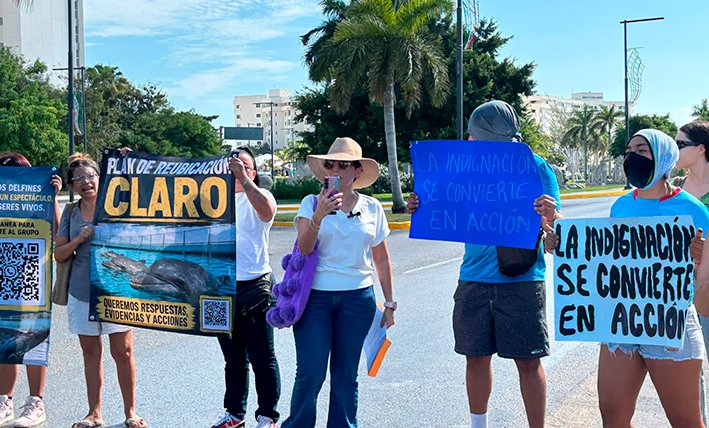
Mincho, which spent its entire life in captivity, died at the Dolphin Discovery facility in Cancún. The death drew fresh outrage from animal rights advocates, among them Alia Sánchez, who led a September protest over conditions for the dolphins held at the site.
In a statement posted on social media, Sánchez said Mincho died without ever experiencing freedom, after spending its existence in artificial pools far from the conditions of its natural habitat.
The activist noted that the dolphin’s story inspired legislation known as the Mincho Law, but said its death raises an unavoidable question: what use are laws meant to protect animals when others are still living out their lives in captivity?
Eight dolphins remain at the facility
According to the statement, eight dolphins remain at the facility, and their future is a growing concern for those who have followed the campaign.
Sánchez demanded transparency about the animals’ health and living conditions, access to specialized medical care, a full account of the circumstances surrounding Mincho’s death and a determination of who, if anyone, bears responsibility.
She also called for a safe and dignified relocation plan for the dolphins still in captivity, one that does not put their well-being at risk.
The case has returned a broader question to public debate: whether human entertainment should take precedence over animal welfare. Thousands of tourists visit Cancún and the Riviera Maya each year for experiences with marine mammals, while organizations and residents increasingly question the cost of those activities to the animals.
“For Mincho it is already too late. For them, it is not yet,” Sánchez said, warning that the dolphin’s death should not become just another story that fades within days.
The demand now is that the relevant authorities disclose information, open an investigation and ensure that Mincho’s story is not repeated with the dolphins that remain at the facility.
More Environment
- Heavy Rain Floods Streets and Catches Pedestrians Off Guard in Playa del Carmen
- Sargassum Eases on Northern Quintana Roo Beaches, but Southern Stretches Still Overwhelmed
- Fonatur Prepares Two-Stage, $108 Million Sargassum Plan for 2027
- Secrets Marina Seeks Semarnat Approval for 7,933-Square-Meter Beach Club in Puerto Morelos
- Uxuxubi Seeks Tourism Distinction, Asks for Water Tests at Its Cenotes
More Cancun
- Cancún DIF Shelters Repatriated Families From US
- CBTIS 301 Cancún Second Phase Announced by Mara Lezama
- Grand Outlet Riviera Maya to Light ‘Dulce Resplandor’ Christmas Tree on Nov. 21
- Cancún’s Tardes de Lucha Libre Wraps 2026 Season with 6,400 Fans
- Cancún’s Cantaritos Bar Seized After Drug Raid at Plaza de Toros; Two Arrested