
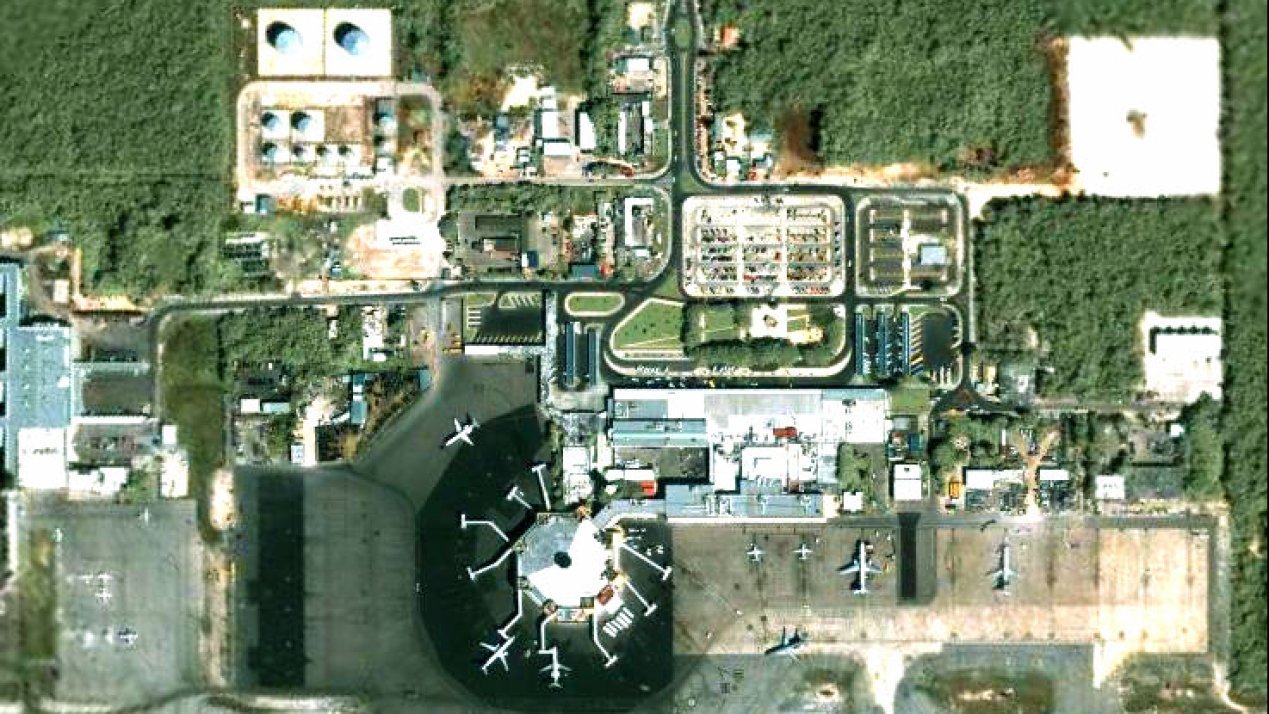
Cancún, Quintana Roo — Cancún International Airport is carrying out an infrastructure expansion program that will run through 2028, with construction at Terminals 1 and 4 and the widening of vehicle access roads to handle growing passenger traffic in the coming years.
Carlos Trueba, the airport’s director, said the project should not be seen simply as a renovation of existing facilities but as a broader effort to expand airport capacity.
Among the works underway is the construction of the new Terminal 1, which is scheduled for completion by the end of this year. Those efforts will be followed by expansions to Terminal 4, with work continuing from now through 2028.
Designed to Meet Peak-Season Demand
Trueba said the goal is to have infrastructure capable of handling the demand generated by the tourist destination in the years ahead, particularly during the busiest periods.
On air traffic, Trueba estimated the airport could close 2026 with passenger levels similar to last year’s, even though operations have been lower in recent weeks.
The airport director said he expects the winter season to bring a recovery in activity and that December will mark the start of a period with stronger figures.
He explained that the decline recorded in September, October and November largely reflects the seasonal pattern Cancún has historically seen. Those months, he said, have traditionally been a slower period for the destination.
Given that outlook, Trueba said it is necessary to work in coordination with the hotel sector and state and federal governments to recover capacity during the months of lower demand and to prevent sharp drops in tourism activity.
Access Roads to Be Widened
The infrastructure expansion also covers the airport’s entrances, particularly given the congestion problems that arise during peak travel periods.
Trueba said crews are currently working to widen the access road from four to six lanes, in an effort to increase vehicle circulation capacity and ensure sufficient infrastructure for the coming years.
The project targets one of the areas that comes under the greatest pressure when passenger volume rises, especially during holiday periods and times of high tourism demand.
Trueba also addressed the presence of rental car company vehicles in areas around the airport. He said authorities also need to step in to bring that activity into order.
He noted that the airport has a set capacity for rental companies and currently provides more than 450 parking spaces reserved exclusively for them.
Trueba said that capacity is already established and that greater intervention by authorities is needed to prevent these companies’ vehicles from occupying spaces or areas outside the designated zones.
While construction continues, the airport faces the challenge of maintaining operations across the different seasons of the year while simultaneously expanding its infrastructure to meet future demand.
Terminal 1, the Terminal 4 expansions and the modernization of the access roads are part of a program that, according to the airport director, will gradually increase the capacity of Cancún’s facilities through 2028.
More Development
- Mexico Opens Consultation on Microwave Spectrum to Expand Rural Internet Access
- Playa del Carmen Braces for Traffic Disruptions as CFE Expands Power Grid
- Demolition Begins on Cancún’s Old General Hospital to Make Way for Maternal and Child Hospital
- Wind Farm Project in Southern Quintana Roo Moves Forward
- Playa del Carmen Announces New Alameda-Style Park With Zipline and Amphitheater
More Cancun
- Tourist Accuses Cancún Airport Transfer Company of Failing to Provide Prepaid Service
- Social Run Brings 3, 5 and 10K Routes to Cancún’s Nichupté Bridge
- Quintana Roo Aims to Close 2026 Near 20 Million Overnight Tourists With High Hotel Occupancy
- Group Proposes Migrant House to Help Indigenous Arrivals in Cancún
- PROFEPA Inspectors Denied Access to Jaguar at Cancún’s Pepe Tigre