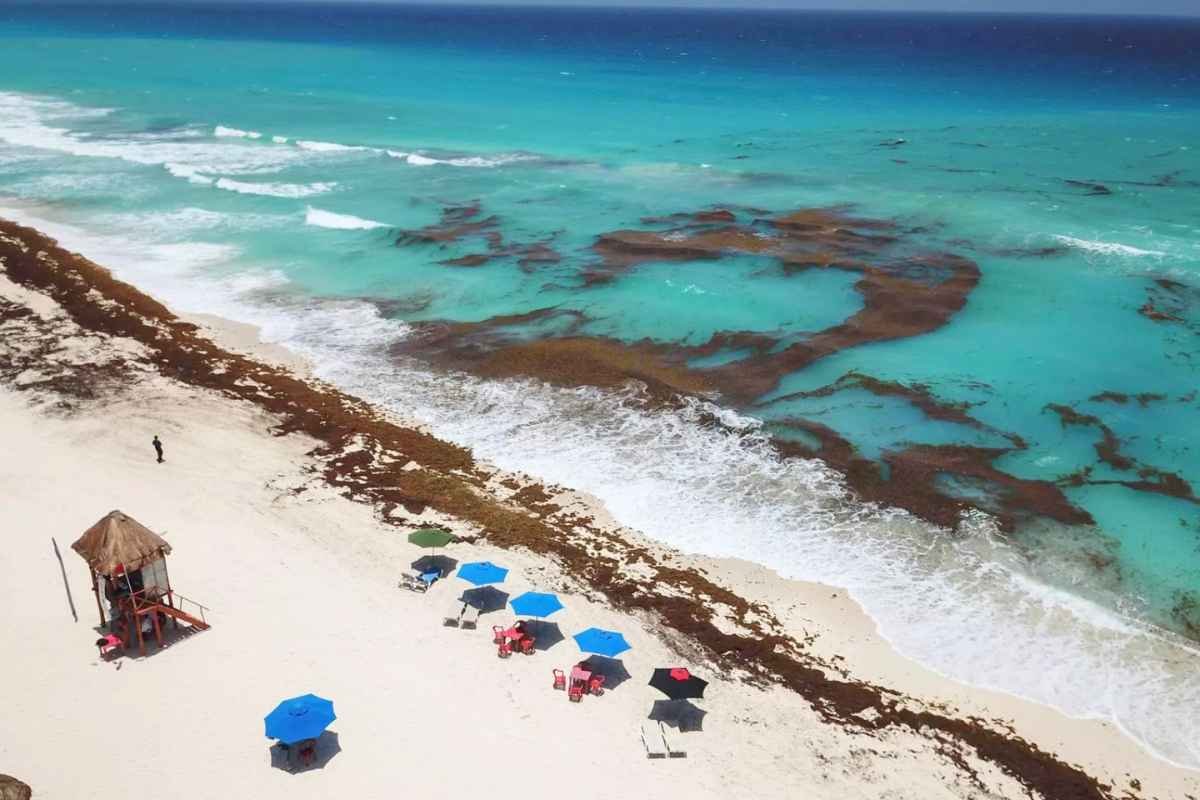
Cancún, Quintana Roo — The Mexican Caribbean opened November with 85 beaches classified as having low or no sargassum, leaving much of the northern and southern coastline in good condition for visitors arriving during the autumn-winter season.
According to technical monitoring, five beaches are in optimal condition with no sargassum at all, while 80% of the rest show minimal concentrations rated green on the sargassum traffic-light system, allowing recreational activity across a range of tourist destinations.
Where the beaches are clear
In the northern part of the state, sargassum-free beaches are located at Holbox and Isla Contoy. A long stretch with low presence also runs from Punta Mosquito and Chiquilá to Isla Blanca, Costa Mujeres and several Cancún beaches, including Las Perlas, Tortugas and Delfines, as well as key spots in the Riviera Maya, Puerto Morelos, Cozumel and Tulum.
The southern region counts two fully clean beaches, at Mahahual Norte and Banco Chinchorro Norte, along with three low-level areas identified at Mahahual Blue Kay, Mahahual Pargo and Playa Mahahual, favoring arrivals in those coastal communities.
Southern zones still flagged red
The report nevertheless warns that moderate, abundant and excessive accumulations persist in specific sectors. It lists 16 zones with abundant concentrations and nine rated red, mainly in the south, including Xcalak, Río Huache and Canal de Zaragoza, where cleanup crews are carrying out intensive containment and clearing work.
The traffic-light system monitors 140 beach zones in Quintana Roo, 100 in the north and 40 in the south of the Mexican Caribbean.
Authorities urge checking daily reports
Environmental authorities and coastal monitoring committees are urging service providers and swimmers to check the daily sargassum traffic-light reports before planning water activities, so visitors can make the most of their trips.
Navy expands open-water containment
The sargassum response strategy entered a new phase at sea in October. The Mexican Navy (Semar) is already operating dynamic barriers in Tulum and Playa del Carmen and has prepared the addition of 17 ocean, semi-ocean and coastal vessels for 2027, part of additional resources authorized by the federal government to strengthen containment in open water.
More Environment
- Residents Report Constant Sewage Overflows at Playa del Carmen’s Colosio Crossing
- Tourists Spot Rare Jaguarundi Crossing a Road in Quintana Roo
- Project Mayas Maps Hidden Groundwater Routes Beneath the Yucatan Peninsula
- Quintana Roo Seeks UN Help Against Sargassum After Record Year
- Playa del Carmen’s Water Pollution Rules Exist but Go Unenforced, Activist Says
More Quintana Roo
- Cancún to Host 122 Swimmers From 37 Countries at Open Water World Cup
- Mexican Caribbean Hotel Occupancy Rebounds to 62.1% at Start of November
- Quintana Roo Nautical Association Pursues Maritime Alliance With Belize
- Quintana Roo Bets on Diving, Gastronomy and Air Connectivity to Revive Tourism Growth in 2027
- Quintana Roo Women’s Secretariat Reports 60% Rise in Services