
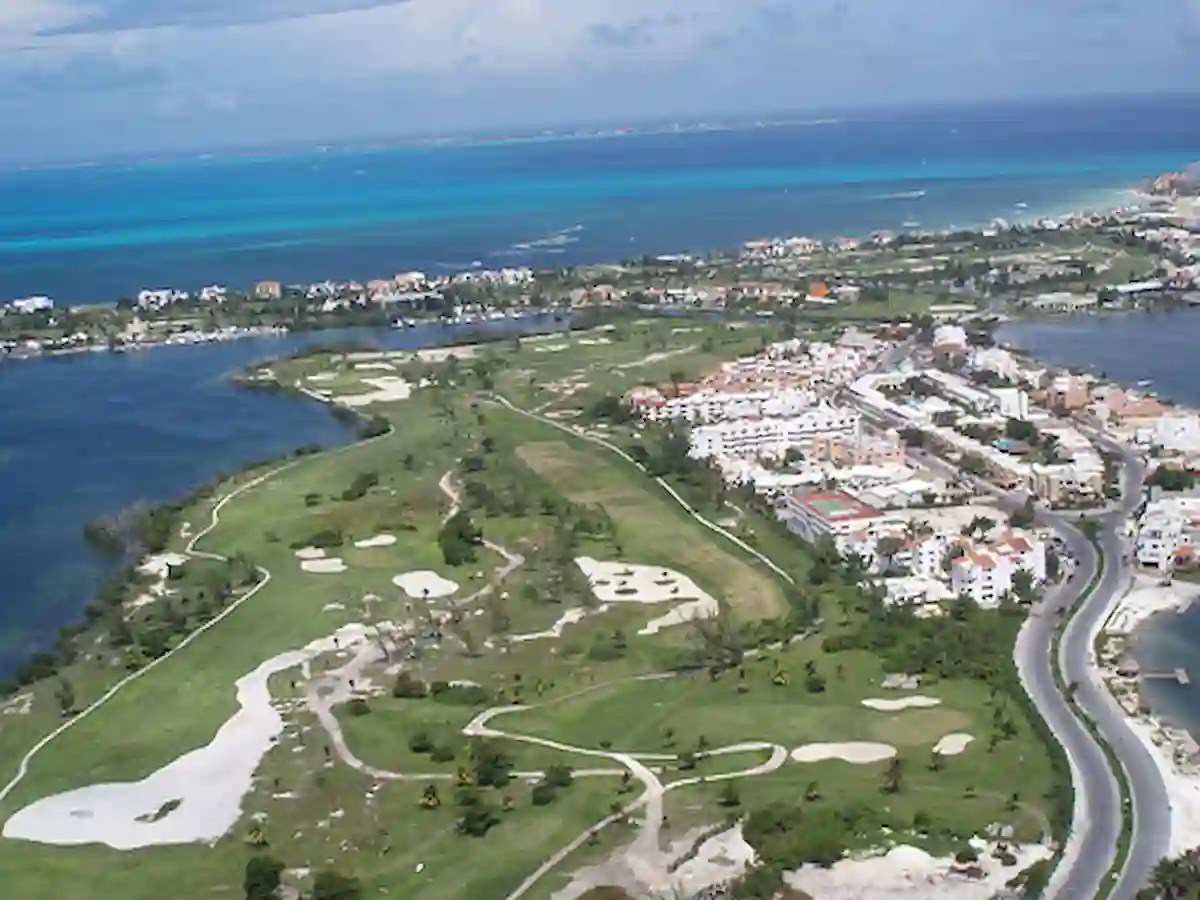
Cancún, Quintana Roo — The Urban Development Program (PDU) for Benito Juárez is about 50 percent complete and will soon enter a decisive phase that will determine where Cancún can grow, which land uses will be permitted and at what intensity, officials said.
Héctor Sánchez Tirado, director of the Municipal Planning Institute (IMPLAN), said the diagnosis stage has concluded and his team is now setting criteria and drafting a catalog of land uses, with the goal of establishing orderly urban growth for the coming years.
“The urban development plan is 50 percent complete. We have finished the diagnosis stage and right now we are establishing criteria and land uses, what the catalog of uses will be, because it will change a little in order to create differentiators for uses and intensities,” he said.
Nearly Half a Cancún More by 2050
One of the main findings of the diagnosis is projected population growth. According to estimates used by IMPLAN, Benito Juárez could add roughly 400,000 residents by 2050 — almost the equivalent of adding half of Cancún’s population.
“We are talking about adding almost half a Cancún more between now and 2050,” Sánchez Tirado said.
Against that backdrop, the PDU must decide where the city can expand. Sánchez Tirado noted that growth to the north is constrained by a territorial boundary with Isla Mujeres, leaving the territorial reserve in the southwest as one of the areas that must be analyzed for eventual expansion, always subject to environmental restrictions.
He stressed, however, that the updated Local Ecological Zoning Program (POEL) must be completed first, because that instrument will define the Environmental Management Units (UGA) and the areas suitable for particular uses.
The POEL is about 90 percent complete and is in final reviews and public consultation, he said.
“If we publish a PDU alongside the current POEL, as soon as the new POEL comes out we become obsolete. So we are putting all our effort into the POEL,” he said.
‘Cancún 15 Minutes’
The new PDU also envisions a model dubbed “Cancún 15 minutos,” intended to ensure that new urban areas have services, commerce, equipment and amenities close to housing, reducing the need to travel to the city center.
Sánchez Tirado said new growth areas should not become purely residential zones but should include the land uses needed to guarantee services and infrastructure.
The plan also calls for reworking the concept of mixed-use zoning to establish different intensities and risk levels.
“It is not a simple mixed use; it is a mixed use modulated by risk,” he said.
He cited commercial or service activities that can generate noise, nuisance or some type of risk and therefore should not necessarily be mixed indiscriminately with residential areas.
The process also involves civil society, academia, and associations of architects and engineers, among other specialized sectors. A general workshop is planned for October as part of that participatory effort.
On timing, Sánchez Tirado said both instruments could ideally be on track between the end of this year and early 2027, though he cautioned that schedules will depend on the relevant consultation, review and authorization processes.
The current PDU dates to 2022 and the POEL to 2021, and both are being updated to define the future territorial planning of Benito Juárez.
More Development
- Profepa Shuts Down Work Damaging Coastal Dune in Yucatán
- Isla Mujeres Residents Demand Land for Cemetery, Market and Slaughterhouse
- Cozumel Residents March Against Malecón Rehabilitation Project
- Playa del Carmen Draws Over $1.6 Billion in New Tourism and Real Estate Projects
- Playa del Carmen Councilor Questions Semarnat’s Indigenous Consultation Requirements
More Cancun
- Cancún Orders Removal of Grounded Boats From Nichupté Lagoon
- Mexico City, Cancún and Puerto Vallarta Top Searches for Independence Day Weekend
- Cancún Mayor Ana Paty Peralta Says She Will Finish Her Term and Skip ‘Gino’ Segura’s Campaign
- Father of Emma, Girl at Center of Cancún Abduction Case, Denies Being Violent
- Cancún Airport Posts Worst Day in Decades as Tourism Slump Deepens