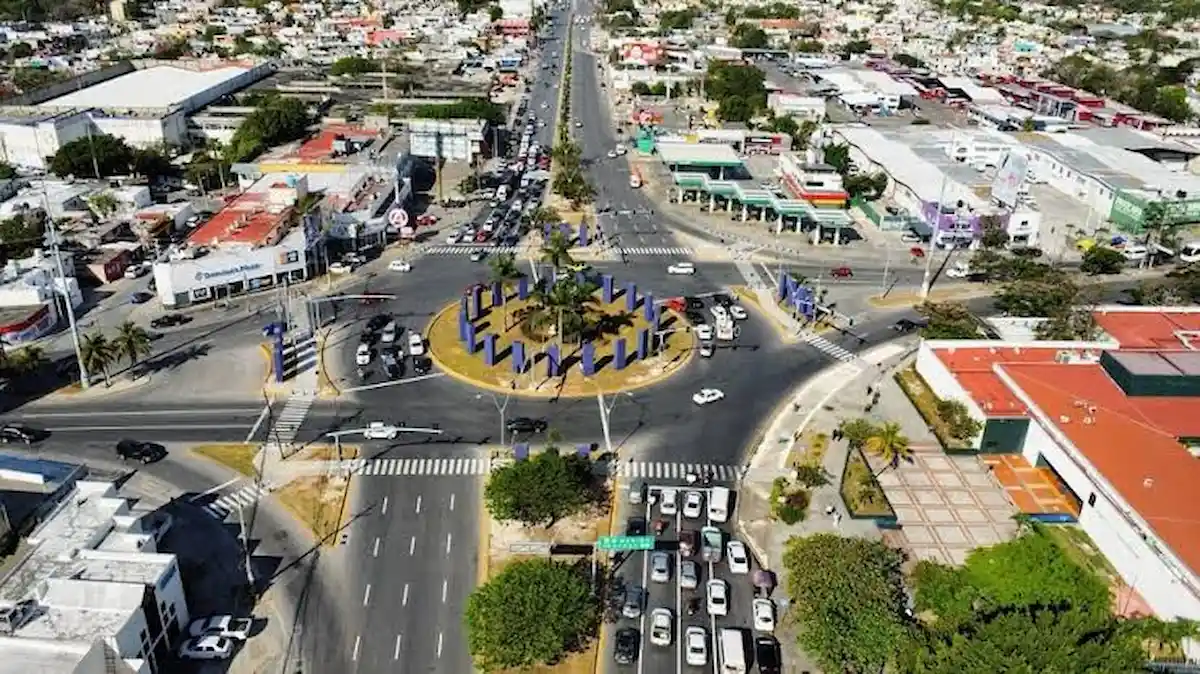
Cancún, Quintana Roo — The Institute of Culture and the Arts (ICA) of Benito Juárez has launched a conservation program for Cancún’s historic monuments, beginning work in the city’s foundational zone, where most of the municipal sculptural heritage is concentrated.
ICA Director Carlos López Jiménez said there are currently 12 monuments classified as municipal heritage that require constant maintenance due to deterioration from weather conditions and frequent vandalism, mainly graffiti.
As part of the program, the restoration of the Monument to History — one of the city’s most representative sculptures — has been completed, and the institute has officially taken over its preservation.
“The restoration of the Monument to History has just been finished; they officially handed it over to the Institute of Culture to preserve and care for it,” López Jiménez said.
The next intervention will be on the Monument to the Bricklayer, where officials aim to restore its original color and remove the graffiti that constantly mars its appearance.
“We are also looking at the so-called Monument to the Bricklayer to recover its color, because it gets painted and then covered in graffiti, but it’s constant work,” he commented.
The program plans to gradually restore the main monuments in the foundational zone, including the Monument to the Ceviche, the Monument to History, the Monument to the Bricklayer, and several traffic circles that are part of Cancún’s urban identity.
In addition to conservation efforts, the ICA is working on a project to rescue one of the symbols of the city’s origin: the old control tower of the Cancún International Airport.
López Jiménez explained that the structure will be installed in a space near the Nichupté Bridge Distributor once the infrastructure works currently underway in the area are completed.
The goal is to turn the old tower into a historical memory site and tourist attraction, where residents and visitors can learn about Cancún’s early years, while also creating a new public space for gathering and photography.
More Development
- Mexico’s Environment Agency Rejects Four Major Tourism Projects in Quintana Roo
- Cozumel Officials Review Malecón Remodel Plans at Tourism Development Workshop
- Cozumel Mayor Chacón Inspects Road Rehabilitation in Félix González Neighborhood
- Semarnat Denies Environmental Permit for GL Dreams Subdivision in Puerto Morelos
- Quintana Roo Public Works Department Seeks 10 Billion Pesos for Road Repairs in 2027
More Cancun
- Morena Launches 11 Municipal Races in Quintana Roo: Who’s In?
- Rafael Marín Confirms Morena Bid for Cancún Mayor in 2027
- Cancún Taxi Union Kicks Off 2027-2029 Leadership Election
- Buen Fin 2026 Set for November 13-17 With Five Days of Deals in Cancún
- Morena Ratifies Gino Segura as Quintana Roo State Coordinator