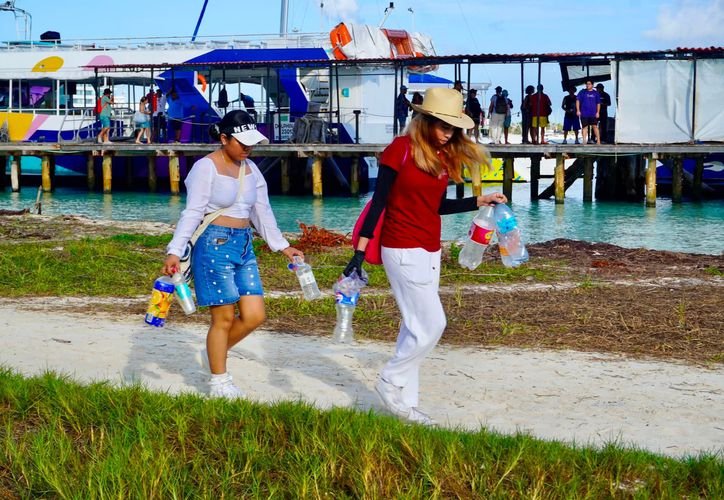
Cancun, Quintana Roo — Municipal cleanup crews have hauled 48,000 tons of garbage from Cancun’s public beaches so far in 2026, officials said. That equals 68.5% of all beach waste collected during 2025.
Arturo Javier Quintero Díaz, acting director of the Public Services Department for the municipality of Benito Juárez, said crews collected more than 70,000 tons of beach garbage last year. Waste volumes typically double during school breaks and other periods of high tourism, he said.
“We’re at 48,000 tons so far this year,” Quintero Díaz said. “Last year we were above 70,000 tons.”
Delfines and Marlin beaches hit hardest
The department said Delfines and Marlin, the largest and most frequented stretches of shoreline, accumulate the most litter. It also reported a 30% drop in cigarette butts and broken glass containers on public beaches.
Quintero Díaz credited the improvement to constant supervision by Zofemat, the federal office that manages Mexico’s coastal land zone. Zofemat staff are stationed at beach entrances from 8 a.m. to 5 p.m., telling visitors that smoking and glass containers are not allowed, he said.
The acting director said the municipality will keep those checkpoints in place to protect Cancun’s tourist beaches.
More Environment
- Puerto Morelos launches weekly sargassum watch until 2026
- Quintana Roo Seeks Geographic Indication to Protect Melipona Honey
- Dengue Cases in Quintana Roo Jump 152 Percent
- Quintana Roo Hoteliers Push Regenerative Tourism Amid Beach Access Disputes
- Greenpeace Finds Contamination at 17 Yucatán Wells and Cenotes as Maya Communities Demand Action
More Cancun
- Hells Angels Leader Arrested in Cancun Over Cartel Drug Trade
- Tourist Boat Traffic Slumps Across Quintana Roo Ports in September
- Cancún Waives 100% of Fines and Surcharges to Help Businesses Get Licensed
- Puerto Morelos Mayor Says Cancún Mansion Raided by Federal Agents Was ‘Lent’ to Her
- Mothers Keep Up Protest at Cancún Middle School Over Alleged Attack on Student