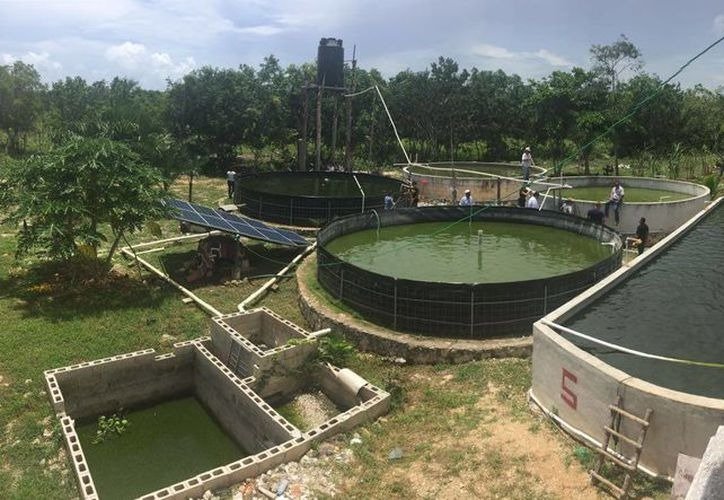
Chetumal, Quintana Roo — Agricultural chemicals washing into Chetumal Bay from the Rio Hondo basin are blocking the development of large-scale fishing and aquaculture in southern Quintana Roo, state officials said.
Jorge Aguilar Osorio, secretary of the state Department of Agricultural and Fisheries Development (Sedarpe), said rainwater runoff carries excess nutrients and synthetic inputs — particularly from sugarcane fields — into the bay, altering the marine ecosystem.
The ecological degradation, combined with the area’s legal protection as the Manatee Sanctuary, has prevented authorities from approving commercial aquaculture projects, including a proposed crab farming and marketing operation. Federal regulators require certification that the water is free of toxins before authorizing any captive species exploitation, citing public health concerns.
To address the issue, Sedarpe is promoting a shift to organic farming by establishing local biofactories that will supply farmers with natural alternatives to chemical fertilizers. The department stressed that current small-scale coastal fishing does not pose a poisoning risk to the public, but industrial-scale operations require rigorous scientific assessment.
The state has requested support from the Mexican Institute for Sustainable Fisheries and Aquaculture Research (IMIPAS), whose technicians will travel to Chetumal to take water samples. The lab results will help determine which activities are permissible in the bay and whether the water is clean enough for investment projects.
Given the strict federal oversight in the protected area, officials are considering relocating the crab farming infrastructure to less environmentally pressured water bodies, with Laguna Guerrero emerging as a viable option. Sedarpe has scheduled a virtual meeting with the National Commission of Aquaculture and Fisheries (Conapesca) later this month to review preliminary findings and define the regional fisheries strategy.
More Environment
- Two Atlantic Low-Pressure Areas Watched; One Shows 40% Cyclone Chance
- Tren Maya Freight Complex in Chetumal to Break Ground in 2027
- Lawmakers Propose One Tree Every 15 Meters in New Quintana Roo Developments
- Bacalar Aims to Show the World Its Appeal Goes Beyond the Lagoon
- Quintana Roo Weighs Permanent Revocation of Permits for Legacy by Awa Playacar After Closure Seals Broken
More Chetumal
- More Than 200 Children Evacuated From Chetumal Daycare After Electrical Fault
- Quintana Roo Prisons Add Digital Visit Booking and Family Spaces
- Bamboo Growers From 13 Mexican States Form National Association
- Chetumal Chef Kevin Chávez to Represent Mexico at S.Pellegrino Young Chef Regional Final
- Diocese of Cancún-Chetumal Warns of Man Posing as a Priest in Chetumal