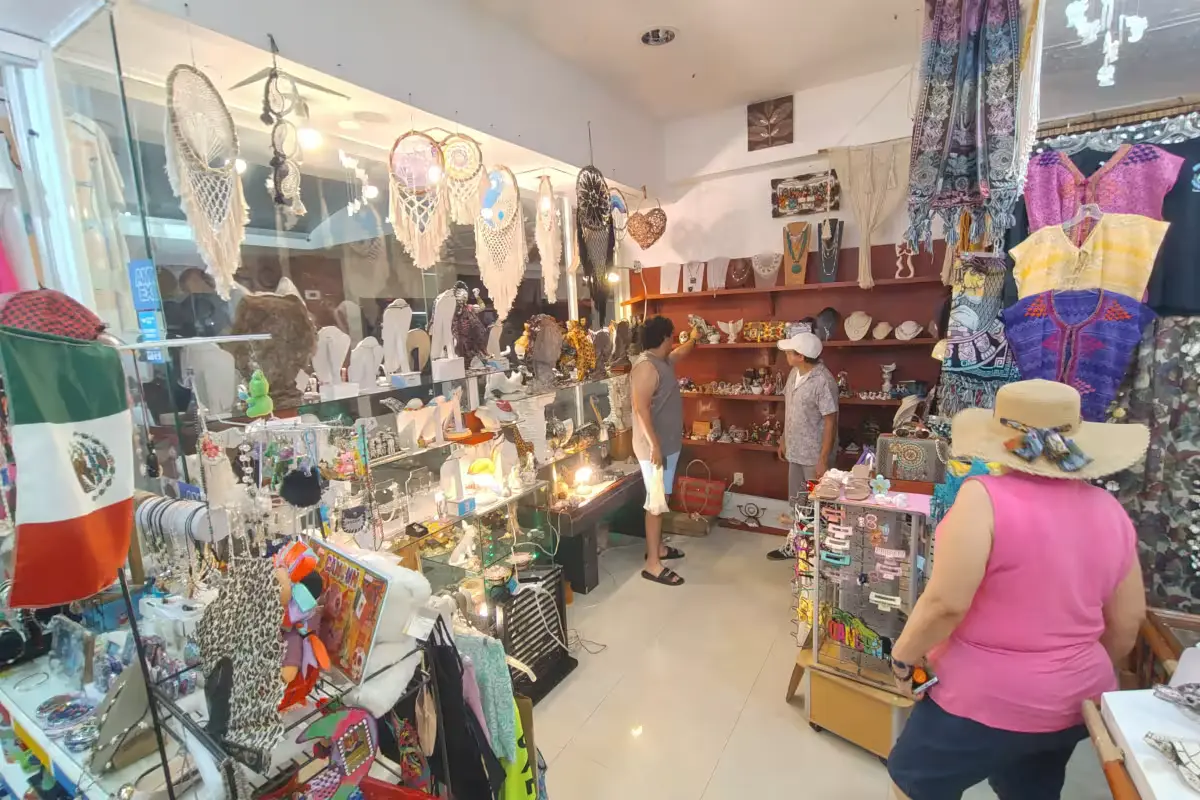
Cancún, Quintana Roo — Artisan vendors in Cancún’s Hotel Zone are weathering one of their worst seasons in recent years, with crowds of summer tourists failing to translate into sales at some of the area’s best-known shopping plazas.
At Plaza Caracol, one of the resort city’s traditional shopping centers, about 50 vendors are feeling the pinch. Javier, a merchant who has worked there for 39 years, said his combined sales from April through July came to barely 30,000 pesos. Jorge Cruz, another vendor, said his earnings were minimal — he managed to sell only a few low-priced necklaces — while debts began to outstrip his income.
The slump is visible across the hotel zone. Several shops at Plaza Flamingos stand empty, and workers there said they have gone entire days without making a single sale. At Coral Negro, the summer season brought none of the crowds of foreign tourists seen in previous years.
Longtime vendors remember a very different Cancún. In the 1980s and 1990s, they said, international visitors with strong buying power packed plazas like Caracol, Lagunas and Coral Negro, purchasing handicrafts, jewelry, clothing and regional products in large quantities. Javier recalled that American and European tourists who stayed for extended periods sometimes arrived on luxury boats, asked for samples and made purchases worth thousands of dollars.
By the mid-2000s, however, sales began to fall sharply, Javier said. Today, many plazas show signs of neglect: shuttered storefronts, faded “for sale” and “for rent” signs, dusty display windows, and corridors with few visitors.
Tourists still wander through the plazas, but their purchases offer only slight relief. A family from San Luis Potosí said they enjoyed Cancún’s beaches and beauty but noticed a decline compared with previous visits. They bought some souvenirs, giving vendors like Cruz a small boost.
Cruz said the period from May to July was especially difficult, with the high season failing to produce the expected income. Many shopkeepers, he said, have turned to loans to cover basic expenses and keep their businesses open.
Plaza Flamingos is in even worse shape. Most of its units are closed, and the few stores still operating report sparse visitors, with sales mostly limited to cheap promotional items.
A family of 28 from Monterrey said they had a pleasant stay at their hotel and enjoyed the beaches, but acknowledged that Cancún no longer holds the same appeal for older generations. In the past, larger family groups made the trip; today, it is mainly children and grandchildren who visit, they said, while their parents prefer to keep their memories of the Cancún they knew decades ago.
Vendors and plaza workers now say they do not expect a meaningful recovery during this high season. Facing scarce customers and rising debt, many are operating on minimal income — and some fear they may eventually have to close their businesses for good.
More Business
- Quintana Roo Climbs 12 Spots to 9th in Competitiveness Index
- Quintana Roo Courts European Airlines to Boost Winter Flights to Cancún
- Xcalak Fishermen Help Track Reef Fish Larvae in Chetumal Bay
- Mayan Council Urges Mexico’s Supreme Court: Don’t Decide About Us Without Us
- Quintana Roo Construction Demand Jumps 40% on Hotel Renovations
More Cancun
- Cancún: 3 Kidnappers Get 80-Year Sentences Each
- Erasmo Catarino Nearly Drowns at Cancún Beach, Rescued by Raúl Sandoval
- Three Raids in Playa del Carmen and Cancún Net One Detention and Suspected Drugs
- Cancún Enters Final Year With 2.3 Billion Pesos in Public Works
- Benito Juárez to Regulate Cancún Vacation Rental Boom With New Urban Development Plan