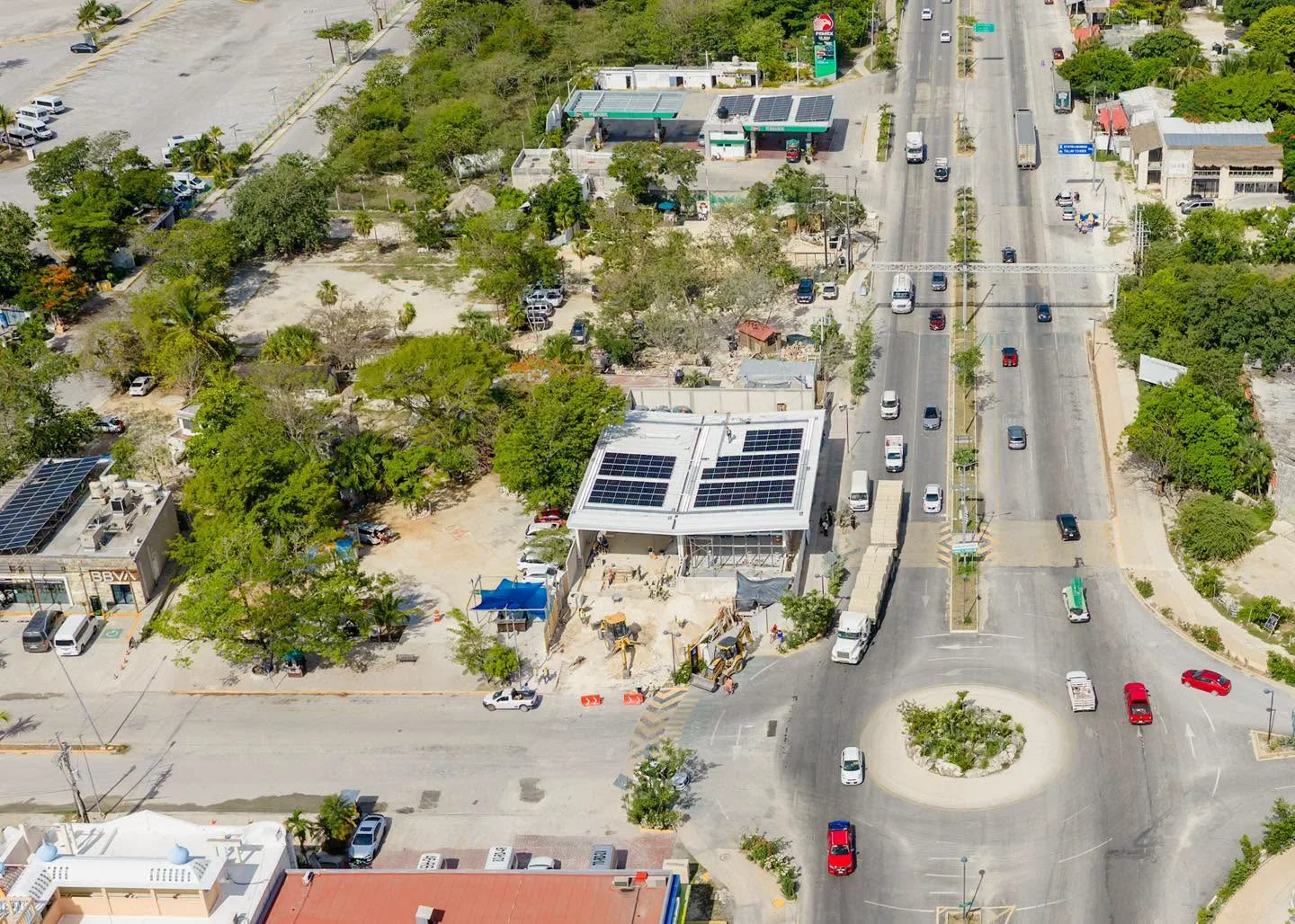
TULUM, Quintana Roo — A new ADO bus terminal near Tulum’s archaeological zone is expected to begin operating in September, giving the northern side of the city a permanent transportation facility serving tourists, residents and long-distance passengers.
Mobility ADO is investing 37 million pesos in the project, according to Gerardo Jerez Ovando, the company’s general manager for the Caribbean region. Jerez provided an update during a construction-site visit with Tulum Mayor Diego Castañón Trejo.
Construction is scheduled to finish by the end of August, followed by the start of operations sometime in September. The company has not announced the precise opening date.
The Terminal ADO Zona Arqueológica is expected to operate 24 hours a day and offer connections to Cancún, Tulum International Airport and destinations in central Mexico. However, operating around the clock does not necessarily mean buses will depart throughout the night. Individual schedules, routes and frequencies have not been published.
“We have to continue generating economic activity and infrastructure to provide the service our residents and tourists deserve,” Castañón said during the visit. The mayor described the investment as an indication that private companies remain interested in expanding services in Tulum.
A permanent terminal at an existing transportation point
ADO already recognizes Tulum Zona Arqueológica as a departure and arrival point in its booking system. Some buses serving Cancún, Playa del Carmen and other destinations currently stop in the area.
The company’s own travel information identifies two Tulum terminals: Tulum Centro, on Avenida Tulum between Júpiter and Alfa Norte, and Tulum Zona Arqueológica, along Federal Highway 307. ADO currently advertises service from the archaeological-zone stop to at least part of Cancún International Airport.
The new project therefore appears to formalize and substantially expand an existing bus base rather than create an entirely new transportation point. Its importance lies in providing permanent infrastructure, staffing and passenger facilities where some travelers currently board along the highway.
The company has not yet detailed which amenities the terminal will include or whether every service currently stopping near the archaeological zone will move into the new facility.
ADO also has not said whether routes or departure frequencies at its downtown terminal will change once the second facility opens. Tulum Centro is expected to remain an important station, particularly for passengers staying in the pueblo and central neighborhoods.
A more convenient option for visitors to the ruins
The location could be useful for visitors arriving from Cancún or Playa del Carmen who intend to visit the archaeological zone without first traveling into downtown Tulum.
The ruins are north of the city center and form part of a larger visitor area that now includes Tulum National Park, Parque del Jaguar and the Museo Regional de la Costa Oriental.
Since the federal government reorganized access to the area, visiting the ruins may involve separate entrance procedures for the archaeological site, national park and Parque del Jaguar. The National Institute of Anthropology and History, known as INAH, continues to sell admission directly at the archaeological zone. Grupo Mundo Maya also offers combined ticketing at the entrance to Parque del Jaguar.
The new ADO terminal should make it easier to reach the general visitor area, but passengers should not assume the bus will leave them directly at the archaeological entrance. ADO has not yet published a site map showing the terminal’s precise relationship to the park entrance, ticket offices or internal transportation.
The archaeological zone also keeps much shorter hours than the future bus terminal. A 24-hour terminal could accommodate overnight and early-morning long-distance services, but it does not create nighttime access to the ruins or Parque del Jaguar.
Direct connection to Tulum airport planned
One of the most notable proposed routes would connect the archaeological-zone terminal with Felipe Carrillo Puerto International Airport, commonly called Tulum International Airport.
The airport opened in December 2023 approximately 40 kilometers southwest of downtown Tulum. ADO already provides scheduled service between the airport and its downtown station, although the number of trips has varied with flight schedules and passenger demand.
Adding the archaeological zone as an airport connection could benefit travelers staying on the northern side of Tulum, visiting the ruins or lodging at hotels and resorts along Highway 307. It could also reduce the need to travel south into the center of town before turning back toward the airport.
ADO has not said whether the airport service will run directly from the new terminal or include a stop or transfer at Tulum Centro. Travel time, luggage policies, fares and daily frequencies remain unannounced.
Passengers should continue checking the ADO booking system using their exact travel date and departure point. A ticket labeled “Tulum” may refer to the downtown terminal, while “Tulum Zona Arqueológica” identifies the northern location.
Connections to Cancún and central Mexico
ADO says the new terminal will also connect passengers with Cancún and central Mexico. Cancún service could include the city’s downtown bus terminal, Cancún International Airport or both. Those are separate destinations in ADO’s reservation system, so travelers will need to verify the arrival point before purchasing a ticket.
“Central Mexico” is also a broad description rather than a confirmed route list. It could involve direct long-distance services or trips requiring a connection through another terminal. No cities have been formally identified.
Current third-party booking information shows that the archaeological-zone stop already handles several daily departures to Cancún and a smaller number to Playa del Carmen. Those schedules may provide a foundation for the new terminal, but they should not be treated as the final September timetable.
Employment figures require some context
Jerez said the 37-million-peso project is associated with 50 direct jobs and approximately 250 indirect jobs filled by people from Tulum and elsewhere in Quintana Roo.
Mobility ADO and the municipal government have not provided a breakdown showing how many are construction jobs, permanent terminal positions or jobs supported through suppliers and related services.
The full figure of 300 should therefore not be interpreted as 300 permanent positions inside the terminal. More information will be needed once construction ends and the facility begins operating.
What passengers still need to know
The project has a target month but not yet a usable travel schedule. Before passengers can plan around the new terminal, ADO still needs to confirm:
- The exact opening date
- Its location and passenger entrance
- Initial destinations and departure times
- Airport and long-distance fares
- Whether services are direct or require transfers
- Which buses will continue using Tulum Centro
- Terminal facilities and overnight services
If construction remains on schedule, those details should become available before the first departures in September. Until ADO publishes the timetable, travelers should not assume that every Cancún, airport or long-distance bus will stop at the archaeological-zone terminal.
More Development
- Semarnat Approves 43-Room Hotel on Holbox With Conditions
- Audio Reveals Pressure Tactics in Leona Vicario Land Regularization Scheme
- Hyatt Zilara Cancún Targets 70% Winter Occupancy After $75 Million Renovation
- New CFE Substation in Cancún’s Polígono Sur to Be Ready in December
- Paseo de las Sirenas Becomes a New Isla Mujeres Attraction
More Tulum
- Man Shot Dead in Tulum Irregular Settlement as Neighbors Cite Land Threats
- Mexico to Review Private Events Held Inside Tulum National Park
- Illegal Fishing Undercuts Lobster Prices for Tulum Cooperatives
- Quintana Roo Governor Invites Tulum Jaguar Park Vendors to Register for Certification
- Tulum Yoga Music Fest Plans Week of Classes, Music and Wellness Events