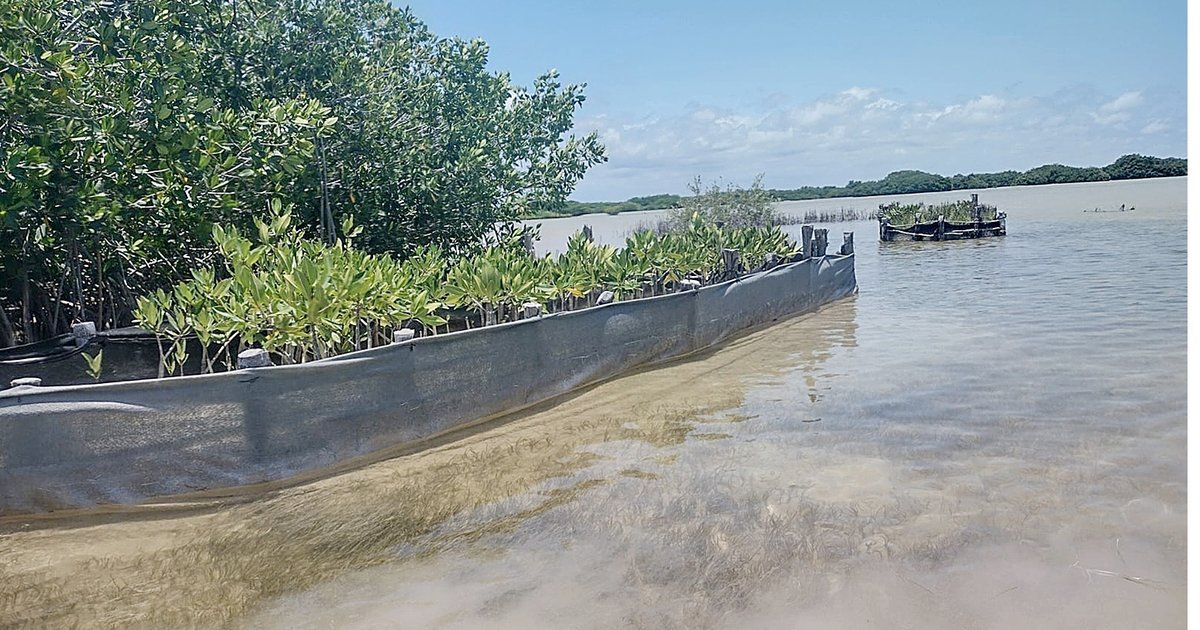
Chabihau, Yucatán — In the small coastal community of Chabihau, part of the municipality of Yobaín on the northern coast of Yucatán, residents proudly recount how they have restored the mangrove ecosystem of their lagoon, which was devastated by two hurricanes in the late 20th century.
Decades of Community-Led Restoration
The lagoon is part of the Ciénegas y Manglares de la Costa Norte de Yucatán State Reserve. It was severely damaged by Hurricane Gilberto in 1988 and Hurricane Isidoro in 2002. Restoration efforts began in 1999, initially driven by a group of about 100 women supported by academic researchers and international organizations.
Over the years, some of those women have continued the work alongside their children, who bring new ideas, and with the active participation of local fishermen. According to officials from Yucatán’s Sustainable Development Secretariat, the main technical solution that enabled mangrove repopulation was designed and implemented by the residents themselves.
The process included cleaning springs, which raised the topographical level of the land and allowed plants to grow without drowning. After five years of intensive planting, the ecosystem began to show signs of recovery, with trees of various ages and sizes integrating naturally or through intentional seeding.
Mangroves: Key to Local Economy and Biodiversity
The ecosystem plays a strategic role in Chabihau’s economy, which is primarily fishing-based. The lagoon serves as a breeding ground for shrimp and various fish species, and also supports the cultivation of a local endemic snail called “Chivita.”
During the winter storm season, when weather prevents offshore fishing, the lagoon becomes a vital source of income for families who depend on daily earnings. Specialists say that sustainable use of the area during these weeks allows residents to weather the critical period without compromising the ecosystem’s future.
After nearly three decades of sustained effort, the site has also gained importance for biodiversity: it hosts a wide variety of birds, deer, and other animals attracted by the freshwater. Experts believe the area has potential for scientific birdwatching tourism.
Resources from the Herencia Maya initiative, which combines private investment with funds from the Yucatán government to strengthen management of 11 natural protected areas in the state, could further support the conservation work already underway in the community. For those driving these efforts, the key is ensuring that environmental conservation goes hand in hand with the economic well-being of the local population.
More Environment
- Two Atlantic Low-Pressure Areas Watched; One Shows 40% Cyclone Chance
- Tren Maya Freight Complex in Chetumal to Break Ground in 2027
- Lawmakers Propose One Tree Every 15 Meters in New Quintana Roo Developments
- Bacalar Aims to Show the World Its Appeal Goes Beyond the Lagoon
- Quintana Roo Weighs Permanent Revocation of Permits for Legacy by Awa Playacar After Closure Seals Broken