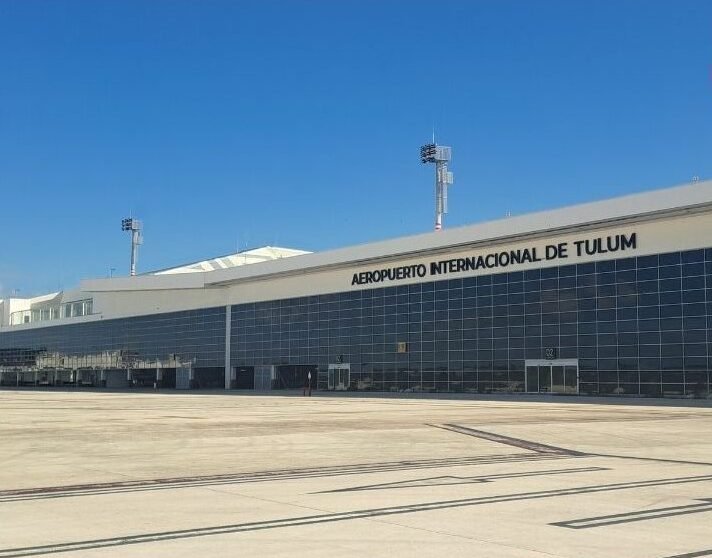
Tulum, Quintana Roo — The Felipe Carrillo Puerto International Airport in Tulum, once promoted as the crown jewel of tourism in southeastern Mexico and a solution to overcrowding at Cancun’s airport, is experiencing an unexpected downturn.
After a first year that benefited from novelty, moving over 1.2 million passengers, the terminal has entered a worrying slowdown. Aviation analysts project that if the current contraction trend continues, the airport could end the year with just 700,000 passengers — less than 60% of its initial record — raising alarms in Quintana Roo’s tourism sector.
The decline stems from a harsh collision with the region’s geographic and economic realities. The airport was built about 20 kilometers south of Tulum, deep in the jungle toward Felipe Carrillo Puerto. While the distance alone might not have been an obstacle, the lack of diversified, affordable public transport turned transfers into an expensive trap controlled by a limited monopoly of local taxi unions.
A trip from the boutique hotel zone to the airport costs at least $1,200 pesos with a federal-plate company — double the cost of reaching Cancun’s airport from its hotel zone. In many cases, it is more expensive than the flight itself, breaking the promise of direct travel and deterring budget-conscious visitors.
Travelers and agencies have discovered that it is often cheaper to fly into Cancun International Airport and take ground transport — bus, shared shuttle, or rental car — for the 130-kilometer drive to the Riviera Maya than to pay inflated rates at Tulum’s airport.
This shift in consumer behavior has hit airline profitability. With demand not sustaining and no government incentives to maintain frequencies, carriers have pulled back. JetBlue, Copa Airlines, Avianca, and Volaris Costa Rica have suspended or scrapped operations at the terminal. The airport went from connecting to 12 foreign cities to just four direct U.S. routes — Atlanta, Dallas, Houston, and Miami — with an average of three daily international flights.
Data from the Federal Civil Aviation Agency (AFAC) confirms a drop of over 34% in international traffic and nearly 25% in domestic traffic in the first months of the year, leading to a 60% contraction in total seat supply.
The airport’s struggles are compounded by broader issues in Tulum’s tourism brand. Rapid real estate and hotel growth has not been matched by basic services. Rising costs, persistent sargassum seaweed on beaches, and high-profile security incidents have tarnished the destination’s premium image.
The crisis has reached the airport’s workforce. Citing low activity and the low season, the private security company handling inspections and internal control has begun removing dozens of workers, restricting access, and pressuring them to resign or accept forced transfers to Cancun. This has created uncertainty and complaints of labor irregularities at the facility, which is operated by the Olmeca-Maya-Mexica Group (GAFSACOMM).
Paradoxically, the airport has been nominated for a World Travel Award as leading airport in Mexico and Central America. The nomination highlights the contrast between its acclaimed architecture and the logistical deficiencies on the ground.
Analysts say the terminal’s first major test of endurance will depend not on how many planes can land, but on the political and business will to dismantle transport monopolies and restore economic competitiveness to Tulum’s beaches.
More Tourism
- Isla Mujeres Ready for Luz y Vida 2026 Festival With Free Pandora Concert
- Paraguayan Tourists Challenge Asur Over $30 Exit Fee at Cancún Airport
- Mexico Hoteliers Warn of 1.1 Million Air Tourist Loss as U.S. Arrivals Slump
- Playa del Carmen Businesses Seek Later Closing Hours for Bars and Restaurants
- National Geographic Names Maya Ka’an Among Top Destinations to Visit in 2027
More Tulum
- Tulum to Host Xibalba MTB Challenge 2026 on November 1
- Uber Begins Operating in Playa del Carmen and Tulum With First-Ride Discounts and Taxi Driver Recruitment
- Tulum Records Over 6,000 Sea Turtle Nests as Beach Furniture Threatens Hatchlings
- Free Mammograms Offered in Three Quintana Roo Municipalities
- Anyma Brings ÆDEN to Zamna Tulum for 10th Anniversary Show on January 4