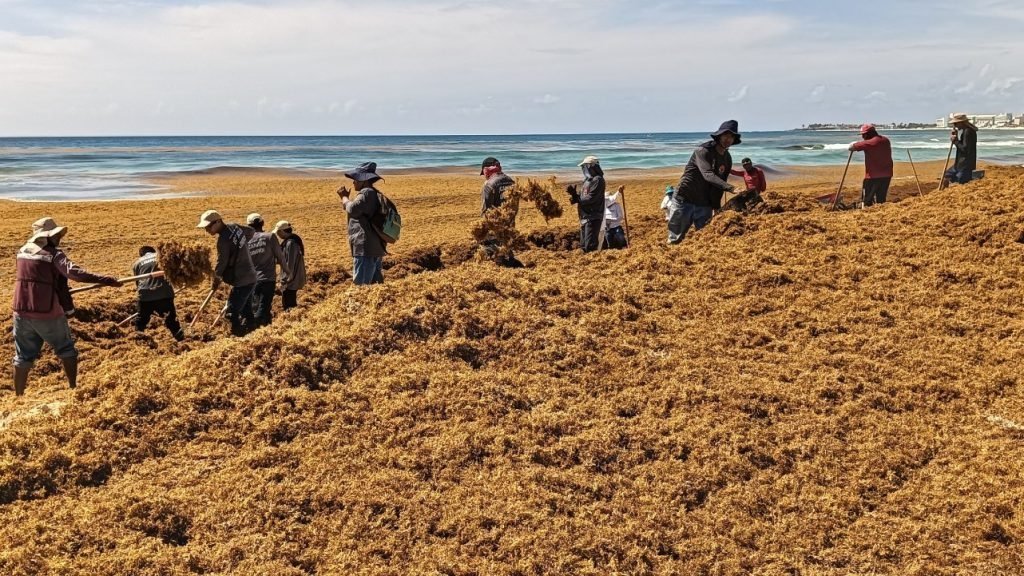
Cancún, Quintana Roo — Climate change is no longer a future threat but a present reality in Quintana Roo, where rising temperatures, extreme rainfall, massive sargasso arrivals, and atypical weather events are clear signs of an environmental transformation that will deepen in coming years, experts warn.
Antonio Morales Ocaña, municipal meteorologist for Playa del Carmen, said global warming is already altering the region’s climate and its effects are virtually irreversible.
“We are seeing phenomena that years ago did not occur with this intensity. The recent rains and storms are the product of extreme heat concentrated in the peninsula,” Morales Ocaña said.
Over the past weeks, temperatures have reached 34 to 35 degrees Celsius (93-95°F) in the shade across the Yucatan Peninsula, conditions that favor energy accumulation in the atmosphere and generate torrential rains, more intense storms, and flooding, he explained.
The meteorologist also linked rising sea temperatures to the massive arrival of sargasso on the Mexican Caribbean coast, a phenomenon that began as early as January this year, months ahead of the usual season.
Adding to the mix is Saharan dust, which annually crosses the Atlantic carrying particles and nutrients. According to Morales Ocaña, this dust can both increase temperatures and fuel the growth of the macroalgae. “Saharan dust partially inhibits tropical cyclone formation but also favors drier, hotter conditions in our region,” he said.
Regarding the current hurricane season, Morales Ocaña noted that Atlantic forecasts remain below historical averages, while the Pacific is expected to see above-normal cyclone activity due to El Niño conditions. He explained an atmospheric relationship often causes increased Pacific cyclone activity to reduce tropical system formation in the Atlantic and Caribbean.
The specialist recalled that Quintana Roo has already experienced record temperatures in recent years, approaching 39°C (102°F), a trend consistent with international global warming reports. “It is irreversible. The only thing left is to adapt to these changes,” he stressed.
Climate change is directly impacting daily life and key economic sectors such as tourism, urban infrastructure, and coastal ecosystems that define Quintana Roo, Morales Ocaña warned. Experts agree that strengthening adaptation and resilience measures will be essential to meet the environmental challenges of the coming decades.
More Environment
- Greenpeace Finds Contamination at 17 Yucatán Wells and Cenotes as Maya Communities Demand Action
- Quintana Roo Tops 152,000 Metric Tons of Sargassum as Playa del Carmen and Cancún Lead
- Profepa Shuts Down Los Rápidos Swimming Spot in Xul-Ha Over Missing Environmental Permit
- Court Gives Profepa 72 Hours to Clarify Tren Maya Closure Order
- National Geographic Names Maya Ka’an Among Top Destinations to Visit in 2027
More Quintana Roo
- Quintana Roo Beaches Lose Up to 14 Meters of Sand a Year as Restoration Plan Advances
- Quintana Roo Youth Sailors Join Mexico’s Team for Optimist Championship in Uruguay
- Mara Lezama Hands Out 100 Sewing Machines in Chetumal to Boost Women’s Self-Employment
- Tourism Slump Forces 35% of Skål México Businesses to Borrow to Cover Payroll
- Crystal Meth Addiction Surges in Quintana Roo, Fuels Nearly 90% of Homicides