
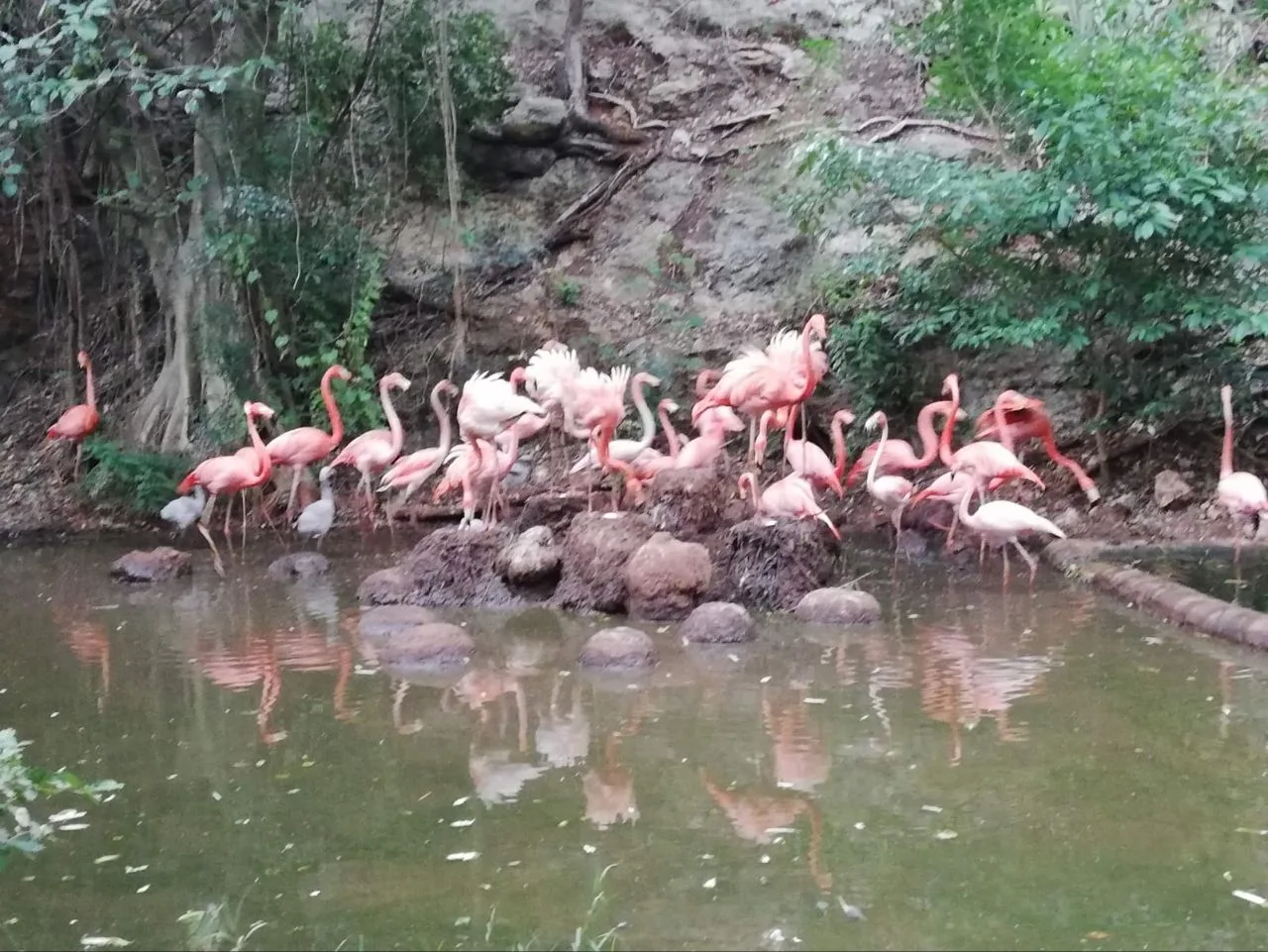
Merida, Yucatan — Six American flamingo chicks have hatched at the Bicentennial Animaya zoo, marking a milestone in the facility’s wildlife conservation program, city officials announced Saturday.
The Public Services Department of the Merida City Council said the chicks are beginning to socialize with the rest of the flock.
Although the chicks are precocial and leave the nest within days of hatching, their parents feed them crop milk beak-to-beak, as the chicks are born with straight beaks that are not yet functional for filtering food.
During the breeding season, adult flamingos lose their characteristic bright pink coloration, which is not present at birth — chicks hatch with soft white down that later turns gray. The pink color comes from algae and crustaceans in their diet.
Breeding Program
Since 2016, the Animaya Wildlife Conservation Center has run a breeding program for the American flamingo (Phoenicopterus ruber), one of the most emblematic birds of the Yucatan Peninsula and listed as a threatened species under Mexican environmental standard NOM-059-SEMARNAT-2010.
Each nesting season, which occurs in spring, flamingos lay a single egg. At Animaya, staff build mud nests early in the year, let them dry, and place them in the nesting area, where breeding pairs choose and finish constructing their nests.
The birds, known for their long necks and legs, are highly social and live in large colonies, making them easy to spot in the wild in their nesting and feeding areas.
Flamingos are sensitive to environmental changes in their natural habitat. Excessive rains alter salinity levels and wetland habitats, flood nests, drown eggs, and dilute water, dispersing or killing their food. Reduced rainfall decreases food availability by increasing salinity and reduces nesting material.
Flamingos serve as engineers of coastal wetlands and mangroves: by filtering water and mud with their beaks, they oxygenate the soil and control populations of microorganisms and small crustaceans, keeping water clean and suitable for other species.
The new arrivals can be seen at the park Tuesday through Sunday from 8 a.m. to 5 p.m., along with attractions such as the Felinary, the Stela, and the Botanical Park.
More Environment
- Riviera Maya to Host Aquaponics Congress With Experts From More Than 10 Countries
- Isla Mujeres Seeks Volunteers to Rescue Blue Crabs on September 28 and 29
- Playa del Carmen Fire Calls Rise 4% on Carelessness and Uncontrolled Burns
- Cozumel Releases Nearly 7,000 Sea Turtle Hatchlings in 2026 Nesting Season
- Semarnat Rejects 954-Room Megahotel at Punta Maroma in Playa del Carmen