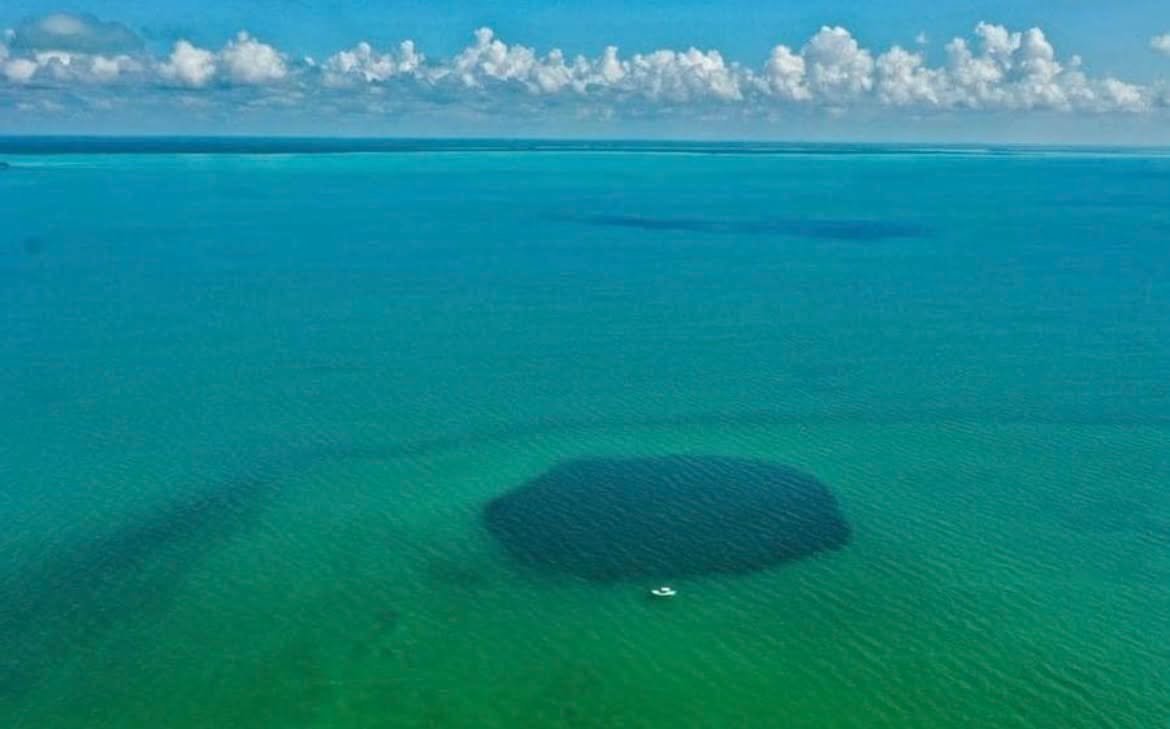
Chetumal, Quintana Roo — Researchers have identified seven deep submarine cavities in Chetumal Bay, including six fully formed sinkholes and one still in development, according to scientists studying the region’s underground water system.
The discovery was announced by Robbie Schmittner, head of the Large-Scale Water Movements Below the Yucatan Peninsula project, known as Proyecto Mayas. He explained that these structures are “blue holes” or submarine dolines — geological formations created over thousands of years by the dissolution of limestone bedrock.
Among the cavities is Taam Ja, currently considered the second-deepest blue hole in the world. The other five similar structures are distributed across the bay, all connected to underground dynamics that remain under investigation.
Schmittner noted that such formations are not unique to Quintana Roo; they also exist in other Caribbean regions such as Belize and the Bahamas, where they are internationally known as “blue holes” and serve as important scientific research subjects due to the information they preserve about the planet’s geological evolution.
While there is interest in exploring their tourism potential, the current conditions of Chetumal Bay — characterized by low visibility and high sediment levels — limit recreational use. Therefore, the primary focus remains on scientific research of the peninsula’s aquifer system.
More Environment
- Playa del Carmen Unveils Recycled-Plastic Lifeguard Tower at Playa 72
- Chankanaab Park Eyed as Site for Cozumel’s First Dolphin Sanctuary
- Tulum Launches Credentialing Program for Parque del Jaguar Tourism Workers
- Cancún to Host National Climate Change Colloquium in October
- Riviera Maya Hotels Offer Free Nights When Sargassum Blocks the Beach
More Chetumal
- Two Hotel Workers Killed Near Kohunlich; Third Survives Beating
- Kidnapped Chetumal Man Found Severely Beaten After 24 Hours
- Southern Quintana Roo Economic Diversification Still Pending, State Official Tells Lawmakers
- Masked Gunmen Abduct 32-Year-Old Man in Chetumal
- Counterfeit ‘G5’ Banknotes Prompt Alert Among Quintana Roo Merchants