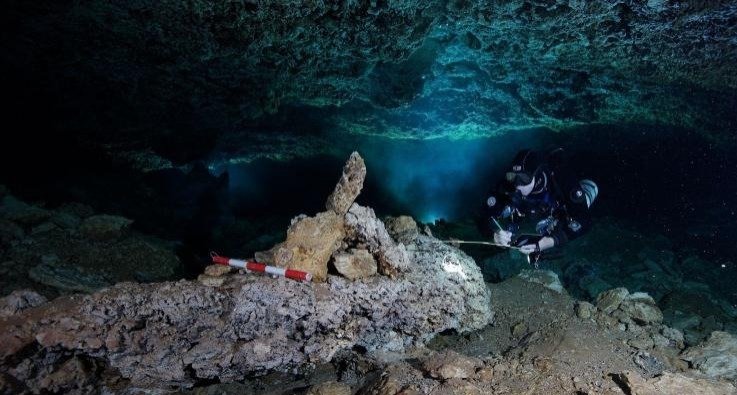
Mexico City — A new project aims to catalog Mexico’s submerged archaeological heritage, creating a specialized atlas of cenotes, flooded caves, and other inland water bodies across the country.
The initiative is a collaboration between the Underwater Archaeology Department of the National Institute of Anthropology and History (INAH) and the Research Center for the Aquifer System of Quintana Roo. Its goal is to strengthen research and conservation of cultural objects associated with water-filled archaeological sites.
Archaeologist Helena Barba-Meinecke will lead the development of the Underwater Archaeological Atlas. The project covers the location, documentation, research, protection, and public dissemination of vestiges found in underwater formations in various regions of Mexico.
So far, researchers have identified 100 sites across 103 archaeological contexts. Of those, 53 are cenotes and 50 are flooded or partially flooded caves. Twenty-two sites contain evidence considered significant for further investigation.
The catalog will provide a systematic record of archaeological spaces that remain underwater, offering tools for their study and preservation. Such sites may hold material remains that shed light on the societies that inhabited different parts of Mexico in ancient times.
The project is also expected to strengthen protection of the country’s underwater cultural heritage and make it more accessible to specialists and the general public through organized information about registered sites and discoveries made during research.
More Environment
More Quintana Roo
- INE Opens 2026-2027 Federal Electoral Process in Quintana Roo, Vows to Tackle Voter Apathy
- Quintana Roo High School System Aims to Install Cameras at All 44 Campuses
- Biometric CURP in Quintana Roo: Where to Apply, What to Bring and Whether It’s Mandatory
- Maya Council and Xcaret Push Supreme Court to Drop Indigenous Symbols Case
- Cancún Hosts 45 Nations at EU-Caribbean Summit on Sargassum