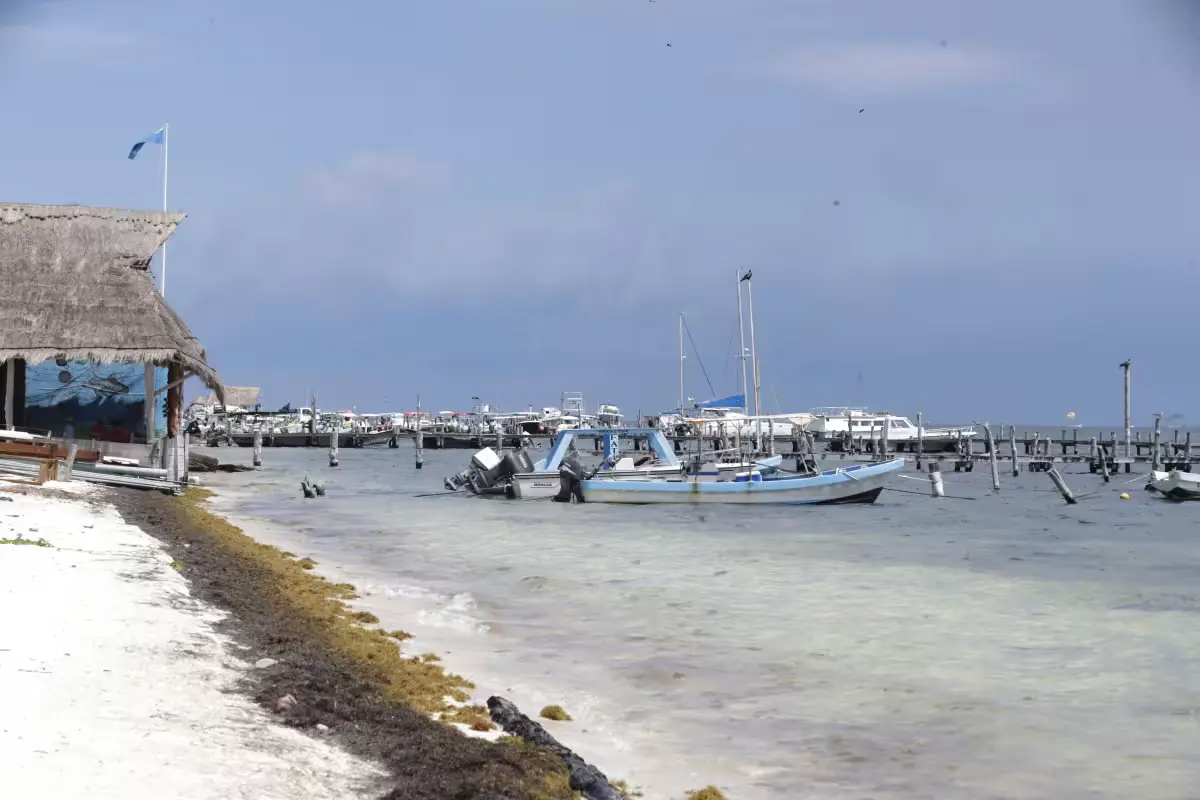
Cancún, Quintana Roo — The latest satellite image of the Great Atlantic Sargassum Belt shows a wide area of lower-density seaweed just east of the Lesser Antilles, a sign that some Caribbean coastlines could see lighter beaching in the coming days, according to the non-governmental monitoring group Sargassum Monitoring.
If the trend continues, several islands could experience less intense arrivals in the near term. But the group cautioned that it is too early to declare victory.
The Mexican Navy is keeping its sargassum alert at red due to the excessive presence of the algae, based on daily reports from the Oceanographic Institute of the Gulf and Caribbean Sea. At the beginning of the month, the Mexican Caribbean contained an estimated 44,455 tons of sargassum; that figure now stands at 18,229 tons. In the central western Atlantic, the volume has fallen from 230,315 tons to 168,427 tons this month.
The apparent pause does not mean the season is over, Sargassum Monitoring said. Large amounts of the macroalgae remain farther east across the tropical Atlantic, and their movement will depend on ocean currents, winds and weather conditions.
“This is exactly why continuous monitoring remains essential,” the group said. “Satellite images help us identify large-scale trends, but only observations from people on the ground can confirm what actually reaches the beaches.”
Environmental authorities in Quintana Roo project that around 119,000 tons of sargassum could arrive by the end of 2026, exceeding the 96,000 tons collected in 2025. In recent weeks, dozens of beaches have been placed on red alert, and some have been temporarily closed. The most affected areas include Tulum, Playa del Carmen, Puerto Morelos, Mahahual and several points along the Riviera Maya corridor.
This year’s season started early. Although the heaviest landings typically occur between May and August, the first arrivals were observed in January and February.
While floating in open ocean, sargassum provides shelter and food for fish, turtles and other marine life. Problems arise when large masses drift into shallow waters and pile up on sand for days. Researchers attribute the growing abundance to rising ocean temperatures, shifting currents and higher nutrient levels from fertilizers, wastewater and other human activities.
When sargassum covers broad ocean areas, it blocks sunlight, damaging seagrass beds and reefs. Its decomposition consumes oxygen, disrupts coastal ecosystems and can create what scientists call “brown tide.”
The decaying organic matter also releases hydrogen sulfide, the source of the characteristic rotten-egg smell. Prolonged exposure near large accumulations can irritate the eyes and respiratory tract, and may cause headaches, nausea or general discomfort, particularly for workers who clean beaches daily.
More Environment
- Mexican Navy Opens Youth Photography Contest on Ocean Conservation
- WHO Warns El Niño Poses Major Global Health Threat
- Hurricane Polo Hits Category 5; Five Mexican States Brace for Heavy Rain
- Isla Mujeres Fishermen Face Grouper Shortage as Catch Barely Covers Local Demand
- Cancún Officials Urge Residents to Protect Pets After Reported Puma Sighting in Cuna Maya
More Quintana Roo
- Quintana Roo Congress Ranks Among Mexico’s Least Transparent
- Riviera Maya Business Groups Push to Block 35.8% Hike in Mexico’s Tourist Entry Fee
- Quintana Roo Climbs 12 Spots to 9th in Competitiveness Index
- Sargassum Collection in Quintana Roo Tops 133,000 Tons, Setting New Record
- Quintana Roo Courts European Airlines to Boost Winter Flights to Cancún