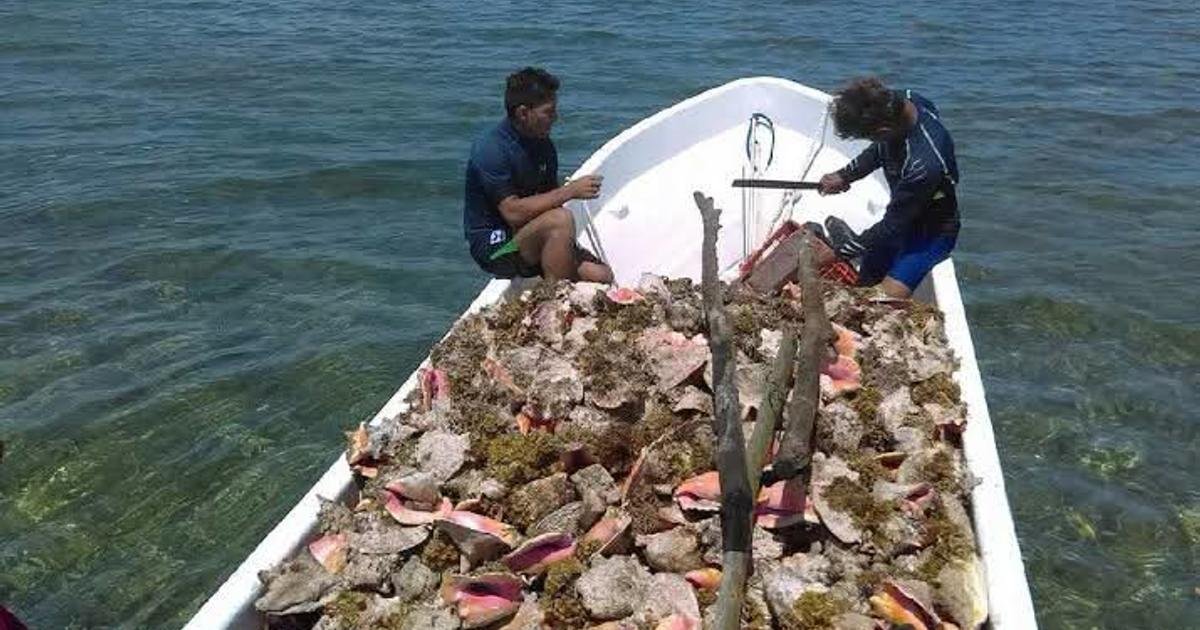
Chetumal, Quintana Roo — After a seven-month ban, Quintana Roo’s pink conch season opened on November 1 along the state’s coastline and will remain open through April 30, 2027. But the restriction stays in force through November in specific areas, including Banco Chinchorro and the coastal strip between Punta Herrero and Bacalar Chico, where harvesting is still prohibited.
For fishing cooperatives, the start of the season means it is time to apply to the National Aquaculture and Fisheries Commission (Conapesca) for permits to harvest the marine resource. Tirso Herrera, president of the Banco Chinchorro cooperative, said the groups will file their applications this month and expect an answer in the first or second week of December, when authorities set the authorized volumes for each organization.
Herrera said cooperatives have received permits of roughly 3.5 tonnes each in past seasons. With 18 cooperatives operating in the zone, authorized production could exceed 50 tonnes a year, depending on the quotas the fisheries authority sets.
“This month of November we file our fishing application for pink conch extraction; by the first or second of December they give us an answer and tell us how many kilos of conch we get,” Herrera said. “Last year and two years ago they gave us permission for three and a half tonnes per cooperative.”
Illegal harvesting continues
While organized fishermen wait for authorization to legally resume work in permitted areas, illegal extraction remains a problem for the species’ conservation and for those who depend on its regulated harvest.
Herrera acknowledged that clandestine harvesting happens constantly along the Quintana Roo coast and questioned the lack of enforcement to keep the product out of restaurants and away from consumers, even during closed seasons. He said some establishments sell conch openly and even promote its availability in social media posts.
“Everyone knows there is illegal fishing, that they don’t respect anything. In every restaurant they sell conch and they even post it shamelessly on social media,” he said.
During the restricted months, pink conch ceviche kept appearing on menus at restaurants in Chetumal and other parts of the state. In some cases, vendors argued the product came from Belize, where the closed season follows a different calendar, though they did not always present documents proving it was legally sourced.
Offers of conch described as freshly caught have also appeared in online buy-and-sell groups and on social media, feeding suspicions that product taken illegally from Quintana Roo waters is being sold.
The situation worries organized fishermen because closed seasons are meant to let pink conch populations recover, while clandestine harvesting undermines conservation measures and puts at a disadvantage those who must wait for permits and respect established quotas.
The problem also raises questions about the inspection capacity of federal authorities, particularly Conapesca, amid complaints that it lacks enough staff to patrol fishing grounds and monitor how the product is sold.
More Environment
- Art Exhibition Uses Coral Bleaching to Spotlight Caribbean Reef Crisis
- Zazil-Há Residents Fight Relocation of Álamo Trees, Citing Possible Cenote Beneath Roots
- Cave Collapse in Tulum Revives Alerts Over Heavy Machinery Above Sac Actun
- Quintana Roo Takes Its Seven Dive Destinations to DEMA Show in New Orleans
- Activists Demand Rescue of Eight Dolphins Still Captive After Mincho’s Death in Cancún
More Quintana Roo
- Quintana Roo Congress Weighs Bill to Regulate AI Use in State and Municipal Government
- Cancún Leads Quintana Roo Will Drive as 2,104 Testaments Are Filed
- Quintana Roo Expects Strong Buen Fin and Favorable Close to 2026
- Quintana Roo Pushes for Five More Pueblos Mágicos, Aiming to Double Its Total
- Quintana Roo Cyber Police Field 246 Internet Crime Reports in Seven Days