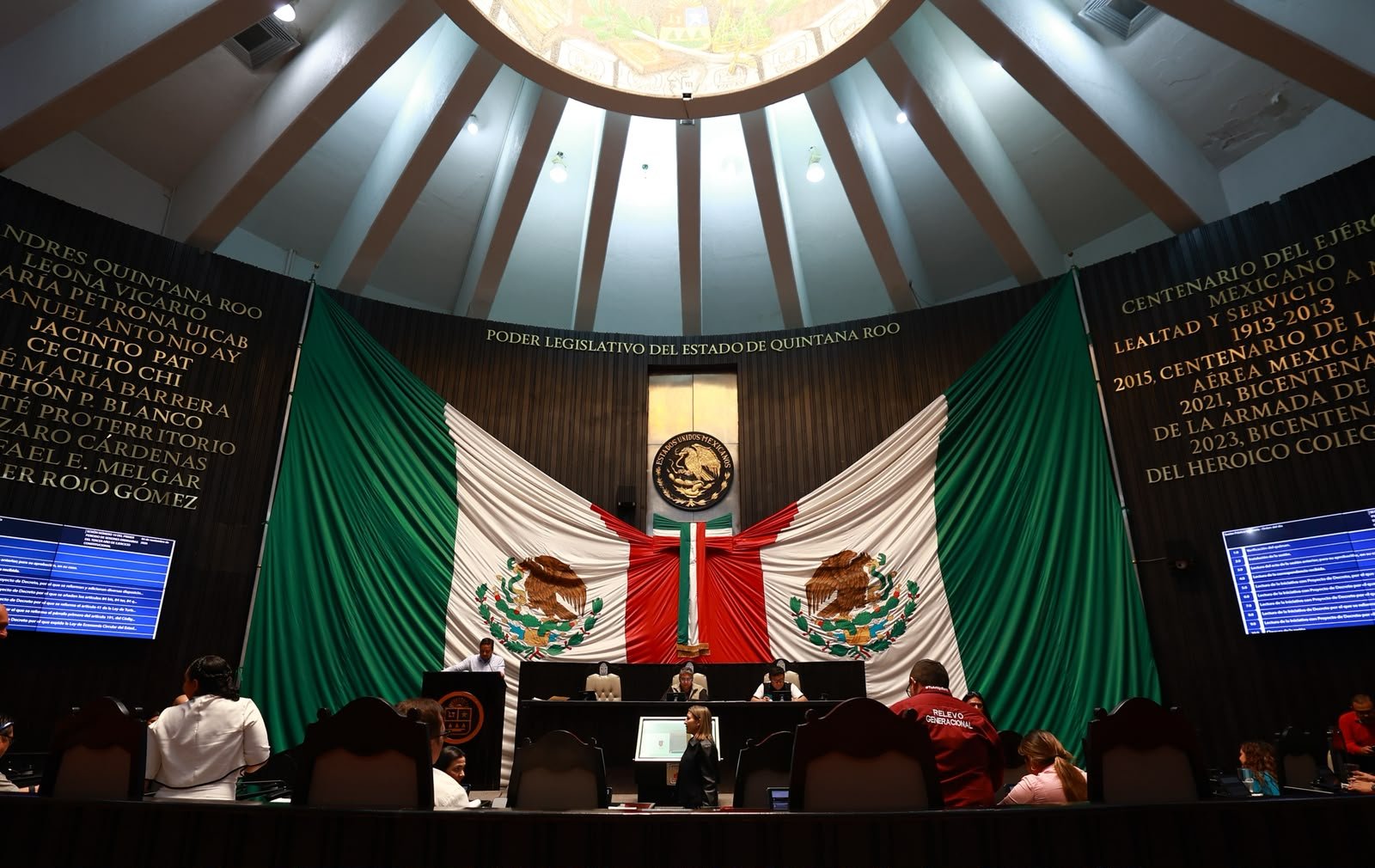
Chetumal, Quintana Roo — Quintana Roo lawmakers received a package of proposals on Wednesday to regulate the use of artificial intelligence in state and municipal government, guarantee free psychological care for crime victims and increase penalties for the corruption of minors, among other measures.
The initiatives, which also cover education, tourism, culture and waste reduction, were read during two ordinary sessions and sent to legislative committees. None has been approved so far.
AI rules and digital rights
Deputy Jorge Sanén Cervantes, who chairs the Committee on Constitutional Matters, proposed constitutionally recognizing the right of all people to access and use digital technologies under conditions of equality, security and freedom.
His initiative would also set rules for how state and municipal governments deploy artificial intelligence, based on principles of personal data protection, human oversight, cybersecurity, accountability and transparency.
Tougher penalties for corruption of minors
On child protection, lawmakers put forward a proposal to toughen sanctions against anyone who induces or facilitates criminal or addictive behavior among children and adolescents. The measure would carry prison sentences of eight to 15 years.
A separate proposal would require that victims of crime receive free, immediate psychological care from their first contact with authorities, so they do not have to wait to access support.
Schools, tourism and culture
In education, Deputy Jimena Lasa Aguilar proposed incorporating substantive equality into school curricula, training teachers to eliminate stereotypes and creating mechanisms to review classroom materials.
Deputy Santiago Frías Canché, meanwhile, called for strengthening the teaching of ethical and civic values from the earliest school levels, giving students tools to identify and reject corruption.
On tourism, Deputy Tepy Gutiérrez Valasis proposed updating state legislation to align with UN Tourism standards and improving coordination between the state government and municipalities. She also suggested diversifying tourism promotion beyond the traditional sun-and-beach destinations through new marketing strategies and sustainability criteria.
A cultural initiative would make the Caribbean Culture Festival a permanent and mandatory event across all 11 municipalities, backed by a dedicated annual budget, an organizing committee that includes residents and academics, and a public trust to manage its funds.
Lawmakers also proposed a Circular Economy Law for Quintana Roo, aimed at promoting an economic model based on efficient use of resources, waste reduction and the reuse of materials.
All of the proposals now go to the relevant legislative committees, which must review them before deciding whether they advance to debate and a possible floor vote in the Congress.
More Government
- Cancún Leads Quintana Roo Will Drive as 2,104 Testaments Are Filed
- Quintana Roo Pushes for Five More Pueblos Mágicos, Aiming to Double Its Total
- Zazil-Há Residents Fight Relocation of Álamo Trees, Citing Possible Cenote Beneath Roots
- Quintana Roo Cyber Police Field 246 Internet Crime Reports in Seven Days
- Cancún Downtown Traffic and Parking Shortage Prompts Vertical Garage Plan
More Quintana Roo
- Quintana Roo Expects Strong Buen Fin and Favorable Close to 2026
- Quintana Roo Courts British Travelers at WTM London Trade Fair
- Quintana Roo Police Expand Mental Health Support as Job Stress Takes Toll
- Quintana Roo Takes Mexican Caribbean to WTM London to Court British Travelers
- Sargassum, Tourism Slump and Insecurity Weigh on Chedraui Sales in Southeast Mexico